Software
Houzz Logo Print
yusuf06_gw

Woodland Garden Suggestions

19 years ago

Hello all,

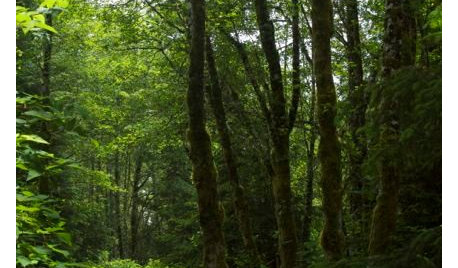
We have a woodland area behind our house that slopes down to a dry streambed. I'm planning on building a short retaining wall to terrace part of this area closest to the house and filling it with a shade garden. The problem is that despite my best efforts, the woodland version of Ghengis Khan continually tries to invade this area, occasionally sacking and pillaging the Hosta, Hellebores, Hydrangeas, Ferns etc. that I have planted there now.

Rather than continue to fight nature, I'd like to plant something in the area behind where I plan to build the retaining wall down to the dry streambed. Obviously, I'll need something that will be able to outcompete stuff like greenbriar, muscadine vines, poision ivy and other assorted nasties...mercifully no Kudzu, knock on wood :-)

Since this area gets only dappled sunlight at best, I'm thinking of planting a combo of Ostrich Fern (Matteuccia struthiopteris) and Bracken Fern (Pteridium aquilinum.

Do you all think this will work? Any other ideas either for different plants (that won't be invasive or a bigger nuisance than the weeds) or to stop the weeds from invading would be greatly appreciated.

Comments (9)

  • 19 years ago

    I'd suggest you do more to get rid of the nasties before you plant in that area. Greenbriar and muscadine are truly thugs and things won't "outcompete" them, even though ostrich fern and bracken can be aggressive in their own right (and even invasive if you want to plant something else there in the future). They'll get smothered and you'll be frustrated again. And of course poison ivy is best contained when you have some elbow room and don't have to worry about killing what you planted.

    Get some brush killer (Ortho Brush Be Gone or Round up's new product for "woody" plants). For the greenbriar (if it's smilax), I cut it off at ground level. Ideally then spray some brush killer on the piece still in ground. Then for poison ivy and muscadine (and honeysuckle), spray the foliage. Spray on a day when you don't expect rain for a couple days; hot weather is good. About noon or 1 pm is a good time for optimal absorption. And remember, once you kill poison ivy, the leftover dead leaves and stems are still just as poisonous, so don't think that you are free and clear to work without protection in that area.

    You may even need to allow yourself a second year to deal with anything that resprouts.

  • 19 years ago

    esh is giving good advice. I've been fighting this problem in my woods for a long time. The problem I'm running into is that as soon as I wipe out the weeds that cover the woods, it reveals a whole new layer of different thugs. This year it is honeysuckle, which was apparently somewhat controlled by the crop of weeds I got rid of last year. Anyway, esh is right that there is nothing you can plant that will out-compete your current crop of thugs. Barbara had good luck covering everything with landscape fabric and pine straw, but she is the only person I know who ever had luck with this method.

  • 19 years ago

    Yusuf, I have a woodland area that I want to take control of, too. When we moved in here last July, the poison ivy had HUGE vines climbing up lots of trees, and the briars and brush were thick. My husband borrowed (I don't know what it is called) something like an industrial size weedeater from his workplace and hacked down most of it. That was last November. Now that its spring, the poison ivy and other nasties are trying to resprout, but I walk through with my Roundup brush killer once a week and get them before they are big and tough. Granted, my woodland area is kinda small and I do enjoy doing that sort of thing, but it works. I'm now putting in a small stone path and plan to plant rhododendrons, ferns, etc. in there. I agree with the others. You must kill these invasive weeds instead of trying to choke them out. Don't get discouraged!

  • 19 years ago

    Sigh, it seems nothing in life is ever as easy as one expects.

    I appreciate the warning but I've already experienced the "joys" of poision ivy. I didn't know what it was at the time and went out to cut down "those ugly vines" (according to my wife) that were literally all the way up into the canopy of the very large hardwoods out back. I managed to kill them by cutting them off at the base and using vinegar but, as you all can imagine, it was something of a pyrrhic victory. :-) FWIW, I can honestly say that Zanfel is worth it's weight in gold...but I digress.

    I tried regular Round Up on these guys and they just laughed at me. So, I tried painting it on a few of them full strength to see if that would work. I swear they actually liked the stuff.

    Hopefully the Brush Be Gone will work. Do you think it will be effective if I simply spray it on the foliage or will I need to cut them off and spray the exposed stumps as described?

    Thanks for all the advice everyone. We've been here three years and I'm only now getting a handle on what it's going to take to get control of this area. It looks like the fun part (planting stuff) is going to have to wait a good while.

  • 19 years ago

    yusuf, you are so right about things not being easy. I'm in a similar situation, can't plant what I want for having to "clear" the area of - you guessed it - smilax, muscadine and honeysuckle. So, I feel your pain. Prioritize by getting the stuff out of any trees first. Usually the vines in the trees are producing fruits/seeds and just adding to your woes.

    For me, the smilax is not a vigorous "resprouter". As I said, I cut it to the ground, chop it into pieces, put it into those brown paper bags and send it to the trashman. Less than 3/4 of those vines came back. Muscadine is tricky. It has thick ropey vines (smooth when young, flakey when old) and greenery sprouts from them. Try to find where the vine comes out of the ground, cut it and put Brush killer on it. That is more effective than spraying pieces of foliage.

    For poison ivy and honeysuckle on the ground, I spray the foliage with brush killer. It may take a week or so to die, be patient. If you have ferns and nice little native plants in the area, be careful not to spray them. You can take a bucket or box and set it over the "good" plant while you spray the adjacent nasty guy. Even a piece of cardboard to hold as a shield works.

    Once you've got the bulk of it done, one trip around in the spring to catch any new sprouts should do it. However, birds do love poison ivy berries, so occasionally sprouts from seeds will occur.

    Good luck and know that you have comrades out there everyday fighting the same battle.

  • 19 years ago

    Same thing here. I have a steep hill on one side of my property that was stripped bare when the homes were constructed. I'm trying to continue the woodland strip that is in my neighbors yard. We've planted two dozen pines and most of them are doing well and are about 8-20 feet tall now.

    The first two years, I fought the blackberry brambles and honeysuckle and wild morning glory. These vines were so invasive, they were stunting any pines or oak trees in that area. Since I cleaned that out, the trees have gotten taller. I think the shade helps to smother the weeds somewhat.

    For some reason, I'm lucky enough not to have poison ivy. I'm sure I would have discovered that the hard way by now. The greenbriar is the worst. I also go around and clip anything with thorns down every few weeks just to keep it from getting a foot hold. I allow the honey suckle and muscadine to grow, but try to keep it off of trees and from getting too far down the hill. The honeysuckle is actually keeping some of the other weeds down.

    My neighbor dumps his grass clippings in his wooded area, and I have to say, it is doing a great job of smothering anything growing there. My poor cat wandered over there and almost sank into the grass clippings! I'm going to use pine straw this spring to try to keep the jungle from getting too wild. It takes a lot of time, years, to get this under control.

    I do like the 'wild' look, and I get some wild goldenrod and bee balm, so I don't like to spray up there. I do have a bad crab grass problem in one spot (because when I had my yard graded, they dragged some of the 'lawn' dirt up onto the hill, brilliant). My master plan is to allow the trees to produce enough shade so I can under plant rhododendron and azaleas up there to get some nice color.

  • 19 years ago

    I've been gardening an abandoned woodland area for 5 years now. It was covered in English ivy, poison ivy, and blackberry thorns when I moved in. I was feeling organic back then, and spent 2 winters pulling it up. Every Monday night I would fill up my garbage cans and wheelbarrow for the compost pickup on Tuesday.

    I kept the area from backsliding by mulching. First it was BioBlend from Cobb County. The dirt was bottomland, so I really didn't need the soil improvement, just mulch. Now I just use wood chips. Easier to get, easier to spread, and less offensive to the neighbors. Just as effective in the long run.

    If you attend our plant swaps, you know that I've been filling it in with shady plants. It's just about full, and depending on the season looks really nice. Altogether, I've spent less than $300 to plant a 1/8 acre garden. I'm pretty please with the way it turned out. It was amazing what started growing once the weeds were gone. Jack in the pulpit, black snakeroot, spicebush, etc.

    If I were going to do it again, I'd spray roundup ASAP. Roundup only kills what's green, and in the beginning only the weeds were green. Then I would call a tree service and have them deliver a load of wood chips. Spread that over the dead weeds, at least 4" deep. That will keep the weeds from reappearing. Then plant as I can get to it. Hydrangeas, hellebores, and ferns are great to start, as they grow fast and can be propagated to spread to other areas. Hostas are another, depending on whether I wanted all natives.

    E-mail me and I'll send some photos.

    - Richard Hanson

  • 19 years ago

    I spoke too soon. I found poison ivy on my wild hill. Oh well!

  • 19 years ago

    I hope you didn't find it the hard way Buford!

    After hearing all your input I think I've changed my mind about what I want to do with this area. I think I'm going to do my best to beat down the nasties back there and plant some more interesting trees (i.e. sourwoods, dogwoods, deodar cedars, dawn redwoods etc.) to go with the hardwoods. Hopefully these guys along with the mulch and brush killer will provide more shade to discourage the re-growth of the greenbriar and such.

    Thanks again for all the suggestions.

Sponsored
Peabody Landscape Group
Average rating: 3.5 out of 5 stars8 Reviews
Franklin County's Reliable Landscape Design & Contracting