Software
Houzz Logo Print
randy_ca

Off Broadway - Walter Moores

20 years ago
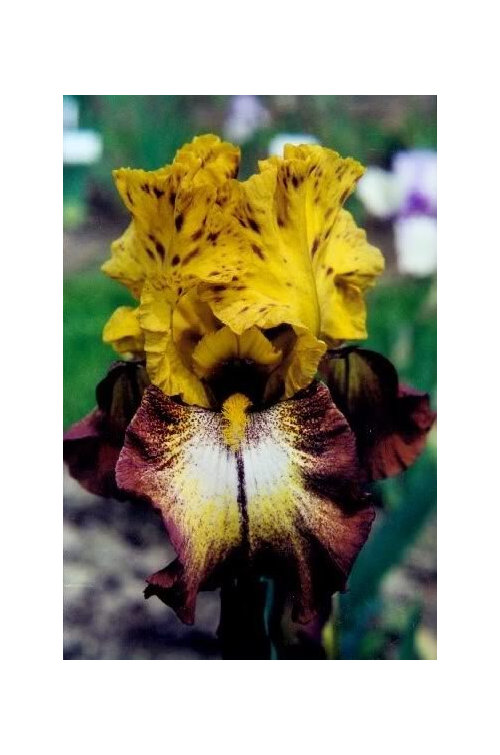
I just wanted to let Walter know that I taped a half hour television show last week that is going to be shown Saturday September 9th here locally in Los Angeles. I talked about our local Iris Society and hybridizing. I used this Jill Bonino photo that she has enlarged and framed to show that iris come in more colors than purple and blue.

I mentioned that this iris was hybridized by Walter Moores and that hybridizers are trying to develop different and distinct iris that the public can enjoy.

Off Broadway - Walter Moores 1992

Comments (13)

  • 20 years ago

    Wish that was on HGTV!

    Last week or so Ray Schreiner was shown on HGTV in a segment. He showed how easy it was to plant irises, but his medium was 100% potting soil. I wonder if the audience noticed. Reminded me of the 'garden weasel' commercial where they show an implement that with a twist and a turn breaks up soil. They use potting soil right out of the bag, too. The GW cannot break up TX or MS soil unless it's Gulf Coast sand.

    Thanks, Randy! I really appreciate it. I never thought that iris would gain so much popularity, yet it has no awards whatsoever.

    Walter Moores

  • 20 years ago

    i really like this one of yours too in my garden year after year.

  • 20 years ago

    I don't go for too many TB iris, but Walter, this one I really like.

    Rick

  • 20 years ago

    Where can this iris be purchased? How would this one be described in iris terminology? It has a number of features.

  • 20 years ago

    Basically, it is a plicata with virus markings in the standards. Suttons usually carries it.

    Walter Moores

  • 20 years ago

    Walter,
    Thank you so much for the info. You actually answered more than you knew. Those "virus markings" are a new term to me but one I have wanted to know. Two Springs ago when my husband and I visited Comanche Acres they had a large lightest blue iris with violet "virus markings" all over it. I do not know the name but have wanted to know ever since. At least now I have a term to use in attempting to describe it. it was soooo beautiful. Does this iris sound like any you know? I do not recall streaks, but just those"virus markings".

  • 20 years ago

    Sometimes wet weather causes virus marks to be more pronounced.

    You will see lots of lots of virus markings on arilbred irises.

    Two really old (but with good form) quarterbreds that have a pale blue background and darker blue virus marks all over are Frances Craig (1952) and Terry Ann (1959).

    My little Esalan (1989) a quarter arilmedian has them. You never know where the marks are going to show up and no two flowers are ever alike.

    I don't have Frances Craig anymore but do believe it is available through Monument or one of the older arilbred sources. I just sent Terry Ann and Esalan to Malevil for better propagation and maybe sale if they prosper in Lubbock.

    I think somebody in Texas posted a picture of Frances Craig on iris talk a few years back. I will check.


    Walter Moores

  • 20 years ago

    I sure wish I could see the show, Randy.

    OB is a cool iris, and a rebloomer in warmer climates, too. It sent up a stalk in December for me in VA (zone 7) on the south side of my house, but I had to cut it and bring it inside to get it to open, as a hard freeze was predicted. But when it did open, what a fascinating iris! That spritz of yellow on the falls just sparkles. But the thing that amazes me most about it is the lunker rhizomes it produces. In VA, it had potato-sized rhizomes and big ol' fans with around a dozen leaves over 2 1/2 feet tall. I'd just go outside and stare at that thing, even when it wasn't blooming. It didn't get quite that big for me in Ohio, but still larger than average. Come to think of it, LAKE REPRISE produces monster fans, too... where are you getting those "big honkin' plant" genes from, Walter? Sure is fun to be able to grow rhizomes in my own garden that rival those huge west-coast rhizomes!

    Irisawe, there is another pattern similar to, but not quite the same as virus marks where the whole flower has streaks and splashes on it that's called "broken color." There are a couple hybridizers out there who specialize in that pattern, probably most notably Brad and Kathie Kasparek of Zebra Gardens. Maybe not what you were thinking of, but fun to look at anyway! :-)

    Diana

    Here is a link that might be useful: Zebra Gardens

  • 20 years ago

    It's soil, culture, fertilizer that make for big rhizomes.

    There used to be a lady in our club that would bring to the sale four or five rhizomes of the same variety rubberbanded together. She never transplanted but would just pull off from the clump tiny increases to sell. Her irises were also too crowded and I wondered how she really knew what she was digging. She never fertilized. Very few customers would buy those rhizomes, of course. Her garden was also commercial and she had ads in the AIS Bulletin.

    I am sure that if were around now, she could be getting more complaints about plant quality than Michigan Bulb. She would be the hot topic on this Forum.

    Walter Moores

  • 20 years ago

    Walter, There are a lot of small iris sold on ebay. Most of the time you see a group of the same iris for sale it will be small rhizomes. I can usually get about 60% of these to make it through the first winter. I bought 7 Brother Carl(Zurbrigg 1983) last fall. All of these made it through the winter and one bloomed on 04-20-06. Another bloomed on 06-23-06 and there has been at least one in bloom or putting up a bloom stalk since then. I have one in bloom right now and another has a bloom stalk. It will be interesting to see what this does next year. It may be a continous bloomer in my climate and zone or it may just be that the different rhizomes are just gettng to bloom size as the summer wore on. Lee Mincy

  • 20 years ago

    "It's soil, culture, fertilizer that make for big rhizomes."

    Very true, but when they're planted right next to other irises who don't get nearly as big, it's gotta be the genes! :-)

    Diana

  • 20 years ago

    I do agree with phantomfyre. I've got ideal conditions for growing iris. West coast location (Inland Northwest) Full sun, deep fertile soil, excellent drainage, and SEAPOWER is just mincing along next to a huge, powerful clump of BLUE KENTUCKY GIRL. The clumps are just 1 year old each. I don't understand. All of my clumps are at least 2.5 to 3 ft away from each other so there is no competition for water and nutrients. Which call forth the question. Is this years Dykes Medal Winner all show, and no grow? I seem to think so, because the fans are stubby and small, sparse increase and little in the way of lateral rhizome development. Its a shame! We'll have to re-evaluate it next year.

  • 20 years ago

    Sea Power doesn't even live here! I have tried growing it almost since its introduction. It has never bloomed. It dies over the first winter. Where I have seen it in bloom, it was on about an eighteen inch stalk with four buds, but the flower was gorgeous. It had one branch. Judges are seeing the flower and not the rest of the plant or it does well where most of the judges live. And all were whopper rhizomes I got from the West Coast!

    The Schreiner/Keppel blues and blue amoenas have never done well in my garden. Sometimes the tabulator for the AIS judges votes will include a map or give percentages of the voting in various regions for the Dykes. It hasn't been done in a long time, and I have requested that this be a regular part of the Results of the Judges' Ballot. I have had no response. I suggest that if others are interested that they write the Bulletin editor (Filardi) or the tabulator (Epperson) stating you'd like to know the regions where Sea Power grows and prospers. You can find their emails inside the Bulletin.

    Good growth and bloom can vary. I'm sure we've all had the experience of having something flourish in one part of the garden only to move it to another part and have it sulk. So big, hunky rhizomes become peanuts in the same garden.

    Yes, it is a combination of soil, culture, genes, and climates. With genes, it may be something called 'line breeding' that may cause difficulties outside the hybridizer's home garden.

    Somebody might start a thread called SEA POWER PERFORMANCE, and we can conduct our own survey by telling whether is performs or not. A simple yes or no would do. Also tell your state and climate zone to see if there is a trend.

    Walter Moores

Sponsored
Wannemacher Interiors
Average rating: 5 out of 5 stars26 Reviews
Customized Award-Winning Interior Design Solutions in Franklin Cnty OH