Software
Houzz Logo Print
runktrun

Fungus Among Us

16 years ago

Last fall with thanks to Viburnum Valley I was finally able to identify a serious disease problem that is spreading rapidly throughout my landscape due primarily to my lack of good cultural practices. Yes, I have lopped of branches in the dead of a wet spring, summer, and fall, without cleaning my blade between cuts and I am now beginning to see that has been as bad for my landscape as not cleaning my kitchen cutting board after de-boning a chicken would be to my health and well being. My question to you (if indeed there is anyone out there) is; what do you conveniently carry along with you while pruning to effectively clean the blade between cuts?

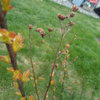
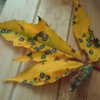
We had a very wet 2009, my neck of the woods actually recorded eight inches of rain fall above the average, this coupled with a very cool summer (I don�t think it warmed up enough for those heat loving plants until August), and of course there was the blight that hit both my tomatoes and potatoes. Topping all of this off has been two storms that included desiccating high winds further stressing the non-deciduous plants. To my mind these are but a few stress factors that are adding up to a fungal disease perfect storm of sorts for 2010. Now as I understand it there are hundreds of diseases that will effect hundreds of different species, some are secondary fungi living off of other fungi that have infected our plants further complicating the understanding of fungal diseases. Has there been something off kilter and nagging you in the back of your mind about plants in your landscape? Is there something going on that you can�t quite put your finger on? Share with us if you will in your most descriptive way what mystery seems to be happening in your landscape�. Professor Plum with the pruners in the garden shed!!

As hefty as this topic is, I think this winter would be a good time for us to share what diseases we have found in our landscapes, what we did to stop or slow down the spread in our own landscapes, and more importantly what horticultural practices we will be employing this spring to prevent or slow down the spread. Katy

Comments (8)

  • 16 years ago

    I'm probably not as attuned to plant diseases as I should be. I realized this when I took a class this fall with a bunch of students also taking a plant pathology class. They were constantly noticing & collecting leaves that had various diseases on them to take back to class & share.

    My main focus as far as plant killing is more macro than micro - the mammals that decimate certain gardens. The voles did in a bunch of plants last winter and the one before, working their little teeth safely under our abundant snow. And the woodchucks were hard on certain plants in the veggie garden, particularly the broccoli and the basil (who knew?!)

    The one disease that I am aware that I have in abundance is powdery mildew. It infects my variegated shrub dogwood and my tall phlox. With this year's abundant wetness, it seemed much worse than usual. I'm sure that I have other diseases, probably killing plants, but I'm just not in tune enough to have found them.

    I've heard that a 10% bleach solution disinfects pruners well, but I haven't a clue how I would carry that with me around the garden without ending up either speckled or drenched in white. I'd vote for rubbing alcohol, either in a wide-mouth plastic jar (think old mayo jar) or as wipes (though it might take a lot of wipes if you have much pruning to do.)

  • 16 years ago

    Babs,
    Interesting that you describe vole damage as being the primary problem in your landscape. Until I was forced to zoom in and really try to diagnose what was causing problems in my landscape I too had attributed all damage to voles who I now believe only played a small part in damaging many of my woodland shrubs.
    I have unknowingly encouraged the spread of Botryosphaeria canker that has spread to and heavily damaged mature Ilex, Viburnam, Rhododendron, and Blueberry. My guess is the plants that were stressed by voles were much more susceptible to the spread of this disease then my poor cultural habits allowed this disease to spread and take hold much more aggressively.
    I wonder if powdery mildew and rust winter over? Should we expect elevated cases of them this summer?
    Isn't it amazing with all of the garden related tools and gadgets that no one has created an easy way to sterilize your blade?

  • 16 years ago

    Katy...Wow, you really have a problem for which there appears to be limited control suggestions. Two suggestions:

    1. To sterilize pruners between cuts; mix up your 10% clorox solution and pour it into a hand sprayer. The handle of the sprayer easily slips over a pocket edge (or I wear painter's pants which have that little loop part way down the leg) which makes it easy to carry about. Spray pruner blades after each cut. Least frustrating method.

    2. When off-Island purchase a 100 pounds of cornmeal from one of your New England grist mills (or you may get lucky and find a feed store that carries horticultural cornmeal which is less expensive). Wait until the weather warms in June and then heavily broadcast the cornmeal, covering your entire yard. Wet down lightly after spreading. Cornmeal encourages the growth of trichoderma fungi which in turn does aid in controlling plant diseases. This treatment should be repeated every six weeks during the warm season. Try it for a growing season to see if it might help your situation.

  • 16 years ago

    I've read about and considered the disinfectant informaton. However, until I cause a problem for myself, I doubt I'll take the time to spray 'n prune. Not that I prune that fast...I might spray between differnet plants, but spray between each cut on one shrub? I just have too much to do and too little time. I'm sure the advice is good...but....

  • 16 years ago

    Babs,
    NandinaÂs suggestion re trichoderma fungi led me to pick up Jeff GillmanÂs "Truth abouth Organic Gardening" . He has quite a bit to say about powdery mildew, as soon as I get a chance to slog through it I will post what he has to say.
    Nandina,
    Thanks for the suggestions, a water bottle indeed seems to be the most practical solution. Encouraging the growth of trichoderma fungi is a brilliant idea, however after a fiasco with rats a year or so ago I really do not want to be spreading their favorite food around my landscape. Any other organic product come to mind that might be effective?
    Marie,
    until I cause a problem for myself, I doubt I'll take the time to spray 'n prune
    If only I could un-do the mess I have created, the amount of time I will now be spending to remove all fallen leaf matter, bring irrigation into a wooded area, and work like crazy to raise the ph, will be a lot more timely and expensive then if I had practiced good cultural habits. Do yourself a favor and become vigilant before you create a monster for yourself.

  • 16 years ago

    Katy, okay, no cornmeal. Your local feed store must sell 40# bags of dried molasses as horse owners use it. This also encourages various types beneficial fungi. Toss this around the yard as the weather warms. No promise that it will work but it will not harm. And, it does not attract ants.

    Willing to be a guinea pig? Last month a Russian named Valerie posted "...best recipe for organic gardening" on the Organic Forum. Sorry, can't seem to link it to this Forum. The whole thread reads a bit like science fiction. From the ramblings I have put together three different formulas with which I am experimenting. The following formula may have merit and might work for your situation. I have a hunch you should give it a try. As an aside, I have found that it stops yellowing of plants and leaf drop overnight used at half strength (50% water/50% formula).

    Add to a 1/2 gallon plastic container 2 tablespoons of rye flour, 2 tablespoons of dried molasses (could also be black strap molasses) and fill with non chlorinated water. Allow to sit in sunlight for 3 days, shaking often. Strain through a coffee filter, pour in hose end sprayer, set dial for 3 tablespoons per gallon and spray on and around affected plants, soaking the ground. This would also be done when weather warms. Repeat monthly. This formula will spoil after a few weeks so toss out left overs. No guarantees but it should encourage friendly fungus.

  • 16 years ago

    I used to disinfect pruners by taking into the garden a pickle jar of pure bleach into which I would dip the pruner blades(in between trees) and then dry w/ a paper towel.Plse understand that i have no authoritative knowledge in this topic of disinfecting of tree pruners , BUT the very experienced, very knowledgable, very picky and Japanese tree expert we know-Yama- does not clean his pruners in between trees. I asked him about it and all he said was "not needed". If he were not so completely anal about his tools, his techniques, etc etc, I would question that opinion, but I have not pursued it w/ him since he said it.
    I do plan to ask him when I see him in the spring.
    I don't know how the experts on the GW Trees Forum- feel about the issue.
    mindy

  • 16 years ago

    nandina,
    As I have all of the suggested ingrediants this seems like an interesting experiment come the warm weather. Even if all it does is slow down leaf drop it would be well worth it to me.
    Arboretum,
    I understand that cleaning pruners between cuts may seem excessive to you, but I now realize how easy it was to overlook a gall and forget about noticing the pimple size fungi on one side of one branch only to continue pruning other branches making the plant more suseptable to a sever out break. I suppose I am feeling much like the person who has just recovered from H1N1 who washes their hands much more frequently than they ever did before they got sick.