Software
Houzz Logo Print
deannatoby

colored dogwoods--your experience?

I have just found out about red- and yellow-twigged dogwoods. Ooo la la! Before, the only dogwood I knew existed was the southern dogwood from our previous state of residence. These colored ones are amazing! Does anybody have one with particularly striking wood? I'm more interested in their winter appearance, but any spring/summer beauty facts would be appreciated. I know these end up being shrubby, but I'd like to have a nice tree, if possible? Can you please give me feedback on varieties to consider up here?

Thanks so much!

Comments (9)

  • 16 years ago

    This is actually a complicated topic.

    First of all, the nomenclature of the red-twigged dogwoods is all over the place. There are two main species within the genus (Cornus). One of the species is Cornus Alba (common name: Tatarian Dogwod) and the other one is Cornus sericea (Common name: Redosier Dogwood or sometimes you'll see it as Red Osier Dogwood). The last species is also referred to as Cornus Stolonifera. I'm not sure if sericea and stolonifera are truly synonymous or if they are different species. If you are looking around the internet, or reference books, or nurseries, you will see the names of all three species commonly interchanged resulting in a lot of confusion.

    Each species has several cultivars that are commonly sold to the general public although most of the ones sold in Massachusetts have variegated leaves which contrasts the red bark to some extent. Even though these two species are in the same genus as the common dogwood (Cornus florida aka Southern Dogwood), they do not resemble it at all. Cornus florida is always a tree and the other two species are always shrubs although they can be rather large shrubs. For best winter color, you want to cut off branches once they reach 4-5 ft in length so that the plant puts out some new growth. The older stems tend to fade in color while the younger ones are a brilliant red. I have two of the cultivars with variegated leaves. I don't remember the cultivar name. The bright red stems of both of them really stand out in the winter especially against snow. I highly recommend them.

    It's not possible to prune these types of dogwoods to look like a tree. If you want a tree with colored bark then choices exist but this isn't one of them.

  • 16 years ago

    Your post was very helpful. Thank you so much! I had read and seen pictures of colored dogwoods on another thread, but it has since been posted that one of the tree pictures might be of a pollarded salix alba 'vitellina' or golden willow. That required me to find out what in the world a pollard is. I've found that out, and am still so very interested. We won't be ready this year, but next year we'll probably be putting some trees and shrubs in. I'll try to get more info this summer on the dogwoods and willows so we'll be ready to plant next year. Thanks again for your informative answer!

  • 16 years ago

    I have an artic fire dogwood-a smaller, neater version of the red osier that I love. Its a brilliant red (and isn't in as much sun as it should be) and, so far, hasn't required any pruning like the larger red dogwoods can (the new wood is red, sometimes the old wood gets dull).

    The summer appearance isn't showy to speak of, but it is a very neat and tidy growing shrub. SO even with no flowers, its a nice addition in the garden.

  • 16 years ago

    Oops, sorry Deanna . . . I should have explained pollarding in the original post on the perennials forum. My only excuse is that I tend to post early morning or in the evening and I'm not always fully awake . . . :>) I'm not sure where you are in NH, but there are a pair of pollarded catalpa trees on route 4 just east of the puzzle shop, almost across from the Northwood transfer station.

    One thing to know about the shrub colored twig dogwoods is that many tend to have foliar diseases and look pretty ratty by August. If you have a spot where they will stand out in the winter but not be too visible during the growing season that would be best. Good sanitation (cleaning up leaves in the fall and removing clipped branches) will help decrease disease problems. I have a variegated red-twigged dogwood that I like quite a bit, but late summer is not its best time of year. I have also grown yellow twigged dogwoods at a previous house. In either case it's nice to have plants that have that winter interest and color.

    If you have the time, field trips at different times during the growing season to various nurseries and arboretums to see what trees and shrubs look like at different times of year. Lake Street Nursery in Salem has a good reputation for trees and shrubs (though I haven't been there) and I've enjoyed going to Scenic Nursery in Raymond, though I haven't been there in a number of years. The campuses at both Plymouth State University and the University of New Hampshire have a nice variety of shrubs and trees, though not necessarily labeled. The Arnold Arboretum in Boston has a great collection of trees and shrubs that are grouped and labeled so that if you want to compare different lilacs or types of false cypress you can. You can also just wander around and see a huge variety of kinds of woody plants.

  • 16 years ago

    Here's a blog entry that talks a bit about pollarded Salix alba 'vitellina'.

    Here is a link that might be useful: Dirt Simple - Trimmed UP

  • 16 years ago

    Thanks for the tips, nhbabs. I'm not too far from Rte 4 so I would expect the pleasure of seeing those trees this summer. I'll certainly look for them. And thank you so much for the nursery recommendations! We'll be in Boston in June, so a trip to the arboretum would be very useful.

    Do you grow things in front of your dogwood that get tall in August but die down in winter to hide the leaves in August? Maybe some echinacea or tall rudbeckias? I'm just trying to figure out how all of this works as I plan my garden. This year I'm trying to watch how and when things grow and see if I can take advantage of seasonal heights to maximize my garden. I know I'm not the first person to think of this, so I need to take some time to find the resources to educate myself on taking advantage of the heights of flowers as the season progresses and things come and go. I'm sure you have done quite a bit of that in your garden! One day I'll be an encyclopedia of garden knowledge...right?!

    Thank you again!
    Deanna

  • 16 years ago

    The Arnold Arboretum has several stands of red-twigged and yellow-twigged Cornus sericea along the main roadway where it passes alongside a pond. Can't miss it.

  • 16 years ago

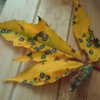
    This is cornus alba 'Bailhalo' or Ivory Hal*o as it is commonly called. This photo was taken on August 19th of last year. The foliage looked wonderful despite having had some early spring damage from winter moths. It has morning sun only and despite a lot more shade than it is reported to enjoy, it still has red stems in the winter.

    Off topic, but the tree in the background is a Rutgers hybrid, 'Constellation' that still shows some flo*wer bracts this late in the season.

  • 16 years ago

    These shrubs are tougher than advertised. The two variegated ones that I have are in full sun and dry, infertile soil and they always look great. I've never observed a foliage problem with them.