Software
Houzz Logo Print
cascadians

Are Birds Good for Trees?

19 years ago

Lots of birds here in the PacNW, and lots of trees: Does anybody know if birds help baby trees get stronger by flitting on their branches? Or is that hard on saplings?

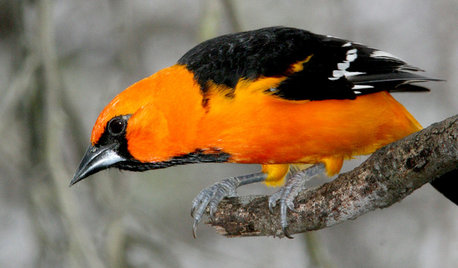
I've got 23 bird stations around the house, started New Year's Eve 2005 and now this is Bird Mecca, with all manner of finches, sparrows, chickadees, flickers, starlings, crows, hummingbirds, black-headed grosbeaks, bushtits, junkos, towhees, red-winged blackbirds, wrens, thrush, hawks, bluejays, robins, cedar waxwings, swallows, downy woodpeckers, etc. Over 300 baby trees in the yard which are swarming with birds, The guano's supposed to be good, but what about the weight of the birds? And they're always rubbing their beaks on the branches.

Will they eat harmful insects? Or be too spoiled and lazy from the thistle and sunflower seeds to eat bugs? Do you have a tree damaged by birds?

This may sound strange, but sometimes I think the trees are cheery and welcome the bird company, all these colors and feathers alighting on their branches and singing and congregating and hopping around. Especially in winter. Does it strengthen the new limbs? Anything I should be watching for?

Comments (9)

  • 19 years ago

    "Continual rubbing or brushing of woody trees and shrubs, even that which is gentle enough not to abrade
    tissue, will result in shorter heights and wider trunks. This is partially meditated through the release of
    ethylene gas, a naturally produced plant growth regulator, which in turn increases the formation of lignin
    in the disturbed tissues. The result of thigmomorphogenesis is a stocky, sturdy plant that is more resistant
    to breakage or windthrow than one that has been untouched, and the greater the disturbance the more
    pronounced the response. The short, stunted appearance of alpine forest trees is an extreme example of
    wind-induced thigmomorphogenesis. Such trees are less likely to break from snowload or suffer
    windthrow than thin, upright specimens."

    Here is a link that might be useful: Thigmomorphogenesis

  • 19 years ago

    Awesome bboy! A scientific answer, thank you! I figured if the bird's weight didn't crack the branch it had to make it stronger, but I'm a total newbie at all this and need much more scientific education. Great article, thanks.

  • 19 years ago

    that is really interesting. i doubt the birds would have the same effect as wind does in an alpine forest but shorter sturdy trees does seem perfect for urban gardens.

  • 19 years ago

    I've had a number of trees girdled to death by birds pecking hundreds of holes in them. I want to like birds but I kind of wish they wouldn't do that.

  • 19 years ago

    Sapsuckers?

  • 19 years ago

    Ian, those are sapsuckers. They do not girdle the trees although it looks pretty close sometimes. They are drilling for sap, much like tapping a maple to make syrup, except the sapsuckers eat the insects that are attracted to the sap. Hummingbirds also I've heard are attracted to the sapsucker holes for the insects. It looks like it must be damaging, and it's definitely an open wound, but I've never seen a tree killed or seriously damaged by sapsuckers, and they're pretty birds. They go for the sweet-sapped trees mainly like birch and alder and aspen and maple.

    Are birds 'good' or 'bad' for trees?? aren't they pretty much made for each other?? Trees live in a world filled with birds, and birds live in a world filled with trees. Although trees as a whole predate birds by millions of years, trees and birds get along pretty well together, and they've lived together for much longer than we've been around.

    It's a myth that birdfeeders will spoil the birds so they won't eat insects. Most insect eating birds don't eat birdseed, for one thing. Conversely, birdfeeders don't attract most insect eating birds except for chickadees. Suet feeders, and birdbaths most of all, will attract more of the insect eaters.

    The weight of birds damaging trees? I wouldn't think so. Birds don't weigh hardly anything, their bones are hollow, and under those feathers there's hardly any bulk left, it's all fluff. And birds get off if a branch sways too much under their weight.

    Birds need trees, and trees need birds. I agree that the trees seem cheered by birds in them, even when the birds are eating all the flower buds so fruit won't set. That's what the finces do to my cherry trees, they gather by the dozens just as the flower buds are swelling, but who cares? finches are pretty and sing nice, and there's too many tiny little cherries on these trees anyway, they're a nuisance, might as well go to the birds as drop stones on the lawn for me to step on and the dogs to eat and plug up their guts.

    I read once that in Europe it's considered a good omen if a bird lights on a newly planted tree. Sounds like you have a yard full of good omens. Are you keeping a life list of the birds you see?

  • 19 years ago

    We have several large Garry Oaks that get the jumping gall moth in the summertime. I have seen Chickadees eating the eggs and now we have a huge number of chickadees around the place. The leaves are looking much healthier and each summer there are less of these pests. btw, we have an insulated door into our shed and there is a knothole in it. A chickadee has hollowed out the insulation and is raising her family safely away from all predators. I love the birds too and have lots of feeders.

  • 19 years ago

    And on top of everything else thigmomorphogenesis is a great word! jwww

  • 19 years ago

    I am down on sap suckers as they have really done a number on my birch trees!!!!! I will soon have to give them the final basal pruning cut! They have all but girdled the trees and three out of five trees are leaning severely and are not too attractive! The birds are also responsible for multiple seedlings of salmon berries and blackberries (all in small tidy bunches) but I still love the birds and will continue to weed and plant trees that are not a problem. Live and learn and keep on gardening and learning!