Software
Houzz Logo Print
fbot

recommendations for complementary plants

20 years ago

Hi All,

Need some help deciding what to plant in a new bed. I'm a new gardener (been at it less than 2 years) so I am still learning what plants look good together. There is an area in my front yard that gets full sun (all day sun, in fact), has okay soil and get very dry if not watered regularly. Since the grass has such a hard time growing here, I decided to cut in a 10' by 12' perennial bed.

I already had 3 small white-blooming azaleas there, so I cut in the bed using those as the back of the border. I also have planted purple cone flower, rudbeckia "maxima" and "goldsturm" and several shasta daisies. I also threw in some spare hostas that I had from divisions. All are pretty small right so it's hard to visualize what looks good.

Any advice on this plant combination? What other plants may look good with what I already have in place?

Thanks for the advice,

Linda

Comments (10)

  • 20 years ago

    Echinacea (coneflower), rudbeckia, and shastas are a great trifecta in a sunny garden. Add some russian sage behind them, some may night salvia and threadleaf coreopsis in front and you basically have a small sunny bed I once had before voles ate it. (Painful memory, let's move on)

    I'm not sure you'll love the hosta there. This year it might work well as a filler, but I don't think full sun is something most hostas will like.

    In the very front of the bed maybe some blue and white chips campanula. Or possibly some annual allysum. Some blue border veronica might work well in front of the trifecta. Some yarrow would be nice. Possibly nepata. Even a shrub rose in there...I hear "knock-out" roses are easy care and look great... Oh gosh, the possibilities are really endless.

    Think of your current plants in terms of 1.) height 2.) color 3.) water needs (the trifecta are all pretty drought tolerant) 4.) and form. You have a lot of daisy-type form (I'm sure there is a technical name for that) so you probably want to add some spiky and rounded and mounded forms as well.

    The sky is the limit, really. Have fun, experiment, make mistakes, take notes, move plants come fall or next spring if they don't work.

    Patty

  • 20 years ago

    Good recommendations BarefootInCt. I agree on the hostas --in full sun most will not perform well and may end up with dried leaves when the weather gets hot.

    I would also consider 5) bloom time. With the existing plantings the azalea would bloom in May/Early June and the others are summer blooming, July/Aug. So how about some early spring bloomers and fall bloomers? Sedum Autumn Joy although overused is a great late summer/fall plant and has dried flower heads that you can leave all winter. For early spring, snow in summer, creeping phlox, perennial geraniums. The low growing sedums have interesting foliage texture and color and flowers in late spring or summer depending on the variety.

  • 20 years ago

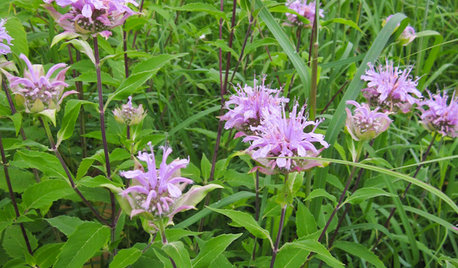
    My favorite combination in my sunniest garden is Moonbeam (threadleaf) coreopsis, which is a real workhorse, with monarda Jacob Kline (very red). One caveat - the monarda is mint family, and the spread may annoy you - mine stays somewhat well-behaved as the soil in that garden is fair at best, and I don't fertilize the monarda. I think that combination would look super with echinacea & shastas.

  • 20 years ago

    Another consideration is foliage texture. The fleshy sedums would play nicely off the "trifecta," which don't have especially interesting foliage (IMHO). There are others besides Autumn Joy that would work, like Matrona (a biggie) or some short varieties in the front of the bed.

    The russian sage would be really good for this too, or you might consider the slightly shrubbier caryopteris. The effects are similar but the caryopteris (blue mist shrub) has a more rigid form.

    Some plants with spiky foliage would also help; daylily or iris, and those would widen the season of interest, as would grasses - if you like them!

    A sunny border is a great way to get hooked on gardening, so have fun with this space.

  • 20 years ago

    Thank you so much for the ideas. I have a great shopping list for my trip to the nursery this weekend!

  • 20 years ago

    Don't forget bulbs. I mailorder most of mine and if ordered before 7/1, my favorite company, Brent and Becky's, gives a discount. I also order from Van Engelens (wholesale) or John Scheepers (retail), but the same company really. You can get bulbs that bloom from March until September or October when you order from specialty bulb companies, and you can request catalogs sent from the companys' websites. I love snow crocus and reticulated iris for early color and autumn blooming crocus and colchicum (sp?) for late blooms as well as the more traditional tulips and daffodils. I think some of my favorite bulbs are blooming now, the tall alliums (ornamental onions) that bloom in purple or white spheres on 2'-4' stems.

    I also have a couple of really hardy mums that have survivied my -20 F winters for several years. One a beautiful coppery colored one that blooms until hard freeze and the other a pink daisy that blooms in September. I don't know variety names for either.

  • 20 years ago

    And don't forget the ornamental grasses!!!

    I struggle to site them appropriately in my mostly partial shade yard... but where they're happy they are MAGNIFICENT. They emerge rather late (this can make them good companions for early bulbs), grow quickly, and they provide lovely winter interest, too. They require NOTHING. They shrug off drought and crummy soil. They are bothered by no pests that I've seen in many years. They come in all sizes (1'-10'!), in lovely colors ("blue", to variated bright green/yellow). They're easy and fabulous. Buy varieties that "clump"... Miscanthus, Panicum, Pennisetum. (I missed the plant swap and have 6 2 gallon Miscanthus languishing in my pot ghetto). Site them to the rear of a bed that is viewed from only one side, or use them as a "spine" down the center of a bed that you walk around. Because they are capable of attaining such height, you may be able to use them as "shade" for plants that prefer some relief from direct, hot sun. (It won't be enough for your Hosta, though, I'm afraid). The larger grasses can be used as seasonal "shrubs"... giving you privacy you might never suspect could be delivered by a perennial. I'm a huge fan of them and only wish I had more places to put such trouble-free workhorses to work!

    Perovskia (Russian Sage)... wonderful plant (I should give you mine!). Oriental poppies (use the grasses to hide their withering foliage when their bloom fades, since they go dormant after flowering, like bulbs).

    German Iris. This is a very tough plant. I had no success with it until I angrily yanked it out of a very rich bed and "relegated" it to the crappiest site I had... and I thought I was "banishing" it... lol. Well, it sure showed me. :)

    Sedums. I love these plants and don't have enough places to use them effectively, sadly.

    Asters. Late fall color, full sun, lean soil. Lucky you!

    Hosta does not belong in the site you've described. Move it to a partially shaded/shaded location. Only then will you be able to really appreciate what a terrific plant it can be.

    Right plant, right place... guaranteed gardening success. Really! (I'm jealous).

  • 20 years ago

    What??? No Lavandula suggestion yet??? LOL There are many varieties that will give you your choice of color, height and density.

    All the recommendations are wonderful for what you describe but if it were me, I'd make it herb oriented from here on given the spot. Careful choice and arrangement won't make it look like a kitchen garden. Some of the most formal plantings I've seen are solely herbs.

    The Trifecta and azalea will give you the bones for color. For one bloom herbal wonders consider Baptisia, Pineapple Sage (blooms a unique red and attracts hummers in fall), Chives, any of the "fruity" Salvia, Santolina, Thyme -- the possibilities are endless.

    Or how about putting in some mini roses to front the bed? They do well in dry soil unlike their older cousins.

    And yes, definitely put in bulbs. Lots of them.

    My mantra ad nauseum -- If you don't like it, you can always yank/move it!

    Martie

  • 20 years ago

    Since I see some purple blooms in the suggestions above, how about purple foliage? Some of the sedums have some great foliage-Purple Emperor is a wonderful one and gets to about 2' tall, with pink blooms in the fall. There is another one with darker foliage, but the name excapes me at the moment. 'Frosty Morn' is also nice, with varigated foliage and pale blooms.

  • 20 years ago

    Some not already mentioned:

    Heuchera - the maroons add nice contrast
    Veronica - super hardy, many colors and varied bloom times
    See thrifts - great on the border and compliment the large grasses in form
    Scabiosa - pincushion flower - great flowers for a long period in summer, especially if pinched
    Helenium - compliments coreopsis and rudbeckia
    Platycodon - balloon flower - nice in front, lots of blues and whites
    Spirea - really shrubs, but well-behaved and they come in a variety of leaf and flower colors

    These are all plants that have survived some pretty harsh winters for me and don't need a lot of attention.

    And, of course, delphiniums and foxglove.

    narcnh