Software
Houzz Logo Print
ellen_portland

Japanese Maple no new growth?

20 years ago

Hi all,

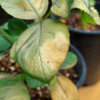
Back in March I bought a cutting of a Osakazuki Japanese Maple. It's grown quite a bit since then, but in the last month or so I haven't noticed any new leaves and am becoming concerned. It looks fine otherwise... the tag said something about it being fast growing... We put a fence of wire griding around it for protection since it was so small- I wouldn't think that would hamper anything, since it's not touching the plant and is open on top(didn't want to mow it down or anything!)

Any ideas? It gets pretty good sun, but also has the protection of a lot of overhead trees.

TIA!!

Comments (13)

  • 20 years ago

    I think it's just the Season; my Japanese maples are putting out much less growth than they were in the Spring. I'm relatively new to them though, so I could be wrong; it'll be interesting to see what more expert people have to say.

  • 20 years ago

    Falling off of new growth production early in the season in this region is due to summer drought. To compensate, increase irrigation. Mulching can also make a marked different in plant growth response, exposed soil bakes and dries out.

  • 20 years ago

    I believe your maple is expected to reach 8-10 ft in 10 years, so I wouldn't call it fast growing. You'll probably see more growth next year once it gets established.
    My older maples are putting out very little, if any, growth right now and they're irrigated.

  • 20 years ago

    Probably dry below the surface. There's irrigated and then there's effectively irrigated. A monsoon climate plant that aestivates is not getting enough water. If non-dwarf Japanese maple cultivars like 'Osakazuki' grew that slowly for commerical growers they would cost far more than they do already. They're not waiting for them to grow in spring only each year.

  • 20 years ago

    I do have bark chips around at it's base (not against the trunk) and I've been religiously watering it, everyday when it's been so hot... making sure it gets a good soaking, but not drowning it.

    Maybe I should include some kind of fertilizer?

    Thanks for all your thoughts.

  • 20 years ago

    Below is an article that you may find helpful.

    I can understand the lack of water, as bboy mentioned, being a factor, but in my yard my trees are in an area that gets plenty of water. They appear to follow the cycle described in the article.....check out the 5th paragraph.

    How large is the cutting you planted? Did you add any fertilizer to the soil when you planted it? I planted a small sapling 3 years ago and it just sat there the first year, grew the second and by the third year looked great. The typical story with most plants!!

    Here is a link that might be useful: maples

  • 20 years ago

    Thanks so much for the info! I hope this is the case.

    The cutting was very small (less than a foot high), in fact I nicknamed it "The Twig". I added a soil amendment when I planted it. It was just strange that it grew happily for a few months and then just stalled.

    The soil around it's planting hole is now a bit hard packed (at least on top)
    from the Summer heat... (I tried "claw" tilling it it another area for wildflowers and practically sprained my wrists!)Could that be a problem? There are other established small trees in it's area (the house was a rental for 5 years before we bought it a year ago, so the yard wasn't looked after)

  • 20 years ago

    The water could be running off instead of soaking in. You might try a soaker hose.

  • 20 years ago

    It's normal for woody plants to reduce growth after the spring flush. Especially if they get heat or drought stress. Once they go into summer dormancy due to stress that's it til their clocks kick back in, increasing watering will only increase your water bill. You need to water enough to keep it healhty but it's not going to keep growing and growing and growing nonstop like a tomato. Seasonality is normal in woody plants.

    Very likely the water is not soaking in. A soaker hose, under the mulch, is a good suggestion. And plants naturally grow slower in harder soils. Not necessarily a bad thing, pushing them into maximum growth makes them more susceptible to setbacks and problems when your inputs (water, fertilizer) fall off.

    Now if it doesnt' grow next spring, that's definitely a problem. Until then, patience.

  • 20 years ago

    patience as reg said. My wife has a nursery with many japanese maples. I hvae received many (lace leaf, bloodgood, sangu kaku, etc) in containters that were not real healthy. I have noticed if I tranplant in the ground they will still look like heck that first year..but one winter in the ground lets the roots get established and you should really see a nicer plant in spring next year...

    I know the eleven I transplanted last fall sure look like a different tree this year..very healthy with gorgeous color...

  • 20 years ago

    Roots grow mostly in fall, less in spring and not much in winter. Japanese maples are monsoon climate plants, there is no summer dormancy unless the tap is turned off, something they do not benefit from. Take a walk or drive around and look at the condition of Japanese maples in heavily watered locations with lush lawns and compare with those in less moist situations.

    Monsoon climate plants do not have the same growth behavior as those native to dry sites within the Pacific Slope where summer drought is a major limiting factor. Plant explorer F. Kingdon-Ward once saw thousands of dead rhododendrons in a part of China where the monsoon rains had failed to come.

  • 20 years ago

    Okay, well after bboy's last post I'm a little confused, as I do water my Maple religiously.

    So if he says there is no Summer dormancy, seems like there is conflicting info out there, as from Annz's link "Maples have two growth periods every year, in the early spring there is a flush of new growth, ......The heat of summer brings a summer rest period, or summer dormancy, followed by another push in late summer, early fall.

    All I can do is baby it as much as possible and keep my fingers crossed for next Spring. Thanks so much for all your info everyone! You guys are GREAT!

  • 20 years ago

    I'm talking about summer dormancy as in aestivation (shutting down for the summer), and the related idea that you don't have to--or shouldn't--pour on the water in summer (and fall) because the tree always stops growing after spring anyway due to the summer being too dry for new growth. That is different than growing in flushes, through the season.

    Summer dormancy is a poor term for a break between flushes, it overstates the case. Japanese maples come from a region where it may rain feet in summer, unlike here where the July precipitation is normally seriously deficient. I have been planting recently in hand-watered beds that have turned out to be dust dry as far down as I dug the planting holes. This is not a rare experience here, if you do not have an effective irrigation approach or system that is undertaken when the soil begins to dry in spring and kept up it may dry right out by summer despite efforts to the contrary. Either you are replacing the lost moisture or you aren't.

    It's not part of the makeup of Japanese maples to have to cope with summer drought on a regular basis. They may be able to cope with variations in moisture availability by growing in flushes, but the fact that they have been seen to do this does not mean it is the optimal (or even normal) situation for them. All plants have tolerance ranges within which they can still function, but they will not being doing as well (and producing as attractive an appearance and pleasing a response) on the edges of their tolerance range.