Software
Houzz Logo Print
misslemonverbena

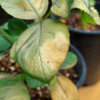
labrador violets completely chomped

18 years ago

While the hosta right next to them is fine. Is it slugs? There are some little shot holes, but some leaves are almost chomped away. I didn't see any silvery trails. Could it be earwigs?

Comments (14)

  • 18 years ago

    In my garden LV are a pest -- almost impossible to get rid of. They are even growing into the lawn. I don't think bugs can kill them.

  • 18 years ago

    Slugs, earwigs and root weevils are my big three as far as pests. My LV chomped too so is Lamium next to it. Looks like earwig damage on Clematis. So is my sweet violet. I'm thinking earwigs as I don't see slime trails either.

    I tried newspaper traps earlier this year for earwigs and had no luck. Caught a couple. Some of my Clematis are tortured.

  • 18 years ago

    It must be earwigs. I had them real bad in California & they ate lamium there too. It's almost not worth not fighting them. I dug up the LV's today & put them in a container. I know they're invasise dotty but what can I say? I love them. The earwigs don't seem to bother the lipstick strawberry plant, or the baby's tears, so maybe I'll stick with those for groundcover.

    I'm pretty friendly towards insects, but earwigs give me the heebie-jeebies. Imagine getting ready for a dinner party in your garden & lifting the table cloth to shake it off, & seeing **hundreds** of them that were hiding underneath scurry away. Eeeewww!

    Buyorsell: The newspaper thing never worked for me either. Here's what did:
    Take some cat food cans (not rinsed, the smell attracts them) & fill them about half full of cheapo vegetable oil. The earwigs will climb in there & drown. Enlist DH to dispose of them, because let's face it, you have more important things to do. This was the only thing that ever made a dent in the earwig population for me.

  • 18 years ago

    I must say that this thread surprises me. I do nothing particular to control insects in my gardens and encounter the occasional earwig, but not in any significant numbers and not to the extent that I notice any real damage from them. It might be worth investigating further to see what conditions exist in your garden that makes it so attractive to them and taking whatever steps necessary to curb/control them. When I used to grow more dahlias, I would see more of them, but the newspaper trick seemed to work well enough for me. I generally don't mind insects too much, but I will say that earwigs in particular are a bit creepy - maybe it's from that story we all hear growing up about them burrowing into your ear and that immediately transports me back to the Star Trek 'Wrath of Khan' movie and those earwig-like whatevers Kahn used to torture hapless victims. Yuccckkk!!!!

    Googling "earwigs" can turn up various articles that describe what types of conditions these insects prefer and how best to attempt to control them, but be aware that some of the "approved" treatments are pretty heavy-duty (many have even been removed from the market), so choose your weapons wisely :-) Apparently boric acid - commonly used for ant control - is effective, as is the vegetable oil trap MLV has used.

    Personally, I wish something would start chomping on my violets, as they are pernicious pests in my garden and pop up everywhere!!

    Here is a link that might be useful: earwigs

  • 18 years ago

    Note that plant being talked about likely to be common and tough (weedy) Viola riviniana and not tiny far northern V. labradorica, which may not even by in cultivation much, if at all. V. riviniana 'Purpurea' has been sold incorrectly as V. labradorica 'Purpurea' or simply V. labradorica for years.

  • 18 years ago

    They do remind me of the nasties in Wrath of Kahn but they don't bother me to see them or squish them. I hate giant sewer roaches like we had in Phoenix, all other bugs don't bother me. They do disfigure some of my plants as do root weevils. I don't mean a few notches here or there. The damage is severe.

    I have no idea what violets mine are, I know one has the cultivar name of 'Liane'. At any rate they are chomped.

  • 18 years ago

    V. odorata 'Lianne' and 'Royal Robe' mixed together in the flower bed and a Parma that is Violette de Toulouse in a pot.

  • 18 years ago

    Ah, the regular violets. I was puzzled too at the concept of labrador violet (v. riviniana? interesting!) being seriously damaged by anything short of nuclear detonation.

    Now the ornamental violets are very attractive to slugs, which can be tiny tiny tiny, and in my yard the wild rabbits eat them too. Rabbits definitely prefer the violets to the hostas.

    I've never had earwigs be pests and I've been gardening for decades.

  • 18 years ago

    OK, now I'm confused. I have what I thought were Labrador Voilets being quite a nuisance in my garden. Am I misnaming them?

  • 18 years ago

    Dotty, I think I have V.labradorica growing in a planter, this one does look different to the ones that I'm forever pulling out. The leaf is slightly different, mine got sunburned this summer when it got so very hot those few days this summer so I cut them back. The new leaves are very dark almost black, when they mature the undersides of the leaves keep that purple tinge, the leaf itself seems to be a little smoother to me.

  • 18 years ago

    With purple leaves it would be the common V. riviniana 'Purpurea'. Seedlings come up with characteristic purple leaves and bluish flowers, being seedlings these will vary somewhat in other respects.

  • 18 years ago

    For pictures

    Here is a link that might be useful: riviniana - Google Image Search

  • 18 years ago

    Bboy, mine does look very similar to the second picture is there any sure way to tell the difference between these two? I got mine from a source that should have known what they were. Because they were cut back quite late the new leaves are almost black. Labradorica's leaves don't get that dark? Is there any noticable difference between these two, their flower color or size?

    A......

  • 18 years ago

    The real Labrador violet has nothing to do with the common garden plant, other than being in the same genus. Completely wrong names can and do get put on plants in cultivation, become widely used. This is an example.