Software
Houzz Logo Print
arbo_retum

Cutting Back Perennials- Do It In the Spring

19 years ago

Thanks to the U of Minn Yard and Garden email newsletter, I have just read their reasons for cutting back perennials in the spring, rather than doing fall cleanup. In our gardens,we started doing this a few years ago for really one simple reason: the amount of plant material that is left to dispose of- after the winter- is 1/10 of what it was in the fall(because of all the leaf dessication and loss).We just don't have the room to compost all that material in the fall. But as you will see below, they give many reasons for spring cleanup. My exceptions to the spring-cutting back rule are : Peonies because of diseased foliage(we always have botrytus problems on some plants) and siberian iris (spring iris foliage is very difficult to cut back because it's still somewhat turgid). Hope youall find the article useful.

best,

mindy

Trimming Back Herbaceous Perennials- Should we do it in fall or spring?

David C. Zlesak, Regional Extension Educator, Horticulture

As we look out over the fall garden many of us see flowered-out perennials which were once glorious, but now are in decline. Some are succumbing to foliar diseases like powdery mildew or just going through the natural aging process and are losing their leaves and slowly turning brown. What can be done to both preserve the health of such plants so they will come back strong next season and clean up some of the unsightly material in our gardens? Each gardener needs to choose their own balance between these two objectives, weighing factors such as each particular plant species, their use of particular garden space for the winter season, disease pressure, and time availability.

As long as there has not been a freeze and there is green foliage to undergo photosynthesis, chances are there are still carbohydrates being generated and transported to the crown of the plant. Interfering with this process by removing stems and foliage will limit the amount of energy reserves the plant has going into winter and from which to fuel new growth the following spring. For the sake of the plant, it is typically best to wait to remove top growth until it naturally dies back or at least after a hard freeze in order to allow as much energy reserves as possible to be generated and stored. Some perennials when cut prematurely in the growing season may try to regrow from the base, especially if we have a long, warm fall. Such plants deplete stored energy reserves and may not survive the winter.

For especially marginally hardy plants such as mums and lavender, it is beneficial to leave old growth through the winter and remove it come spring. Stems can act as small windbreaks to accumulate snow, blowing leaves, and other materials which act to insulate the crown of the plant. In the University of Minnesota mum breeding program led by Dr. Neil Anderson, winter survival of mums were compared with those having top growth cut back in the fall after a few hard freezes versus leaving it through the winter. There was a clear trend that those with top growth present throughout the winter in these open research fields were much more likely to survive.

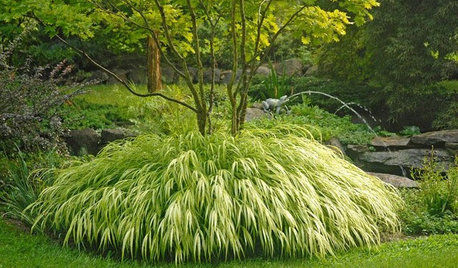
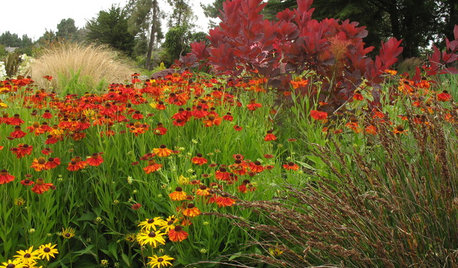
Another reason to leave top growth in tact through the winter is the winter interest it provides. Many perennials have relatively strong canes that do not readily lodge and provide interesting architecture, fruiting structures, or seeds desirable as food to wildlife. Some perennials which provide good winter interest include many of the daisy or composite flowers such as Echinacea (purple cone flower) and heliopsis, most ornamental grasses, and other sturdy plants with attractive fruit capsules such as Siberian iris.

For very hardy plants such as bee-balm, daylilies, hostas, and peonies, they are so durable that removing their foliage in the fall is generally no problem at all. In fact, removing foliage in the fall and carefully discarding it can help reduce disease pressure, if a problem, the following season. Even for the more tender or marginal perennials where diseases have been an issue, removal of diseased tissue in the fall is a wise choice. Mulch can be brought in as an alternative to help insulate the more tender perennials.

Barring disease pressure, leaving top growth on herbaceous perennials is the easiest way to manage herbaceous perennials and is what is recommended. Top growth can provide continued ornamental interest throughout the winter in itself and the wildlife it may attract. In addition, in spring top growth of many herbaceous perennials is more brittle and much easier to remove compared to the fall. Consider and weigh your particular perennials, winter garden preferences, and disease pressure and make the best choices for your situation.

Comments (15)

  • 19 years ago
    last modified: 11 years ago

    Thanks for posting that Mindy. Very interesting.

    Noted that they didn't mention that the attractive seed capsules can make for (often?) undesirable seedlings. As well as the time pressure in the spring when there is so much to do. But still food for thought.

    I will probably still do fall cut downs, but I will wait longer for the reasons stated.

    I am fortunate that I am surrounded by beautiful woods in the winter to provide winter interest (along with grasses and many evergreens). I hope that we have enough snow cover that winter interest from perennials is a non-issue.

  • 19 years ago
    last modified: 11 years ago

    If I didn't clean garden in a fall it will drive me crazy.
    Not a neat freak by nature (you should see my office, LOL), but can't stand the dead perennial mess in our showless winters.
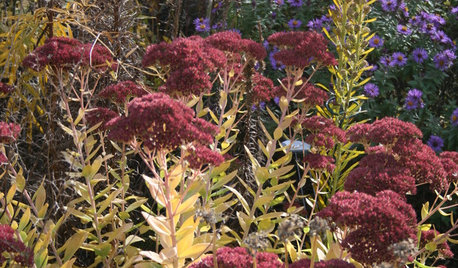
    I leave only sedums and some astilbes for the winter interest in addition to evergreens and semi-evergreens in every beds.
    BTW, astilbes that had been left for the winter never heaved, while cleaned ones heaves sometimes. Coincidence?
    While we are on a fall clean up subject, I found interesting suggestion on Hosta forum.
    When foliage turns into mush, remove it and pour 10% diluted vinegar onto crown. That will kill slugs/snails eggs that were laid in a fall and will overwinter on hostas crowns. In a several years of such treatment you will almost completely eliminate slugs population or at least substantially reduce it.
    Does make sense to me. Have anyone tried it before?

  • 19 years ago
    last modified: 11 years ago

    wow, george, i'ma gonna try it!!! wouldn't that just be unbelievable if it worked.thanks so much for passing that along.
    best,
    mindy

  • 19 years ago
    last modified: 11 years ago

    Wendy, several links are below.

    Here is a link that might be useful: Vinegar + Hosta

  • 19 years ago
    last modified: 11 years ago

    There are some things I cut down as soon as a hard frost wipes 'em out. Hosta is one of them. I tend to be do a pretty strict "clean up" in the beds along the front of our home, allowing less immediately visible beds to remain untidied, though an infestation of voles some years ago prompted more assiduous attention to "housekeeping"!

    I leave the grasses standing and the more upright perennials (Chelone and Babtisia being noteworthy examples). But anything that gets mushy fast is outtahere. A moist maritime climate breeds fungus, mold, slugs, and snails. I'm not a sissy about any of those, but I see no reason to roll out the welcome mat, either.

  • 19 years ago
    last modified: 11 years ago

    Interesting, Mindy ...

    Because so many of my perennials are nurseried I had planned to leave many "up" to protect tender neighbors. Buddleia started the train of thought since it is nurseried next to a Tree Peony that won't take strong, cold wind.

    Agree that I will take down hosta. That flattened, old-kleenex look does nothing for me in spring :-)

    Martie

  • 19 years ago
    last modified: 11 years ago

    Mindy definitely an interesting point of view expressed in the article. Like George, I hate to see the disorder out in the garden and plus in spring my gardens are very muddy and take a long time to dry out enough. I am afraid I wouldn't have the time to do everything in the spring also. But one season when illness prevent me from doing the clearing in fall fully I can tell you that the plants overwintered better with the protection of the leaves and the foliage was as you stated dramatically reduced. I can see for your garden and lot having visited it that it would be difficult for you to find a composting spot as your gardens are so lushly planted. Thanks for posting --interesting to debate the merits of each method.

    Sue

  • 19 years ago
    last modified: 11 years ago

    One consideration that might not be such an issue in MN is ticks. We find areas that get mowed or cleaned out regularly have few ticks than the areas that are brushy or have lots of plants. So unless it's an area where I've not found ticks, I usually clean things out unless I have a specific reason not to, like wanting to catch snow for hardiness protection.

  • 19 years ago
    last modified: 11 years ago

    Quick question on cutting back. Voles are taking over my garden, and I am thinking of cutting back several Spirea severely this fall, as that is their main cover, and their route to more delicious plants. Spirea can take it, right?

  • 19 years ago
    last modified: 11 years ago

    Spirea SHOULD be cut to 6-8" either in a late winter or in early spring, but could take it in a very late fall- early winter, say late November-early December for z6, when cutting will not force them into new growth production. Not the best practice, but once in a two years you could do it with no ill effect to the plant.

  • 6 years ago
    last modified: 6 years ago

    It is a long time since these comments were posted, however I am very interested to know if the vinegar on hosta crowns trick worked against slugs for anyone? Thanks!

  • 6 years ago

    Very interesting to see all these GW members who haven't posted in years. Surprising that was only 4 years ago.

  • 6 years ago

    Mindy's post was 2006. I figured someone recycled it but I wondered why they didn't identify themselves. Welll, it is a timely 'glitch' if that's what it is. I want to try the vinegar trick too.

  • 6 years ago

    BTW, I was visiting friends in the Boston area last weekend just a few minutes from Mindy's and decided to drive by and see if the Arbo Retum was still there. It is! Not sure it's still being maintained and opened to public but the gate was there and gardening seemed to be going on at some level. Does anyone keep in touch with Mindy?