

Attracting Beneficial Insects to Your Landscape
Sometimes I think many gardeners tend to overreact when we see insects or bugs in our landscape. Most of the bugs we see, though, have a useful role to play and very few of them are actually very damaging in the home landscape or garden. Did you know that 90% of the insects in the world are "good guys" and, if we let them, they'll peform all sorts of useful tasks in our landscapes, including performing pollination and helping control the few kinds of insects that are problems.
Whenever we discuss a pest problem of any kind, I try to mention the ways in which beneficial insects can help mitigate the damage caused by pest insects. Lady bugs, for example, eat aphids and mites. Braconid wasps prey upon tomato hornworms. Dragon flies eat mosquitoes. For almost every pest insect, there is a beneficial insect or animal that preys upon the pest insect. The question might be this: how do you attract more beneficial insects to your landscape?
So, here's some tips for attracting more beneficial insects to your landscape.
First, you absolutely must give up the use of broad-spectrum pesticides. Beneficial insects cannot live at your place and do their job if they are subjected to pesticides. If you have to use a pesticide to get a severe insect infestation under control, try to use a narrow spectrum pesticide, preferably of organic origin, that targets the exact pest you're seeking to control, and not harm others.
Secondly, in order to attract the good bugs, you need some bad bugs. The beneficials will follow the food supply, so if you have bad bugs doing damage in your garden, the beneficials will eventually show up, but sometimes you have to be patient and wait for them to find your landscape and your pests.
Third, you can help attract them by planting insectary rows or beds. Many beneficial insects are attracted to plants, like yarrow or alyssum, that have very tiny flowers. So, you need to plant those in your landscape to help encourage the beneficials to come visit. Some of the plants that attract beneficials include sweet alyssum, yarrow, tansy, chamomile, Queen Anne's lace, nasturtiums, shasta daisy, cilantro, feverfew, dill, fennel, parsley, catmint, catnip, lemon balm and many other herbs (especially when allowed to bloom), borage, coreopis, statice, black eyed susans, zinnias, oxeye daisies, sunflowers, tall verbena (verbena bonariensis),cosmos, and wallflower. Many other herbs, in addition to the ones listed above, attract beneficials, including rosemary, oregano, lavender, chervil, sage, thyme, and caraway.
Cover crops, whether grown in the "off season" when crops are not actively growing or when grown as catch crops in between growing seasons or in fallow beds or rows, also will enourage beneficials. There are many cover crops that you can use including clovers, buckwheat, hairy vetch and cereal rye.
One thing to remember is that beneficial insects are often tiny and quiet. They can come to your landscape or garden and go quietly about their business and you might not even realize they are there.
Another thing to remember is that beneficials are just like us in that they must have protein and carbohydrates in their diet. Clearly the pest bugs they consume provide the protein they need, but they tend to get their carbs from pollen and nectar. Many beneficials will not reproduce unless adequate levels of carbohydrates are available which is one reason you need insectary plantings in your garden.
We have a long growing season here in our part of the country, so you want to have insectary plantings in bloom for as much of the year as possible. I've noticed that the few flowers in bloom in December, January and February are swamped with insects.
Mulch and low growing plants often provide habitat for many beneficials, including ground beetles. And, as much as we gardeners are not overly fond of weeds, even native grasses and forbs that we consider weeds often provide habitat or food for beneficial insects.
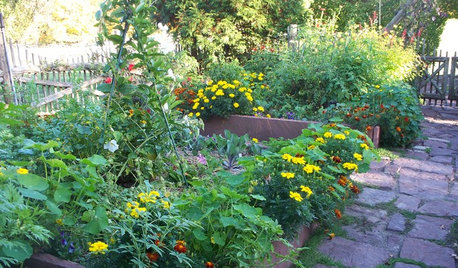
I often refer to my insectary plantings as "companion plantings" for my veggies because I will plant them right in the same bed with them. I also have insectary borders on all 4 sides of the garden. You don't necessarily have to have a huge border around your veggie garden....even a 1'-2' wide strip of insectary plantings will help attract and keep beneficials. If you live in a rural area and have pastures around you, they are a haven for beneficials as well. We mow paths through our pastures, but try to leave the native plants alone otherwise because they are habitat for the beneficials.
If coming up with the right mix of plantings to attract beneficial insects seems overwhelming, you can purchase seed blends for your insectary plantings. Both Planet Natural and Arbico offer seed mixes for insectary plantings and so do some other seed suppliers.
Here's a brief list of just a few of the beneficial insects welcome in our landscapes, and a few of their favorite foods.
Big-Eyed Bugs: Feast upon the eggs of many pest insects and also eat aphids, bean beetls, cabbage loopers, cabbage worms, caterpillars, flea beetles, spider mites, thrips and whiteflies.
Damsel Bugs: Eat many insect eggs (including Colorado Potato Beetle eggs) and also eat aphids, asparagus beetles, small caterpilars, spider mites, and whiteflies.
Ground Beetles: Feed upon asparagus beetles, Colorado Potato Beetles, corn earworms (aka tomato fruitworms), snails, squash vine borers and slugs.
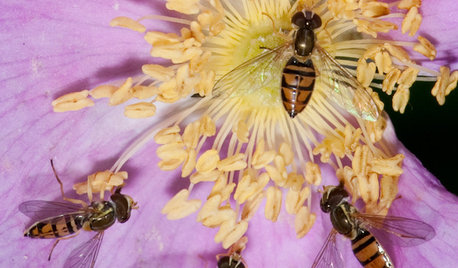
Hover (syrpid) flies: Primarily consume aphids, mealybugs and young caterpillars.
Lady Bugs: Eat the eggs of many pests and also consume aphids, asparagus beetles and Colorado Potato Beetle larvae, bean beetle larvae, spider mites, scale, whiteflies and lace bugs.
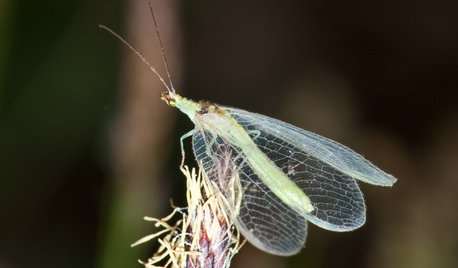
Lacewings (aka Green Lacewings): Insect eggs and aphids, asparagus beetle larvae, caterpillar eggs/small caterpillars, some scales, mealybugs, spider mites, mealybugs and corn earworms.
Minute pirate bugs: Eat insect eggs and aphids, very small caterpillars, scale, whiteflies, spider mites, Mexican bean beetle larvae, and lace bugs.
Parasitic Wasps: Prey upon a wide variety of insects, including aphids, beetle larvae, bagworms, cabbage worms, cucumber beetles, cutworms, gypsy moth caterpilars, leaf miners, tent caterpillars (aka webworms), whiteflies, tomato and tobacco hornworms, sawfly larvae, bean beetles and squash vine borers.
Tachinid flies: Prey upon caterpillars of all kinds, Meican bean beetles, eatwigs, four-lined plant bugs, squash bugs and cucumber beetles.
If you don't have any beneficial insects that you know of, try planting to attract them. Or, you can purchase homeowner size packs of some beneficials and release them.
And, don't forget that there are other beneficial creatures around, including birds, turtles, toads, lizards and frogs. You can attract them to your garden beds by placing small pans of water (a flower pot saucer is the perfect size/depth) in the garden for the reptiles and amphibians and a bird bath for the birds.
Dawn
Comments (39)
 17 years agolast modified: 11 years ago
Dawn, last night I was cleaning out my rose bed and pulling arms full of linaria (toadflax). I found a baby preying mantis. I was so excited. It's been two years since I saw one and that one was an adult. I hope he found somewhere else to go, I cleaned out that whole area. It was looking too wild for the front yard.
Lisa

Okiedawn OK Zone 7
Original Author17 years agolast modified: 11 years agoLisa,
You know, if you have one baby praying mantid, you probably have dozens someplace because oodles of them hatch out at once. They're one of the best predator insects, except for the fact that they will cannibalize one another (a true game of "Survivor").
I can't imagine your yard looking wild. Lovely? Cottage garden-y? Yes! Wild? No. LOL
My front flower border is looking a bit unruly, especially the hollyhocks which are about 7' tall and being blown around by the wind we've been having. Maybe I'll work on that bed tomorrow or Monday.
Today is my day with our 'borrowed' 2-year-old granddaughter who is here for the day (after a 2-wk trip with her mom and her mom's family to Florida and Disney World) and before she's off to spend part of her summer with her dad in Texas. I have had all the fun in the world with her, including about 2 hours in the wading pool and then coming inside to watch "Yo Gabba Gabba" and "Toot and Puddle". Do we know how to live it up here, or what? Her main concern from the moment I saw her this morning was to go 'swimming', so 'swimming' it was, to the extent that you can swim in about 12" of water. We did a lot of splashing though, and I have the wrinkled prune feet to prove it.
Dawn
Related Professionals
Elkton Landscape Architects & Landscape Designers · Greensboro Landscape Architects & Landscape Designers · Florence Landscape Architects & Landscape Designers · Kalamazoo Landscape Architects & Landscape Designers · Chatham Landscape Architects & Landscape Designers · Tupelo Landscape Contractors · Jackson Landscape Contractors · Corpus Christi Landscape Contractors · Taunton Landscape Contractors · Lake Havasu City Landscape Contractors · Victorville Landscape Contractors · West Palm Beach Accessory Dwelling Units · Saginaw Accessory Dwelling Units · Youngstown Accessory Dwelling Units · Portland Accessory Dwelling Units- 17 years agolast modified: 11 years ago
Dawn...
This was, (again), another great study. I read this and googled info for images of bugs I wasn't familiar with. I have been finding both beneficial insects as well as some that are munching my Grape Hyacinths, and even the lemon balm right beside it. Tiny green hopper bugs with an upturned rear end. Couldn't find a picture of them, but I guess they're not going to destroy the entire plants before they get well established. Not a lady bug or other benefical in sight. I hope somebody gets hungry soon for a little green bug snack.I'm starting to be like the bug police and noticing every small detail of what's going on in the garden. And enjoying every minute of it, learning things I didn't know. For example, I didn't know that fireflies were a predator bug, and I have lots of them around the place at night. Nor did I know that Hummingbirds also eat bad bugs. I was happy to learn they like red Cannas, as I have about a 40 ft row ready to bloom. And I am thinking of getting some Hummingbird feeders after all!
I have been planting beneficial companion plants and flowers all over my veggie garden, but because of the heavy spring rains and late planting, not too many of them are well established and blooming. On the plus side, nothing much seems to be bothering the tomatoes, or any of the other things, except for the okra, of all things. This year I planted a new variety and something keeps nibbling on the seedlings, sometimes the entire leaf. I planted a bunch more of my usual, Clemson Spineless, to see if that would make a difference.
I am happy to report I have my lasagna garden well under way, and the first layer of cardboard, grass clippings and compost down, and ready for the next layer.
The son has the entire garden layed out with the pvc soaking setup. It's not quite perfected yet, and have some more work to do on it, but I am well pleased with the overall progress we are making on the new gardening system!
Also, we are working on making a good enough berm to hold
back the spring "flooding of the Nile" into the garden area. I am so hopeful that's going to work that I've been transplanting earthworms into the formerly drowned out and barren areas of the garden...I must say, your info has been a real godsend. I don't know how you find the time or energy but I for one am eternally grateful and appreciative!
Barbara
- 11 years ago
I sowed my buckwheat seed this weekend. Last year I waited almost too late, so this year i decided to get a jump on it. I have had little green buckwheat seedlings all winter in the garden
 11 years ago
Seriously? I think that's awesome. I'm planting bunches this year. buckwheat will be everywhere amongst them, if I can. I love how it composts very quickly into the soil even those that got big over last summer.
- 11 years ago
Any variety of cowpeas. Purplehull, crowder etc... We had oodles of bumblebees, honey bees, and every other kind of stinging flying critter feeding on my pruplehull peas last year. They were so focused on the pea plants that they didn't even seem to notice us. We harvested by working around the bees.
 11 years ago
That's a good idea Johnny. I remember when we picked peas one summer in shamrock there were an abundance of everything flying. They never bothered us though.
- 11 years agolast modified: 11 years ago
You can take out some wicked bermuda grass which doesn't do much except feed june bug grubs and replace it with native prairie grasses and plants. Of course, the toads do like the june bugs but beyond that I can't applaud bermuda for any reason.
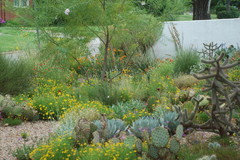
This yard buzzes with activity each year, is much more colorful and needs no mowing. I got rid of all the lawn in this inner city sanctuary and its now fairly self sustaining. Oklahoma has some of the best prairie grasses and wide variety of species of native plants on earth and we unimaginatively dig it up to lay boring, mono culture lawns as the city expands, spraying chemical and mowing as we move ever outward. Its ridiculous to watch prairies disappearing. I don't grow vegetables, just natives, but it would be a benefit if I did. Just think of the savings if those businesses building on the outskirts of the city would keep a remnant of prairie instead of planting and up keeping yet more bermuda lawn around their parking lot.
This prairie native trend is a modern up and coming one in other parts of the world but around here many people don't appreciate what grows commonly all around us.
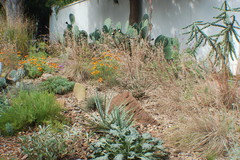
.
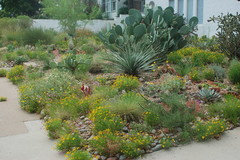
- 11 years ago
Hey, TxR. Was wondering if you were still around.
I push the envelope with allowing all to grow in spring until my husband gets nervous. Then, I only let him mow the front yard leaving the rest a little longer. Even then, I mow around the tall clovers, sometimes, leaving the blooms for the bees. I love love love your garden. I hope to get started on my fence line this year.
. - 11 years ago
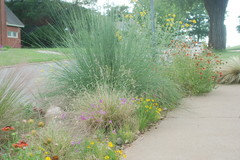
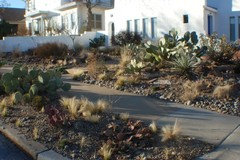
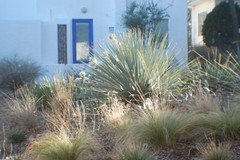
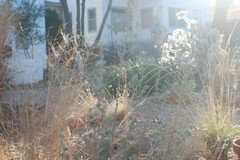
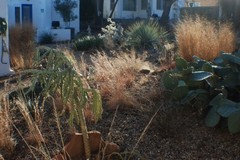
Hi Chickencoup, yea, I'm still around. I've been adding native grasses of late. I decided I need a better ratio of grasses vs forbs and they sure make nice winter interest as you can see below. I shot these a couple weeks ago on a warm nearly 80 degree day like we are lucky in Oklahoma to get. These were shot right before starting the big late winter cut back, I hated doing it but things are starting to green up and that dead foliage would soon look very tired.
A line of Giant Sacaton along the fence was cut down and that was the worst to do, a very large grass but it was starting to green up. The hardy annuals come up in fall, winter over green and will be taking off real soon, also the hardy perennials are leafing out or sprouting new growth at the bases so I cut many back, signs of spring were EVERYWHERE. Grasses have made a positive addition and I'm really into them.
I haven't cut back the switchgrass yet since its still dormant and looking so nice but I added a few new ones last fall along the west border, so pretty, they start blooms in July and hold on to them looking quite decorative until you cut back in late winter or spring. The bottom photo tall grass is switchgrass. I also added a Big Bluestem and some Indian Grass last fall. I'm pretty excited to see how they do this year.

- 11 years ago
That is superb. And the landscape goes with your house's architecture. Are the rocks heat reflectors or just decorative?
- 11 years ago
The gravel melts the snow quickly and they reflect heat which is OK because most of what I grow will take our inferno summers without a whimper. The weeds are now desirable selected ones for the most part, I used to have a lot of undesirable weeds with a lawn but I nip anything hopping over from the lawn next door that dares to enter here. The wild plants have filled in and naturalized, many are low growing generous seeders that serve as undemanding, colorful, long blooming fillers. Stuff like Helianthus 'bitterweed', Purple & White Winecups, Missouri Primrose, Flame Flowers, Lazy Daisy, Liatris, Fetid Marigold, Desert Marigold, Hairy Golden Asters, Blue Grama Grass, Little Bluestem, Snakeweed, Damianitia, Purple Prairie Clover, Indian Blanket, Artemisia and several other natives make great low growing drought hardy lawn substitutes and have naturalized where I once fought crabgrass, dandelions, henbit and other common lawn types of weeds and watered struggling bedding plants each summer like a slave. Prairie weeds are much better all around.
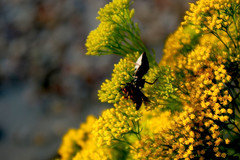
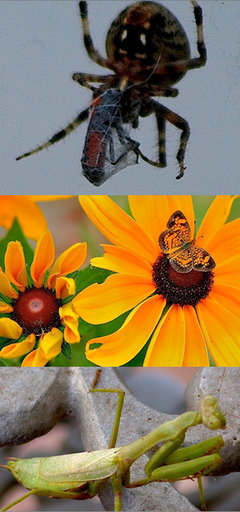
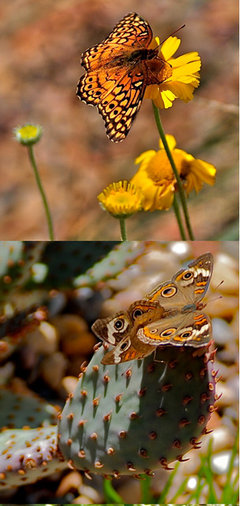
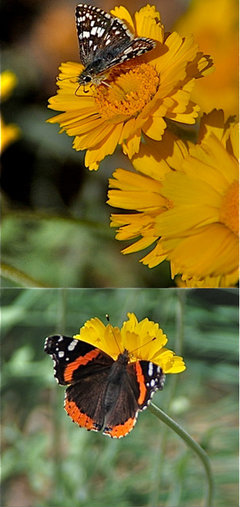
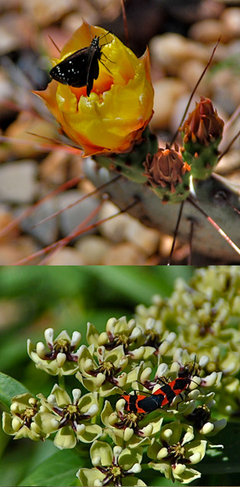
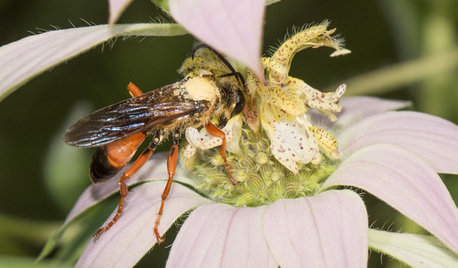
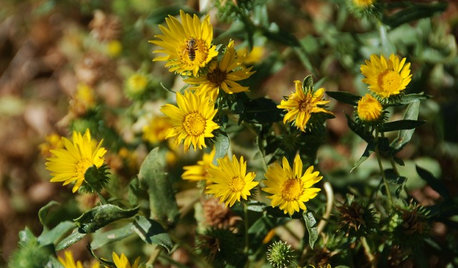
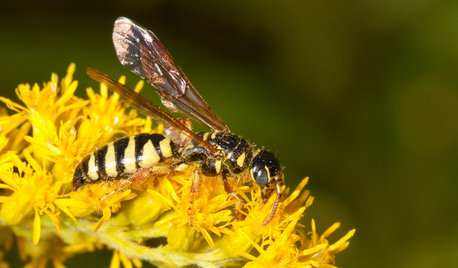
Here are a few visitors.




- 11 years ago
Superb. The photos are fantastic ! I've bookmarked this so I can reference it later. I'm glad you wrote out the species. I was going to ask. lol And, honestly, I was looking up native grasses, yesterday. I really think many of them are growing in the yard or nearby (like the bluegrasses). I'll need to do some type of ID when they're in. Hopefully, I can transplant many and keep it weeded. They should establish quickly. I'm interested in the bluegrass, especially, because the root systems are deep and will provide erosion control. Fantastic and easy landscaping.
- 11 years ago
Ugh, it's time to cut back the grasses? Maybe next weekend I can get out there and do it. So many years I drag my feet too long and it up chopping the top of the new growth. I am really, really hoping all this snow/cold weather will make some poppies pop up soon.
Okiedawn OK Zone 7
Original Author11 years agoLisa, My poppies were popping up from late January through mid-February, but I haven't seen any new ones since the weather cooled off. I bet yours and mine will start popping up again as soon as it gets a little sunnier and warmer than it has been this weekend.
 11 years ago
For someone like me researching this later,
('Later' is whenever we're buying/getting/looking for new plants/seed ! :) )
--Here are some regional polinator guides to download, based on region, that have lovely photo covers. Take a look at the varied ecosystems in just one state, Oklahoma, for instance, I think there's more than 3 guides.
http://www.pollinator.org/guides.htm
I hadn't heard of Pollinator Partnership before. Seems like a good source to spread around. 11 years ago
Okiedawn OK Zone 7, Do you know if any of these beneficial bugs you listed go after honey bees? I'm thinking about adding an apiary (beehive) to my land.
Okiedawn OK Zone 7
Original Author11 years agoMany predatory insects are generalists and will, therefore, prey on anything they find. It's a dog-eat-dog world, you know.
Some predatory insects go after bees fairly aggressively, including Wheel Bugs/Assassin Bugs and Robber Flies. However, I often have tons of wheel bugs and robber flies in my garden, along with many kinds of bees day in and day out, and I rarely see a robber fly flying off with a bee. I often see Assassin bugs positioned near flowers, and I know they'll catch a bee if it comes close enough, but I seldom actually see an Assassin Bug with a bee. Maybe the honey bees are smart enough to see the assassin bugs and stay away from them.
Praying mantids are generalists who will eat just about anything, including other praying mantids, and I see them get a bee every now and then, but by every now and then I mean maybe once a year.
Dragonflies are said to go after honeybees occasionally, but I've never seen that here and I have tons of dragonflies, damselflies and bees.
Plenty of non-beneficial insects kill honey bees including certain mites that infest their hives, velvet ants (aka cow killers), some ants, wasps and hornets (I see hornets get a bee occasionally but don't see wasps get them). Other beneficial insects you'd like to see in your garden, ideally, like frogs and lizards may prey on bees.
Then there's undesirable animals that prey on bees like skunks and bears, and some kinds of birds.
No matter what you do, you'll never be able to keep 100% of your honey bees safe from all the potential pests in their environment as they will encounter these pests everywhere they go, not just in your yard or garden. That's just part of being a beekeeper.
If I kept bees, I'd worry more about the pests that infest their hives, like the mites and wax moths, and not so much about natural pests in the environment. You can't control the entire ecological system around your bees.
Beneficial insects used in a garden to control pest insects are a very important part of gardening in an organic and sustainable way that won't harm your bees, and helps you avoid both organic and synthetic pesticides, many of which will harm your honey bees.
Hope this helps. If you have beekeeping questions, you can post "bee question" in a subject line and ask George, who posts here as MacMex. I am almost positive he is a beekeeper.
- 11 years ago
I for one think that TR's yard is gorgeous. I agree with him about monoculture bermuda. I love the natural xeriscaped look, but it is hard to sell. Everyone wants the atlas cedars and big pretty water gulping flowers. Even in his yard, a gorgeous garden pond or fountain could be installed. Beauty is in the eye of the beholder I guess.
- 11 years ago
Plants for beneficial insects? Hey, the solution is LISA. hahaha She'll getcha hooked up.
- 11 years ago
hahaha, Bon, well, I do have flowers, and flowers help attract beneficial insects! Speaking of, I harvested echinacea and tithonia seeds last night.
- 11 years ago
Thats weird. I went back & edited my post to submit a photo we just took and my entire post disappeared without me deleting it. Also, I find I can only upload one photo, if I add another the first photo just disappears along with the message. Is the site acting up or what? I don't feel like re-typing my message.
- 11 years ago
Houzz sent me an e-mail saying Dan liked my comment. I guess its now hovering somewhere in inner space or outer space but at least someone saw it before it up and disappeared. Thanks Dan.
- 11 years ago
Okiedawn,
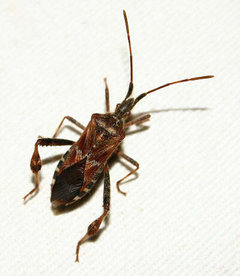
I have been seeing a bug here that is built like a squash bug but it has big knot looking growths on their hind legs. Would you have any idea what kind of bug they could be? I don't know how to post pictures.
Okiedawn OK Zone 7
Original Author11 years agoThat sounds like a wheel bug and it is related to the stink bug. I'll link a page below that has a photo. They are very beneficial and are terrific garden helpers, but occasionally they'll try to get a small bee. If the one I link isn't the one you're seeing, let me know and I'll rack my brain for something that looks similar. Oh, and watch out for them. If you get too close to a wheelbug, it will bite you. There is a related conenose bug, aka the kissing bug, that spreads Chaga's Disease, but it usually is found south of Oklahoma.
- 11 years ago
These look some what like the ones I see, only these are darker like the squash bugs, and have the black knots on their hind legs. If they are mashed the smell much like the squash bugs. They look different from a squash bug only with the long hind legs kind of like a spider or the wheel bug but have the sack or knot just above the hock on their back legs. Thank you for trying to help.
 11 years ago
Last year we had a bumper crop of wheel bugs. I have to say, they creep me out.
Okiedawn OK Zone 7
Original Author11 years agoI hate leaf-footed bugs and hope that's not what Auther is seeing. They will strip plants of their leaves in no time at all. I generally have scissors in my garden tool bucket, and every time I see a leaf-footed bug in my garden, I snip it right in half.
- 11 years ago
chickencoupe & okiedawn,
Thanks for all the help. I was thinking that it might be a Wheelbug, but now I think it might be the Leaf-footed bug. It has the sacks or what ever they are called on their back legs and they are about the right color. They look like they could be the Squash bug's first cousin. When I mashed one it smelled just like a Squashbug. So I guess I should kill everyone that I see from now on?
Okiedawn OK Zone 7
Original Author11 years agolast modified: 11 years agoAbsolutely. Leaf-footed bugs are not your friend. If you learn to recognize and kill them while they're young, they won't live long enough to do a lot of damage in your garden.
I'm going to link a page that has a photo of the immature leaf-footed bugs in the center near the top of the page. When you see a bunch of little bugs like that clustered together, they generally are leaf-footed bug nymphs and you're doing your garden plants, especially tomato fruit, a big favor by killing them all. If you see a similar-looking bug that is alone on a plant, that usually is the nymph of an assassin bug/wheel bug that is beneficial. I always leave the lone ones alone because they're the beneficial ones, but I kill the ones I find in clusters. Usually I start seeing the wheel bug and assassin bug nymphs in May, but I usually don't see leaf-footed bug nymphs until June (or even July in a really good year, and this was not a really good year).
With pests like squash bugs, stink bugs and leaf-footed bugs, I try to kill all the young ones I see early in the season in order to keep their population growth slowed down. Stink bugs and leaf-footed bugs are incredibly damaging to tomato fruit, and you know what a tomato maniac I am. I'll share my garden space with lots of pest insects and leave most of them alone, knowing the good garden helpers like toads, frogs, lizards, birds and beneficial insects will get them, but I never miss a chance to kill a squash bug, stink bug or leaf-footed bug.
- 11 years ago
chickencoupe & okiedawn,
Thank you for all the information. I will keep this in mind. The nymph look like the squash bugs they are gray color and these are a orange color. I had a lot of Assassin Bugs last year but haven't seen any this year.




User