Software
Houzz Logo Print
mickey2_gw

New to worm composting

20 years ago

I so glad I found this forum.

My son bought me a can o worms which I set up in the beginning of August with 1000 worms -- allegedly.I have read on this forum where some people don't like the can o worms and others do.

Right now I don't know how many worms I have. I don't think there are 1000. But I do have large and small red wrigglers, so babies must have been born. As for their eggs I never thought to look for any and now I want to find some. Where are the eggs usually found? In the bedding material?

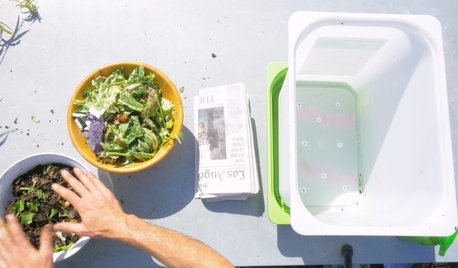
My tower came with coir bedding -- very nice. I put food in the second layer and cover it with a damp piece of burlap -- which the worms have already eaten through and I am now on the second burlap cover.Should I continue feeding the worms this way or would it be better to use shredded paper to cover the food? Would that make for more bedding in the second tower layer?

My container is kept in the cellar and I check out these creatures each day. Right now I think that they do not like savoy cabbage since they haven't touched it.

Should I get rid of the lettuce?

I would like very much to increase the population of worms.Should I buy more worms? I see they are listed on eBay at less than I what I originally purchased mine for.

And how about worm tea? Is it complicated? It would be great for my garden but I imagine I would need a very productive worm composting system to be able to start making worm tea.

Thanks for any help. I'm sure I'll be asking more questions soon.

Mickey2

Comments (14)

  • 20 years ago
    last modified: 11 years ago

    Congratulations on your new worm farm! You don't need to buy any more worms -- in about 6 months or less, you won't believe how many you have. 1000 is a fine start and they will multipy like crazy.
    I have a COW and it works just fine, despite all the bashing it gets on this forum. You are already using coir bedding, so you probably don't need the shredded paper just yet. But eventually, you'll need to supplement the coir with something, and the paper is good. The COW comes with instructions that say you don't need bedding after the coir is gone, but that's not true (maybe that's why people have so much trouble with COWs). You'll always need bedding to keep a good moisture and aeration balance in the bin. I put mine in dry, because by the next day it's wet just from being in the bin (COWs tend to be rather wet).
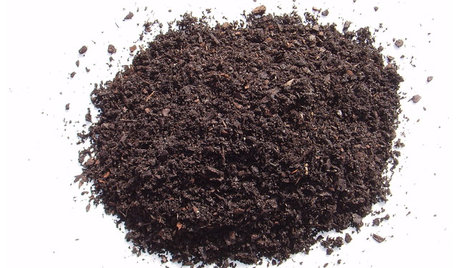
    The worm cocoons look like tiny yellowish pods a little bigger than the head of a pin. You'll find them in the worm castings, mostly, where they stand out against the black loamy stuff.
    Don't be in a hurry to add the next tray. Let it get to the point where it's so full you can't close the lid, then transfer some of the rotted gunk (and worms) to the next tray, add more bedding and some food, and you're good to go. Each new tray is slow to get up to speed because most of the worms are still below. Be patient.
    Worm tea: not difficult. Take some castings and soak them several hours in water. How much? You'll hear wildly different recipes, but probably anywhere from 2 T. to 1/2 cup castings per gallon of water.
    Good luck!

  • 20 years ago
    last modified: 11 years ago

    I also have many COW's. Novemberguest's info is right on. As for the cabbage..any cruciferous material, (ie cabbage, celery), takes a very long time to decompose and therefore is not available as food for the worms for a long time. If I have alot of that stuff, I will freeze it first, thaw and serve. Check out this link below for some good images of cocoons. They are about the size of a BB and start out lemony colored and darken to a burgandy before hatching.

    Here is a link that might be useful: Standing Horse

  • 20 years ago
    last modified: 11 years ago

    Thank you both, I feel more confident now and sure that I'm doing things correctly. The images of the cocoons were great -- good macro lens. I still can't find any, perhaps it's too dark in my cellar for me to see them. When I was checking them again today (which of course I do every day) I saw a lot more little wigglers so something is definitely going right
    I've picked up a lot of information from all the postings on these forums.
    I love MY worms and can now see me getting another COW.And I can't wait until they really start "going crazy" and multiplying.
    Any more suggestions on what to feed them? I've read "don't give them eggshells" and I've read give them eggshells -- of course I rinse and crush them. The refrigerator idea is good I can see where it helps to break down the food.

  • 20 years ago
    last modified: 11 years ago

    I put in lots of eggshells (crushed, though I hear even that is not necessary, as the calcium will leach out of them), lots of coffee grounds and filters, used tea bags, used napkins & paper towels (more bedding!)and the usual fruit and vegetable scraps. Obviously no meat, bones, or dairy, and they're not too fond of citrus rinds. I also stay away from anything sugary, as it seems to attract the ants in my yard.

    I have yet to figure out why this whole worm thing is so endlessly fascinating. I find myself daydreaming about my worm bin in times of boredom or stress, which is really worrisome, I think. It's not like I don't have a life!

  • 20 years ago
    last modified: 11 years ago

    Well What I do is When I have a lot of left over salad or veggies I put it all in the blender with a little bit of rain water.. I blend it fine then pout it the worm bin.. I cover it up a bit and pronto the nexts day they are all a busy eating up what i made for them..It helps them some what not to work so hard...Every one needs a break..lol...EVEN WORMS...lol

  • 20 years ago
    last modified: 11 years ago

    Novemberguest - You don't know how relieved I am to hear you give the thumbs up for COW. My son is buying me one for Christmas and so I thought I would check out this forum. To my dismay, I read that the COW was not much good.

    This will be my first wormery and I'm pretty excited about it. Your advice is so valuable. Thank you so much for your positive imput.

    Sue

  • 20 years ago
    last modified: 11 years ago

    I've had a COW for about 5 years now, and while it can be a little tricky, it can also be easier than big plastic bins. My tricks for success:
    ---I tend to keep the bottom-most tray (the one right above the catch basin with legs) full of bedding only. Worms and bits of food and compost fall through from the middle tray into the bottom tray, but that's OK. I found when I treated the bottom tray like the others, it had a tendency to shed too much vermicast and worms into the catch basin, which would then clog up the drain, and could start to smell if I wasn't paying attention.
    ---I always leave the drain in the catch bin open, with a coffee can underneath to catch any drippings. I don't get a lot of liquid leachate, but I try to keep my COW a little on the dry side (it once got too wet and stagnant and went anaerobic, and I WILL NOT let that happen again).
    ---I always have the three trays in place in the COW. Top tray (tray #1) is the "active tray," where I bury food wastes in bedding. Middle tray (tray #2) is either a previous active tray that was full (I call this the finishing stage), or is just full of damp bedding material if the COW is a new set-up. Bottom tray (#3) is just bedding material, usually dry--it will get damp/wet over time.
    ---I keep feeding the active tray until it gets "full." What does that mean? I pocket feed every 2-4 days (depending on how much stuff we're producing in the kitchen). I usually start at "12:00" in the bin, and feed at "1:00" and "2:00," etc, all around the tray. When I get back to 12:00, if there is no recognizable food waste, I start back around the circle. If there is recognizable food waste, then the top tray becomes the middle tray.
    ------If there was stuff composting in the previous middle tray, it should be done by now (hopefully). I scrape out the vermicompost and feed my tomatoes (or horde it until tomato season). Then I fill this tray with fresh dry bedding, and this becomes the bottom tray. The previous top tray becomes the middle, and the previous bottom tray (which had only bedding) becomes the top tray.
    ------If the middle tray had only bedding, just switch 1 and 2, so the finishing stuff is in the middle, and new or slightly-dripped-on bedding is in the top tray.
    ---When rotating trays, be sure not to get them too full. I once put a "full" tray in the middle position. It had too much stuff in it, so I just squished the top tray down on top. BAD BAD BAD idea. It got too compacted and went anaerobic.
    ---When in doubt, add more dry or barely-damp bedding. I use a mix of coir (when I have it), shredded newspaper (my $5 strip paper shredder has paid for itself many times over), and fallen leaves (when I remember in the fall).
    ---I add lots of crushed egg shells for several reasons. I've read that worms need calcium to lay eggs. I've also read that fruit flies/fungus gnats prefer a slightly acidic environment, and the calcium carbonate in egg shells will raise the pH and buffer the system without throwing it out of whack. Since I've done this, I haven't noticed a single fly in or around the bin.
    ---To further prevent fruit flies/fungus gnats (whatever they are), keep your food waste covered with a layer of bedding.
    ---Remember that worms don't eat food waste--they eat the stuff that is decomposing the food waste. Big chunks of things that take a long time to rot will sit in your bin for a long time. I've started freezing things like cabbage, squash rinds, melon rinds, etc., and the like. I also try to increase the surface area of foods by chopping or tearing them slightly, without going to too much trouble.

    Just remember, stuff will rot. Humans have gone to extreme lengths throughout their history to prevent decomposition, but it will happen. Worm bins are just a specialized system to promote rot and produce high-quality compost in the comfort of our own homes.

    Good luck!
    Emily in snowy Fairbanks

  • 20 years ago
    last modified: 11 years ago

    You're more than welcome. I'm not the only one who finds the COW just fine to work with. Just make sure to keep bedding in it at all times, don't overfeed, and don't let it get too wet. Also, don't add trays until the last one is full-to-overflowing, which means the black compost will be well above the inner ribs. (For me, each tray takes about 3 months before I add another, but when you're starting out it will probably be longer.) When you're ready to harvest, expect to still see worms in the bottom tray. Place it on top with the cover off and slowly remove the castings -- the worms will crawl down into the lower trays to avoid you (nothing personal).

    Those are the big secrets. Whenever you have more questions, feel free to post. Good luck!

  • 20 years ago
    last modified: 11 years ago

    Emily Rocks! That was such great info...a perfect example of how many ways you can do this. I have a cow-type thingy as well, and am still finding my 'groove' with it. My lesson was not to put a cup of water daily in it (like instructions suggested). I never need to water my bins, I add my shredded paper in dry, and I live in sunny So Cal. I do feed my worms juicy food though.

    Susan, I'm still grinning over 'freeze, thaw...and serve'! Ever since I learned you were not a man in bad shorts, I have pictured you as the June Cleaver of Worms...You don't dissapoint!

    I'm going to try Emily's method now. In checking my bin tonight, the collection bin full almost to the spigot with what looks like gooey castings and worms. It doesn't smell at all so I haven't had to deal with it, seems like a healthy area. However, I would rather it be incorporated into a active bin. So If I understand correctly I am going to try:
    1. emptying the current collection bin (worms and gooey castings) Probably will start a new bin with this stuff if it is not nasty. 2. Put shredded dry paper only into lowest bin. 3. Put damp layer of shredded paper into middle bin, 4. Put my current active and almost done bin on top and stop feeding.

    Any last advice is great! Also, I don't see my stacking system handling near the amount as my rubbermaid...any wisdom?

  • 20 years ago
    last modified: 11 years ago

    The only trouble that occurs to me with Emily's system is that you really only have at most 2 working trays instead of three. I am wondering -- why not just fill the collection bin (the lowest area with the spigot) with shredded paper? If you put a lot of loose bedding into the area that normally collects gunk and leachate, it would probably keep the spigot and vents from getting totally blocked, no? Then you could use the upper three trays in the normal fashion. Emily, see any reason why this wouldn't work?

  • 20 years ago
    last modified: 11 years ago

    Novemberguest--
    I haven't tried to fill the very lowest part of the COW with paper. I was afraid that the spigot would definitely get clogged if the paper started to compress and get wet, and after my anaerobic experience, I never want to go through that again.

    You do lose a working tray with the technique I've used, but for me this inconvenience is offset by ease of cleaning and collecting vermicompost. Plus, my COW is in a fairly warm area (the basement stays about 70 degrees F), and I try to only put in things that are easily composted. Since my COW is only working at 2/3 capacity, I sometimes have too much kitchen waste, so the excess goes outside to the main compost pile (which at the moment is frozen solid).

    I have also, when I'm running above capacity, placed almost finished stuff on top of 2-3 inches of dry shredded paper in the bottom tray. This gives the almost finished stuff a place to finish for an extra month or two, and doesn't dump vermicast into the bottom collection bin.

    If you try to put paper into the collection bin, let us know how it works! It would be nice to have my COW at full capacity for the winter months, at least.

    Emily in ridiculously warm Fairbanks

  • 20 years ago
    last modified: 11 years ago

    swampboogiequeen..
    Susan, I'm still grinning over 'freeze, thaw...and serve'! Ever since I learned you were not a man in bad shorts, I have pictured you as the June Cleaver of Worms...You don't dissapoint!
    I like to think of myself more as Martha Stewart's evil twin..:D

  • 20 years ago
    last modified: 11 years ago

    Emily, I think I will try putting a piece of landscape fabric over a bit of hardware cloth, then put that combination over the spigot to keep it clear before filling the collection bin with shredded paper. I'll let you know how it works.

  • 20 years ago
    last modified: 11 years ago

    ....considering an 'evil' Martha....Oh wait...you have lots of kids too!

    Imagine if Martha had children....WWMD....Not a good thing!

Sponsored
The Steele Group
Average rating: 5 out of 5 stars1 Review
Industry Leading General Contractors in Franklin County, Ohio