Software
Houzz Logo Print
tonym_gw

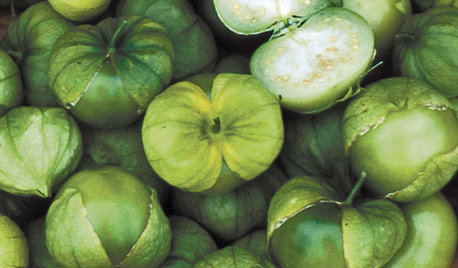
Tomatillos

19 years ago

Planted tomatillos for the first time this year in hopes of making green salsa. At present, I have three bushy plants, each about 3-4 ft high, with lots of yellow flowers, but no fruit. The weather has certainly been hot enough, and the plants all appear healthy. Are these a traditionally late yield?

I thought that it could have been the lack of bees to pollinate the flowers, but I have regular tomato plants in the same area that have already yielded the first red tomatoes of 2007, so I know that's not the likely problem. Plus, they get at least six hours of sunlight.

Any information or advice on successes or challenges with tomatillos would be appreciated.

Comments (8)

  • 19 years ago

    I don't understand that. I am a zone colder than you and I have two plants, both the first time for me, and they are loaded with both flowers and fruit-in-husks. Some of the husks are quite full and starting to split, but not brownish yet and none have fallen to the ground. Maybe there is something to the male/female plant requirement that is missing here, although I am still unsure about that. I am sorry yours haven't fruited yet, it seems to me they should have. When did you plant them, and did you have pre-started seedlings or did you seed directly? You could just be behind timewise.

  • 19 years ago

    Maybe there is something to the male/female plant requirement that is missing here, although I am still unsure about that. I am sorry yours haven't fruited yet, it seems to me they

    ****

    There are no male and female tomatillo plants.

    Each plant has perfect blossoms just as do tomatoes, but with tomatillos the blossoms are self incompatible meaning that no fruit set occurs. But pollen from another plant can do the job.

    It's been years since I last grew tomatillos but I've read here and there that for lots of folks they sometimes do take a long time to set fruit.

    (I thought that it could have been the lack of bees to pollinate the flowers, but I have regular tomato plants in the same area that have already yielded the first red tomatoes of 2007, so I know that's not the likely problem. Plus, they get at least six hours of sunlight.)

    Tomatoes self pollenize the majority of the time and no insect pollinators are needed, but to transfer pollen from one tomatillo plant to another, b'c of the genetic incompatibility, an insect pollinator would be required.

    Carolyn

  • 19 years ago

    I tried to grow them last year and had problems. The plants were loaded with blossoms, then a few fruits came on in their cute little packages. Then all at once.. the few fruits I had and all the blossoms fell to the ground. I didn't try them this year.

  • 19 years ago

    Tomatillos grow well here, hot & dry. I have lots of volunteers from last years crop & the ones doing the best are getting quite a bit of water whist the ones which came up in the paths with no water are not producing. I think they need a lot of compost & water. Also you need to have several plants & patience. They may take several years experimenting with to get it right in your climate & soil. I pick all that are turning yellow (before anything else eats them) then they go into the food processor & a can of 'el pato'hot sauce & garlic, Sooo good! Here now, try lots of aerated compost tea, you must feed them, nurture them like you would a orphaned pet.

  • 19 years ago

    I have a veritable plague of tomatillos here, and from whence most of them came, I can't imagine. I planted two or three plants and have at least twice that many that came from somewhere else. These are the small, extremely sweet varieties that exude so much sugar sap between the skin and the husk that you can literally stick the small gooey fruit to a wall. It's like they're dipped in corn syrup.

    I was unaware that they had to have another plant with which to pollinate, but that explains why one plant is away from the rest and despite being about 4' tall, has very few fruit.

    I have a purple variety planted, but I don't remember which one. There's no purple fruit as such yet.

  • 19 years ago

    I'm having issues with Tomatillos too. I have two plants right next to each other. They are about 4 ft tall, loaded and I mean LOADED with flowers. The bumble bees love these plants.

    Not only do I have many flowers but I have many little husk things too. But lately I am seeing a lot of those husk balls on the ground. They are just dropping off left and right. Many have little marble sized fruit in them.

    I don't know what the deal is. Frustrating though. Anyone think I might need to give them a dose of alfalfa tea with some other stuff like liquid kelp or bone meal or something?

    Thanks,
    Michelle

  • 19 years ago

    Thanks all,
    Great advice and insight. For the record, I started them from seed (Parks) back in Feb. Have brought them along this far, and will continue to feed with M-G. Maybe, as shellva mentions, some other some other fertilizers could do the trick. (Anyone ever hear of AGgrand?) Will take a watch and wait approach, and keep good records. I relish a challenge!

  • 19 years ago

    My best year growing tomatillos was when I started them indoors about a week before starting peppers (which is usually 2-3 weeks before starting tomatoes.) I transplanted 2 of them to one 20 gallon bucket with a 5ft tall CRW tomato cage when they were about 18-24" tall and already Y'd out. I treated them as tomatoes and fertilized with high phosphorous fertilizer like Miracle-Gro 15-30-15 and kept tucking them back into the cage. I had hundreds of fruits 2 to 3" diameter busting out of their husks in mid-late August from a Memorial Day planting.

    Alfalfa tea is all nitrogen, liquid kelp is all potash, and bone meal takes a long time to become available. For tomatoes, peppers, tomatillos & nearly all fruiting plants, go easy on the alfalfa & fish emulsion and heavy on the phosphorous. Save the alfalfa & fish for lettuce & leafy vegetables, and the kelp for giant pumpkins...

    Hope this helps.

    Mark