Software
Houzz Logo Print
momofjandj_gw

HELP...my vine is stripped!

19 years ago

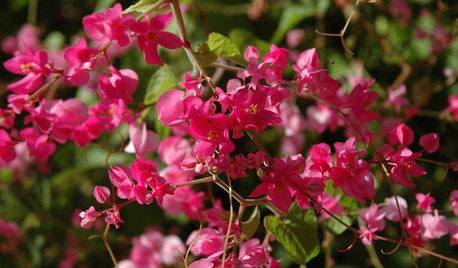
I just got home yesterday from a 6day trip to San Antonio to visit my best friend. All of my plants looked like they had grown enough for weeks EXCEPT my coral honeysuckle...

Before I left, it was really growing up the trellis and full of leaves. It caught my eye when I saw the vine but NO leaves!! What is going on?! What happened to it? There are only leaves on the very bottom of the plant!!!

Comments (19)

  • 19 years ago

    Could it have been bagworms? Though they leave pretty apparent evidence of their presence. They're quick about defoliating a plant.

  • 19 years ago

    This same thing has happened to my coral honeysuckle. I removed a 2" green worm with a tough body and a "horn" I think. There are no bags on the bush which I assume has to be there for a bagworm. What kind of organic treatment can I use, since there may be other worms on it. They blend in with the leaves so I may have more on the lower leaves which they have left alone thus far, just as momofjandj said.
    Thanks!

  • 19 years ago

    That is strange that a tomato horn worm would be eating the coral honeysuckle. I had to trim one of my coral honeysuckle vines back a couple weeks ago because it was getting too heavy for the support. I'm going to have to pull it off the fence this winter and attach a sturdier support. I haven't seen any worms on either of my coral honeysuckles. If it is a tomato horn worm, then just pluck it off and toss it onto the concrete where the mockingbirds will see it and eat it. If you can find them at an organic supply nursery, look for parasitic wasps to release if you don't want to pluck that caterpillar off. Bt spray will also help if it is bag worms, but the bag worms are more prevalent on evergreens.

  • 19 years ago

    Snowberry Clearwing (Hemaris diffinis) feeds on dogbane, snowberry, and honeysuckle. The dark border of the Snowberry's wings is generally much narrower than that of the Hummingbird Clearwing, and the thorax is yellow and black, which explains why it is often mistaken for a bumblebee.

    Carol brought me cutting of Honeysuckle in May and it didn't have any holes in the leaves. Then I started looking and missed 2 of the 4 cats on it. They were only about a 1/4" long
    They looked like the first cat in the link
    I put them out on a bigger honeysuckle
    jolana

    Here is a link that might be useful: Snowberry Clearwing

  • 19 years ago

    Jolana - you are a walking encyclopedia! Did you aquire your knowledge over the years because you are a gardener, or do you have a PHD in botany and bugs? I learn new stuff everyday, but I know I'll ever match you in your knowledge of the gardening kingdom. Thanks for sharing your wisdom.

  • 19 years ago

    Gee, I'll second that. The lady knows her bugs!
    Jim

  • 19 years ago

    The same thing happened to my honeysukle but it was back in late April before all the rain. When I left for vacation, it was fully leafed out with many blooms. Came back a week later and almost every leaf was gone! I started looking for the reason before I even turned the key and went inside the house. I found numerous Hornworm-like caterpillers all over the plant. They were smaller than hornworms but looked just the same otherwise. My honeysukle still is leafless today! :(

  • 19 years ago

    That looks like a hummingbird moth. Is it the same thing?

    I wish I had some of those caterpillars to help get rid of my Japanese honeysuckle. If I could train them to only eat the Japanese honeysuckle and not my coral honeysuckle, we'd be in business.

    Sally

  • 19 years ago

    This is the first year I have had a coral honeysuckle (or any honeysuckle for that matter). Should I leave the stripped vines alone and will they leaf out again? Or do I cut the vine back to the healthy growth? I haven't found anymore 'hornworms" so I am holding off on the BT. Maybe they have already matured into moths. Thanks!

  • 19 years ago

    They are hummingbird moths and Musicalgardener, your plant should re leaf. I done both cut them back a little and left them
    Good luck with it
    jolana

  • 19 years ago

    They are hummingbird moths and Musicalgardener, your plant should re leaf. I done both cut them back a little and left them
    Good luck with it
    jolana

  • 19 years ago

    Here's a site with excellent pics of the caterpillars. I'd love to have some of those. Wouldn't mind losing the foliage on mine for this creature:

    Here is a link that might be useful: Clearwing Hummingbird Moth

  • 19 years ago

    I have yet to see a single caterpillar on my vine and I'm checking it a few times a day!!!
    The only thing I am finding alot of are those stinking webworms. I don't know why they wouldn't enjoy my honeysuckle; they have helped themselves to everything else!!

  • 19 years ago

    I am curious as to why these seem to be desirable. Is it because of the "hummingbird" part? I have never found moths very desirable. Are these hummingbird moths rare? From reading your links, I couldn't find the answers. Maybe I missed something. Thanks.

  • 19 years ago

    I know a lot of moths seem mundane, but there are many, many beautiful moths also. Some of them are huge. It's just that we don't see them as often since many of them fly at night.

    There are many varieties of hummingbird moths other than the clearwings. Most of them hover around the flowers like hummingbirds right at dusk and for me they lend a certain magical quality to the garden when I see them.

    Clearwings, though larger, look so much like bumblebees that they safely venture out in the daytime. I've been seeing a lot of them this year.

    Here is a link that might be useful: Beautiful moths

  • 19 years ago

    I guess it's human nature to like beautiful things, and interesting things, and I find hummingbird moths to fit both those descriptions. To me, they look like a cross between a bumble bee and a hummingbird. Their behavior is very much like a hummer's which is why I think they have that common name, but they look a bit more like a bumble bee, only a bit longer. I see them during the daytime feeding a phlox, butterfly bushes, and other plants that attract butterflies.

    I have been told that plants in the Gallium genus were their larval food source, but it looks like Lonicera fit the bill for them, too.

    Sally

  • 11 years ago

    Yes, ma'am, and here I am to tell you the same thing... years later. I found a dozen Tomato Hornworms on my Coral Honeysuckle. I had noticed all the leaves were gone, but I had just written it off to one of the cold fronts that came through here. But, after finding a dozen of those cats, I realized they were the ones that stripped the vines. Imagine that, I would have never guessed it. Looks like I'll be one the phone tonight or burning up the internet telling all my Master Gardener friends about this. I hope someone else comes on after my note to confirm this as happening in their yard... only because it helps to bump this note back up.

    Who would have ever guessed!

  • 11 years ago

    I've never found them on my Coral honeysuckle (yet), but a few months ago, these two big fat hornworms were eating my Silver pony foot, of all things.

    Since I love hummingbird moths I left them alone so they could pupate. Is your vine stripped? I imagine it will recover, don't you? Let us know how long it takes.

  • 11 years ago

    Silver pony foot, too? Oh my. I had no idea that they had such a diverse appetite. I had a tomato plant about 8' away. I didn't want them getting to the tomatoes. But, I understand your love of all God's creatures.

    The plant is absolutely stripped. The new leaves are about 1/8" long. I plan to relocate this plant and hadn't paid enough attention to it and "The Case of the Disappearing Leaves". With Winter coming, I don't expect it to make a lot of headway before the temps drop again.

    Good to see you on here Roselee.

Sponsored