Software
Houzz Logo Print
ris4b2rd

Wall Cracking = Foundation Problems? Help! - very long

20 years ago

I was planning a major kitchen, bathrooms and laundry room remodel. No structural wall changes, just cabinetry, plumbing, etc.

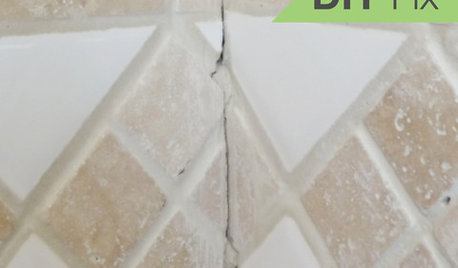
The house is 16 years old and sits on landfill using a post-tension slab. There are a number of sheer walls built into this house as well (which is why we don't want to go through the trouble and expense of making structural changes). From the very beginning the house had "settling cracks" radiating from windows, drywall seams, and radiating from door corners as well (even on the sheer walls). Several doors have always had the "bonus" of closing or opening, which means some of them don't stay right where you put them mid-open/close. Some of the most offending cracks have always been at the seams where the walls meet the ceilings. (these are all cathedral ceilings). We don't use many of the rooms in the house so don't ever hardly go into them. But with this planned remodel, I have gone through and noticed that there are many of these same types of cracks. My concern is that I don't want to invest a large sum of money in remodel if there is a foundation/structural problem I need to take care of. If I have to do repair work, then there won't ever be a remodel in our future.

I called one structural engineer, but he said I need to pay 4500.00 for them to come out and do a soil analysis. He was talking about having to jack the house up and building a new slab on top of the current post-tension slab, and talking a HUGE chunk of money. He also hinted that some people just live with these things. When I grabbed onto that, he steered me back to having the problem fixed now.

All the houses in the neighborhood have slight wall issues, and since I have plantation shutters, it is very obvious how much the windows are out of plumb.

Is this something that can just be cosmetically repaired and continue living there, or should the foundation be fixed. Though the problem isn't that the foundation is falling apart, it's the settlement.

Thanks.. I apologize for the length of this, but haven't been able to sleep for 2 nights.

Comments (4)

  • 20 years ago

    The house may be able to be stabilized with large sums of cash, or it may not. You will need someone to analyze the situation and suggest possible remedies, and if soil data isn't already available (ask at your local building department) it's likely that you will need to have the test done. Shop around for the best price. Then you can make an informed decision based on the cost and the likelyhood of successful repairs. Do not ignore the possibility that the repair may not be totally successful. The repair you describe seems iffy, but it's hard to say without knowing all the factors.

  • 20 years ago

    Thanks jrrr. I was wondering why a soil analysis would have to be done. But now I realize that it is the way to come up with something to resolve the problem.

  • 20 years ago

    ris:
    "The house is 16 years old and sits on landfill using a post-tension slab."
    Why did they postension the slab? Did they expect the soil below to settle further and now the salb must span over the settled areas? If this is the case the salb should be supported on grade beams or someother type of foundation.

    "From the very beginning the house had "settling cracks" radiating from windows, drywall seams, and radiating from door corners as well (even on the sheer walls)."
    Are you the original owners? Some initial settling might be expected. Have you gone through and patched cracks only to have then reform? How long ago? How long did it take for the patches to re-open? Is there a situation where rain/snow/runoff is potentially washing away soil below the building?

    "All the houses in the neighborhood have slight wall issues, and since I have plantation shutters, it is very obvious how much the windows are out of plumb."
    Do the windows operate smoothly? Are the frames racked or is the whole building rotating "out of plumb"

    After 16 years, settlement should be at a slow enough rate where, you should get a decent life (say another 16 years) out of a remodel without throwing good money away. If the structure is still settling at a good rate (where if you patched cracks they are going to reappear in a year or so because of continued settlement) then expensive stabilization methods may be needed.
    HTH

  • 20 years ago

    sdello, yes we are on landfill and in 1990 post-tension slab was the thing to do in this area. What does that mean that the slab should be supported on grade beams? Do you mean they should dig up around the foundation (now that would be an expensive job as it is pretty much cement all the way around the house) and put some sort of pilings into the soil?

    We are not the original owners, but are the first people to live there. The original owners bought on spec to make a profit. The first year the builder would calk things, but then they moved on to their next development and then went out of business under that name. I would say that for the most part all these cracks have been there at least 10 of the 15 years in varying degrees. I used to caulk the ones I could reach, but never touched the cracks where the walls meet the ceiling. Funny thing, until I started wearing my glasses at home, I never even noticed them, but with my glasses everything came into focus. :-\ Some of the patches they originally did have held up the last 12 years or so. Some just kept spreading. I think made a mistake installing plantation sutters on all the windows before the settling stopped or at least slowed down as both sides of the house have sticking problems with the shutters. That was putting pressure on the opening. From the very beginning there was not a straight wall in the entire house and wall sections from top to bottom weren't even the same measurement, meaning left to right. We pretty much have patio surrounding 3 sides of the house, no contact with dirt, and then one section of the front is the driveway/garage, next to that is a planterbox area and then next to that is the frontdoor. I'd say the only sections that are exposed to dirt would be a section of the living room that is about 6'.

    I'd say it has probably been at a slow rate, but just never paid a whole lot of attention to it until I realized the amount of money we were spending for remodeling two bathrooms, kitchen and laundry room, also carpeting and whole interior painting. We have never painted the interior for the whole 15 years. Just minor touchups where I caulked or where there was a little wear and tear. The windows all operate, though both sides of the house, a couple windows are definitely out of square. Of course, they were like that when we moved in at 1 year old. I had the builder redo the one window, but didn't check it right away, but found that he didn't really do a great job replacing it level anyway.

    I'd say the areas where I patched myself, and didn't do the job right, just adding caulking and painting over it, some held up ok, others just kept reappearing after a few months or year.

    This was supposed to be our "forever home", so we are really upset that there might be a problem. We are hoping that this is just part of the pain of living on landfill and that there is no major problem. Can't afford to do repairs and remodel and the kitchens and bathrooms...