Software
Houzz Logo Print
bouche_gw

lining for a silk skirt

20 years ago

Hey folks,

I've been lurking around for a while and have been really impressed with the good advice I've seen here.

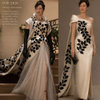
I'm sewing a long white silk crepe de chine skirt (shaped like this one) that needs a lining, and I'm looking for tips on what fabric to use. I had thought about more silk, but I'm concerned about becoming a giant static electricity generator, and about that making the skirt too hot. The linked skirt has a poly lining, but I'd rather my version breathe as much as possible.

Any ideas?

Comments (11)

  • 20 years ago

    The best lining is usually considered to be Ambiance bemberg. It's rayon and about $7 per yard.

  • 20 years ago

    Notice the skirt is rayon, not silk. I don't think silk will work for this type of skirt...too much stitch detail and heavy pleat stitching. A cotton, linen, or rayon would work much better. Save the silk for another project.

  • 20 years ago

    Oooh, thanks!

    I've worked a lot with regular viscose rayon challisÂwent through nearly a whole 40-yd bolt last year. Can you tell me anything about the differences between that and the bemberg?

  • 20 years ago

    Hi Bouche

    I did a course on textiles at college last year. I wanted, like you, to know what type of fabric I should use for what. It's not long before they start talking in terms that you need to be a Chemistry graduate to understand, but there are some ways of summarising things, luckily!!

    Moisture Regain/ Absorbency rates tell you how much of your sweat will go into the fabric and therefore evaporate. The more the better. Polyester has rating of "negligible" on my chart! Viscose and linen are the same at 12% (this is good), Silk 10% and Cotton 8%.

    That is a complicated way of agreeing with the recommendation for using Bemberg Cupro Rayon lining. Many have also been made to be anti-static. You might have to pay more for that.

    To answer your question about the difference between the Challis and the Bemberg - it's about the thickness of the fibres used and the weave.

    I got the definitions below from Fabric University. I'd highly recommend this site!!

    A few cautions about using 100% Viscose/Rayon linings - although it is washable (needs pre-shrinking like cotton), the dyes will fade with exposure to sun (like silk) and the fabric is much weaker when it is wet. This means that you have to be careful that it doesn't tear when washing. It also creases like mad, this will be unnoticeable in a skirt lining, but it can be a bit alarming inside a jacket - the heat of your body sets the creases until the next time you iron it, again like silk.

    Hope you find all this interesting!

    Best of luck,
    AJ

    Challis
    A lightweight, soft, plain weave fabric with a slightly brushed surface. The fabric is often printed, usually in a floral pattern. Challis is most often seen in fabrics made of cotton, wool, or rayon.

    Rayon
    A manufactured fiber composed of regenerated cellulose, derived from wood pulp, cotton linters, or other vegetable matter. Today, various names for rayon fibers are taken from different manufacturing processes. The two most commonly used production methods for rayon are the cuprammonium process and the viscose process.

    Cuprammonium
    A process of producing a type of regenerated rayon fiber. In this process, the wood pulp or cotton liners are dissolved in an ammoniac copper oxide solution. Bemberg rayon is a type of Cuprammonium rayon.

    Viscose
    The most common type of rayon. It is produced in much greater quantity than cuprammonium rayon, the other commercial type.

    Acetate
    A manufactured fiber formed by compound of cellulose, refined from cotton linters and/or wood pulp, and acedic acid that has been extruded through a spinneret and then hardened.

    Here is a link that might be useful: Fabric Dictionary

  • 20 years ago

    Thanks, AJ, for all the great fabric info. I wish my school offered a course in textiles, and that I could get away with taking one. (I'm a grad student in linguistics, and although I know one linguist/prehistoric textile expert, the market is kind of small.)

    Thanks for the tip, stitchntime. I'm not sure I'm convinced that my light silk will behave much differently than rayon in sewing this skirt, but I'm open to being convinced.

  • 20 years ago

    Wow, AJ! That reminds me of my Textiles class in college. Do they still burn small samples to find out the type? I remember the smell of the burned wool like it was yesterday!

    Mary L

  • 20 years ago

    Mary - I'm afraid Health and Safety, Insurance, Liability etc, etc has taken over - we were not allowed to burn stuff in class. We just got a handout detailing the expected results and an invitation to try it at home!

    I did it on a sample of "100% wool" at a suspiciously good price and from the melted edge I'd say it was nearer to a 60%Wool 40%Polyester. I think the fabric shops still draw the line at setting light to stuff in the shop, but it's good fun at home!

    Bouche - I'm doing my college (Technical College, bit like Community College, I think) classes on a part-time basis, depending on your working hours it might be possible for you to take 1 or 2 a year??

    AJ

  • 20 years ago

    AJ, yes polyester will hard bead as you know. I always thought those textile experiments were fun!

    Bouche, would China silk lining be too much silk (too static-y)? I knew someone who lined all of her sweaters with China silk (she was allergic to the fibers in all the sweaters). Hope you will post a pic when you're finished. It looks like a gorgeous project.

    Mary

  • 20 years ago

    I got the Bemberg lining today. It feels so different from the rayon I'm used to! In fact, after all this talk about burning fabrics to see what they're made of, I just had to set it on fire to make sure what I had was really rayon and not a poly knock-off.

    I'll be sure to post a picture when it's done, but that may be a while.

    Thanks for your help, folks!

  • 20 years ago

    :-) You just gave me an image of you attacking a bolt of fabric with a blow torch or something! :-)

    I'm sure since you just took a match to a scrap - safely holding it over an ashtray or sink - that you had the smell of burning paper and a fine ash.

    Yes?

    Cheers,
    AJ

  • 20 years ago

    While the blowtorch method does seem exciting, I needed most of the fabric to stay white and, well, structurally sound.

    Pollen season has just started here, so it didn't smell like anything to me, but it burned rather than melting, which was the main thing, and left a fine, powdery ash.

Sponsored
Haus Studio
Average rating: 4.8 out of 5 stars28 Reviews
Franklin County's Preferred Custom Cabinetry & Design Studio