Software
Houzz Logo Print
mrjones_gw

Vinyl Windows

18 years ago

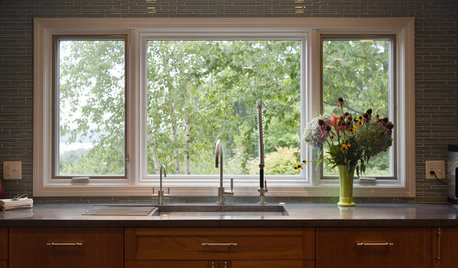
Last year, as part of a kitchen renovation, we replaced a bay window that has crank-operated casements on each side; we chose Simonton 5500. A year later, we're happy with the window and are considering replacing several relatively large sash windows, also with Simonton 5500. In the last year, though, I've seen postings here that talk about vinyl as generally second-class; some even refer to vinyl windows as "disposable".

What's the consensus? What's a reasonable life expectany for vinyl in general, and Simonton in particular? I live in Dallas, where the summer sun is quite strong, and there's little rain. Are there any issues that I should be aware of, good or bad?

Finally, our house is brick on frame; the brick meets the windows we have now. Will replacement windows have essentially the same fit outside, or will there need to be wood trim around them?

Thanks

Comments (6)

  • 18 years ago
    last modified: 11 years ago

    Porchguy..Your experience with vinyl windows must be vastly different than mine. We are in the DC area and we install about 600-800 vinyl windows per month. Of those 95% are either builder grade wood or aluminum windows. In fact the only vinyl windows we remove are either the cheap builder grade models or the budget windows sold by low ball dealers and hardware stores.

    I would never advise a consumer to purchase Pella or Andersen vinyl windows as they are geared towards the low end buyer who has done little if any research.

    There is really no difference between 3/4, 7/8, 15/16 and 1" IG units in terms of durability or energy efficiency

  • 18 years ago
    last modified: 11 years ago

    Although my experience with plastic windows is very limited, I personally would not use plastic components for permanent fixtures. My experience is limited to an office rental and some personal acquaintences whom have plastic/vinyl windows, where I've seen extensive expansion and contraction that has caused windows to not lock, and heavy air and water infiltrations likely due to the same material stability issues. I've also read numerous reports on plastic or vinyl regarding the thermal expansion coefficients and the breakdown of the substrate materials.

    It is my opinion that plastic/vinyl goods are not long-term products, and thus are disposable. To me, it is purely common sense when one thinks about general items, both old and new. Granted plastics or vinyls weren't available 100 years ago, but one can generally view many century old products still in use today, whether it is a steel and wood rake, wooden handled hammer, stone foundation, slate or metal roofing, that old metal dashboard in your 60's pickup truck, glass cola bottles, copper gutters, or many other durable goods. How about that 30 year old metal ink pen on your century old solid wood office desk? These products would likely have found there way into a landfill, had they been made of plastics/vinyls.

    By the way, due to differences of opinion, durability to some may mean more or less life cycles than to others. I would hope that when I refer to durability in regards to home fixtures, it is construed to mean the product should last as long as the home into which it is installed. Significantly less would be construed as disposable. A failed fixture at twenty years old is considered disposable by my expectations. Most recently, I've worked on three projects that contained original wooden windows that required only some minor refurbishing and weather-sealing. The original build dates of the homes and their original windows were 1910, 1900 and 1876. That is three good examples of durability.

    In regards to some addition specifics noted in the above responses, the overall size of the insulated glass is generally not what is important. Rather, it is the size of the interior space between the panes of glass that can be detrimental to energy efficiency gains. If it is too small/narrow, the air space will not provide enough dead-air space between the exterior and interior, thus creating less insulation from the exterior temperature. If it is too big/wide, the air or gas between the glass will convect, thus causing the glass to thermally bridge the outdoor temperature. Glass thickness, like any material will provide greater R-values as the thickness increases. However, keep in mind that the thicker the glass, the more distorted the views become, but thinner glass is more prone to breakage.

    The spacer between the glass panels is a critical component. I would simply suggest that an insulated glass unit provide a 20 year warranty, as that seems to be the best warranty in the industry (non-prorated if possible). If one can find it in the use of non-metallic spacers, no one could argue against one's decision. However, remember that glass is very heavy, and the use of metal spacers is practical. Aluminum was the current technology used many years ago, but stainless steel is a lower-conductance spacer that still contains the structural stability to support the glass for long-term applications, and thus it is used most often today in lieu of aluminum. Again, stainless steel is used due to its lower conductance than aluminum, and for its structural stability. The last thing one wishes to experience is a seal failure between the glass and the spacer, which causes condensation inside the IG unit, so a sturdy spacer bar that connects the two panes of glass around the perimeter is very important.

    Based on my disposable time-line noted above, one may wonder why I would accept only a 20 year glass warranty. It is a compromise based on current energy efficiency requirements in new windows. Because of this requirement for insulating glass and short term seal life, I generally find it appealing for a new wood window sash to provide an easily accessible and removeable glazing leg to allow for simple glass replacements over the long durable use of the window product. In other words, I will avoid products that require replacement of the entire sash when the glass seal fails. I also avoid products that require dismantling the sash for glass replacement. Unless one can get past new building requirements for insulated glass and use a single pane glass product, it is the nature of the modern window product to require glass replacement. This is in contrast to the nature of replacing the whole window which disrupts other aspects of the complete home envelope. This might be compared to re-pointing the mortar in an old stone foundation or re-soldering copper plumbing joints.

    In a nutshell, energy efficiency can be enhanced all day long at the expense of durability. One just has to make their own judgement as to where they want to spend their time and money. If it is acceptable to replace windows every 20 years, buy plastics. If one wants to replace insulated glass often, buy the new warm edge spacer technology. One might save a few bucks each year on energy efficiency with either choice, but one would also be sacrificing long-term durability and thus spending more money in the future by way of replacing whole products. Doesn't this rule apply to most things in life?

  • 18 years ago
    last modified: 11 years ago

    Maybe I should have mentioned that the windows we have now are the aluminum-framed windows that the builder installed (brand name "Danvid", I think) when the house was built 11 years ago. They're double-paned but not energy efficient at all. The seals failed years ago, there's no low-E coating, and the aluminum conducts LOTS of heat into the house during the summer and out of the house duing the winter. From the beginning they've been very difficult to raise and lower. The question isn't whether they should be replaced or not; they should be. The question is what to replace them with.

  • 18 years ago

    Thank you, mcsbldr!

  • 18 years ago
    last modified: 11 years ago

    Most wood windows come with a 10-20 warranties 10 years on frame 20 on glass.ALL the best vinyl windows come with life time non pro rated life time warranties.Why don't the wood manufactures stand behind there product?