Software
Houzz Logo Print
marcolo_gw

Mustard stained my Marmoleum

14 years ago
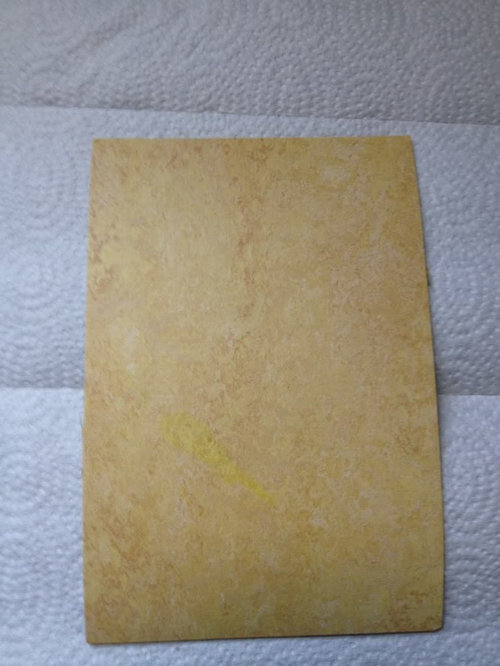
Got a sample of Butter and mistreated it with ketchup, A-1, soy sauce, wine, etc. and left the mess overnight. Everything washed right off except the mustard.

So far I've tried:

- Dish soap and water

- Vodka and water

- Vinegar and water

to little result. Any other ideas? I know you can't use ammonia on mustard stains.

I realize mustard has turmeric-based dye but still, it's a kitchen.

Comments (44)

  • 14 years ago
    last modified: 11 years ago

    See how you are? Someone finally sends you a sample and you just abuse it....

    I guess I would try a poultice with the pH in the other direction. Baking soda and Dawn has treated me well for greasy stuff, so you could try the soda alone since this isn't greasy, but the dawn makes a nice paste that seems like it is really doing something.

    It might work better if you drink the vodka while the poultice is in place.

  • 14 years ago
    last modified: 11 years ago

    You could try making a paste with Oxi Clean powder and letting it sit. I have read that you shouldn't use Oxi on sealed products like sealed marble and such though.

  • 14 years ago
    last modified: 11 years ago

    marcolo, I found this:

    Try using a mixture of alcohol (1 part) and dish soap (3 parts) to remove a mustard stain.

    Here is a link that might be useful: How can you get a large mustard stain out if linoleum?

  • 14 years ago
    last modified: 11 years ago

    Thanks--I tried the alcohol/soap mix. At this point I've mixed everything in every combination, and also tried hydrogen peroxide. Gotta look in the basement to see if we have any Oxiclean.

  • 14 years ago
    last modified: 11 years ago

    At least it's yellow too.;)

  • 14 years ago
    last modified: 11 years ago

    I have white formica counters and get mustard stains on them. I usually just wait a week and it dissappears.

    However, I do rremember a cleaner that I used once, and it turned the mustard red. It came right off. I can't remember the cleaner, so I googled "cleaner that turns mustard red" and found this link:

    http://www.stain-removal-101.com/martha-stewarts-stain-removal-guide.html#Tips For Removing Mustard Stain From Clothing

    excerpt:

    "Step 3: Apply both hydrogen peroxide and ammonia, together, onto the stain.

    In the video when they applied this stain removal solution the stain turned a reddish color, which frankly looked worse than the original yellowy stain.

    But this is what is cool about stain removal -- it is all about chemical reactions.

    The next step below stopped the chemical reaction, and in the process removed most, if not all of the mustard stain from the clothes.

    Step 4: Apply white vinegar onto the stained area to neutralize the ammonia."

  • 14 years ago
    last modified: 11 years ago

    Plain old bleach. If the Marm can't stand that, then it doesn't belong in a kitchen.

  • 14 years ago
    last modified: 11 years ago

    Toothpaste?

  • 14 years ago
    last modified: 11 years ago

    Try RIT dye catcher or rub it with a Shout Color Catcher sheet. They are used for dye in clothing, but it may work since tumeric is a commonly used dye in clothing dyes as well.

  • 14 years ago
    last modified: 11 years ago

    I agree with LWO, if you can't clean it with bleach, it doesn't belong in the kitchen...especially for a floor!

    Hopefully, Deedles sees this, too.

  • 14 years ago
    last modified: 11 years ago

    "if you can't clean it with bleach, it doesn't belong in the kitchen..."

    Ummm, really? Last time I checked you couldn't use bleach on wood either...or marble countertops...or several other things we put in a kitchen. Vinagar, however, which is PH neutral, and sanitizes and can be used on most surfaces without harming the finish of Marmoluem. I do use Magic Eraser on my floors if I have a spot (hair dye was the most recent one) and haven't had a problem.

  • 14 years ago
    last modified: 11 years ago

    Ironically, on the Clorox site, it says you can use bleach on linoleum.

    Here is a link that might be useful: Clorox

  • 14 years ago
    last modified: 11 years ago

    We had marble floors, stairs and walls in the administration building on our college campus...and I don't know if they cleaned them with bleach...but I doubt they cleaned them all with vinegar. But, they still looked great after almost 100 years. Of course, it was marble from Alaska...and so far, I can't find anymore marble like that. If I could...I'd feel more confident about marble countertops in kitchen and bathroom! :)

  • 14 years ago
    last modified: 11 years ago

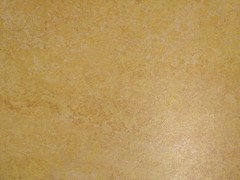
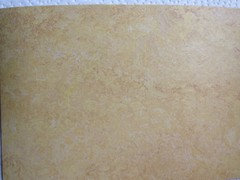
    A diluted bleach solution seems to have done the trick. I almost think I can still see a bit, but at this point it looks too much like the pattern to tell.


    First one is in sunlight, the second is inside.

    Don't know if you're supposed to bleach Marmo or not. Although when I was little, everybody had linoleum in the kitchen, and back then, my mom bleached everything on the planet from her hair out.

  • 14 years ago
    last modified: 11 years ago

    Vinegar is ph neutral? Not. It is an acid.

    Bleach can safely be used on marble. I use it in my marble shower every week.

  • 14 years ago
    last modified: 11 years ago

    Vinegar is NOT pH neutral. It is an acid with a pH of around 5 and will etch marble and remove copper's patina among many other issues it has being used as a "cleaner". And while it has some anti bacterial properties, it is NOT a sanitizer.

    A 10:1 solution of sodium hypochlorite aka bleach to water is what is used in the restaurant industry to sanitize and it's perfectly acceptable to use on any contaminated kitchen surface that needs to be sanitized including cutting board, marble or granite counters, and your cutting implements. (It should be rinsed afterward to remove residue.) Sanitizing is having it be in contact with that surface for 7 seconds, not soaking in it interminably. Floors and cabinets do not really need to be "sanitized" as they are not food contact surfaces, but even they can occasionally have the sanitizing 7 second bleach solution used on them if they become stained. (Again,followed by a rinse wipe.) If a surface can not stand this occasional application, again, it does not belong in a kitchen. Any commercially produced cabinets and all commonly used countertop surfaces will not be damaged by this brief exposure if properly rinsed afterwards.

    Typically, linoleum has an acrylic topdressing when used in a kitchen and isn't used uncoated at all. That acrylic topcoating prevents stains from penetrating down into the surface and can be removed with ammonia, leaving the linoleum unstained and ready for a fresh coat. It is conceivable that the acrylic coating could be worn off in some areas and mustard could be dropped on it and stain it, so the test isn't entirely an invalid one. It's just not that common of a situation for someone who does regularly maintain their floors.

  • 14 years ago
    last modified: 11 years ago

    Deedles- I could easily leave mustard on the floor all night...or one of my helpers could! LOL

    I do not clean my floor every night, after dinner. I'm lucky to get the dishes in the dishwasher and wipe the countertops...but having a sick kitty (who needs medicine evey night) and being out in the garden until 9pm might make things more difficult.

    In the winter, the mustard would probably get noticed...unless I had the yellow floor, in which case I might not see it by the counter until the next morning! :)

  • 14 years ago
    last modified: 11 years ago

    Actually, Marmoleum doesn't have a topcoat unless you get Marmoleum with TopShield. Lots of rancorous debate over that one. Apparently it's a Johnson acrylic finisher, not a sealer, so it stays somewhat viscous and dirt can become impregnated, requiring a strip, buff and reseal.

    That's a whole other research project, but it's not practical to do with small samples.

  • 14 years ago
    last modified: 11 years ago

    1. Forbo, the company that invented Marmoleum linoleum back in 1860 didn't really have a hard time explaining the cleaning process to people before all these toxic and hazardous cleaning products came on the market.

    2. It is a natural plastic made from seed oil and it's finish can be damaged by high PH products...possibly your mustard....but unlikely. Is it indestructible? No.

    3. When you receive your samples they are "yellower" or more amber than they will eventually be in your home. This process happens naturally from light and can be very rapid, oftentimes leaving an image of an item that was sitting on the counter or floor, even for just a few hours. This fading is temporary and it will all eventually be the same color again. In your post you mention being in the sun and I think that is your answer here.

    4.Plan your flooring choice... Having a walk off area outside your doors or a rough matting in your foyers will help to clean your shoes before you get into your kitchen. Marmoleum isn't really meant to stand up to constant abrasive grit and little stones brought right in from the street. Stainless steel floors might be what some households could use!

    5.The best thing you can do is keep Marmoleum swept. Buy a high quality fine, soft push broom. Did you know dirt can bring in viruses and germs that can actually be incubated with wet mopping. Grit and detergents will eventually damage the top finish and can prematurely wear your comfortable resilient floor. Just the same a worn floor can continue to be refinished and look great.

    6. Spot clean your floor as necessary. Since the natural plastic resin of Marmoleum is negatively charged it doesn't attract or hold dirt like vinyl or plastic laminate flooring. Synthetic or plastic flooring alternatives are like dirt magnets. That is why allergists recommend Marmoleum.

    7. Damp mop occasionally with warm water and a capful of the manufacturers Concentrated Cleaner when your floor is more dirty than sweeping will control. Remember damp mopping actually can be unhealthy. Scrubbing, when necessary can be done with non abrasive pads.

    8. Lastly, most times stains are actually not in the Marmoleum itself but in the durable protective finish that is put over it. If you strip off the finish according to the directions you can reapply it very simply. In this case, the bleach was not the answer but the sunlight. Bleach is not an approved cleaner.

    Cleaning product companies have put many wrong ideas in our heads about health and cleanliness... all the nastiest bacterias and germs seem to breed in hospitals after all.... Marmoleum all by itself combats the formation of germs and bacteria like C-Dificil and MRSA.

    While experimentation is great and you should do it, consumers, stores, hospitals, army barracks and hospitals have been testing this product for 150 years. Reading the instructions for cleaning from the manufacturer, which is very clear about high PH cleaning products is the best way to decide if this natural, organic, healthy, beautiful and timeless floor is for you.

    Isn't it amazing that the Rockettes had a Marmoleum dance surface at Radio City and it lasted over 30 years.... and wasn't worn out when it was replaced!

  • 14 years ago
    last modified: 11 years ago

    Interesting post CoolGreen.

    The virus and germ part incubating doesn't sound right, though. Viruses need living host cells in order to replicate.. they don't live for nothing on a surface as far as I know. (Forget the debate over whether they are even alive in the first place) and then the germs? I mean, you get your throat swabbed and they spread it in a petri dish for at least 24hrs. to grow something. A damp mopped floor is wet for what, 10 minutes?

    People get a little too freaky about germs, IMO.

    Anyway, challenging your immune system is what makes it stronger. (and no I don't mean to go and lick your floor or toilet or something but you know what I mean)

  • 14 years ago
    last modified: 11 years ago

    >didn't really have a hard time explaining the cleaning process to people before all these toxic and hazardous cleaning products came on the market.

    The Victorians regularly used all sorts of noxious chemicals to clean things, including lots of items you can't even buy today without a prescription or a whole lot of paperwork.

  • 14 years ago
    last modified: 11 years ago

    Wow. CoolGreenFloors, your post is the one thing that has stopped me in my tracks about buying Marmoleum. Not even my mustard stain did that. But you made me think: What if all the supposed benefits of Marmoleum are as full of bullsh$Wt as this post?

    The Victorians regularly cleaned with kerosene, among many other things. That's an FYI, because you seem to need a lot more "I."

    Oh, and the Rockettes floors were made with linseed oil--not tall oil like Forbo uses. FYI

  • 14 years ago
    last modified: 11 years ago

    Sorry, I mispoke when I said that the vinegar was PH neutral. I believe adding the water makes it a PH neutral floor cleaner. Here is the recipe I use when cleaning our Marmoluem floors:
    Mix 1 gallon of hot water with 1 cup of distilled white vinegar in a bucket.

    I haven't used the dilluted bleach solution yet, but good to know I could. In the end, the marmoluem floors are one of my favorite things in the whole world. I wouldn't trade them for anything. They are by far the lowest maintenance floors we have ever had.

  • 14 years ago
    last modified: 11 years ago

    lol -- I was waiting for your riposte, Marcolo, and you did not disappoint.

    When will marketers learn that paying online shills almost always backfires? So far I've been turned off from Rachiele copper sinks, Texeira soapstone and now Marmoleum because of these misguided "posts".

    Good to hear your positive experience, Senator. I'm hoping to use linoleum in my own upcoming vintage kitchen remodel. As it happens, I think the greens in the color palettes of the Armstrong or Tarkett offerings might work best for me.

  • 14 years ago
    last modified: 11 years ago

    I am not a paid shill and I installed Marmoleum in my previous kitchen and I LOVED it. However, if you are doing the Marmoleum sheets you have to make sure you have a really good and talented installer because the seams can become an issue.

  • 14 years ago
    last modified: 11 years ago

    No, adding water (ph neutral at 7) to vinegar does not make it pH neutral. It just dilutes the acid. It's still an acidic solution, although milder. A weak acid solution can still etch but is too weak to actually be any kind of anti bacterial solution or cleaner. You would need to add a base (alkaline) substance to an acid in order to make it pH neutral. (That would also eliminate any possible benefit as a cleaner or anti bacterial agent.) Baking soda is one such mild base at 9. Bleach is around a 13, which is why it is dangerous straight out of the bottle and must be diluted to be used safely and should be rinsed when used on cabinets or counters to disinfect. Soapy water is around a 12, and this is part of the reason it is said to disinfect, as bacteria only live successfully close to a neutral pH (just like humans) but it also makes water slipperier and the mechanical action of agitation along with the slippery water loosens the bond that soil has with the item being washed.

  • 14 years ago
    last modified: 11 years ago

    Actually vinegar and water seems to work well on my mirrors and glass-topped tables, which I chose during a brief moment of insanity. I don't know why, but the commercial glass cleaners that used to work pretty well don't seem to do the trick anymore, regardless of whether I buy the ones with or without ammonia.

    While we're on the subject, do not mix bleach and ammonia, people, unless you like to die from chlorine gas. I have to remind people of that so often I'm starting to wonder if I should just let Darwin do his thing.

    Back to Marmoleum--I'm not seeing any consensus on whether Click or Sheet are the safer choices if you're going to have a pattern. I don't understand the Dual Tile at all, since this seems to require an almost infinite number of seams, no?

  • 14 years ago
    last modified: 11 years ago

    I was interested in Victorians and their cleaning habits. (Still no power = time on hands).

    I would imagine sheets are safer for a pattern but you'd be paying for the installer and the seam welding.

    Here is a link that might be useful: Victorian Spring Cleaning

  • 14 years ago
    last modified: 11 years ago

    The cupboard of the Victorian housemaid in a well-appointed city house would have included lye, kerosene, benzene, prussic acid, full strength oxalic acid, chloroform (chloroform + ammonia was popular for removing stains on carpets), arsenic, mercury (beat with egg white, paint in crevices of beds to discourage bedbugs), naphtha, and lots of other treats, in addition to any patent cleaners, which might have included absolutely anything.

    There are a couple of excellent books on cleaning methods used back then, which are fascinating and horrifying at the same time. The only title that comes to mind immediately is "Crinolines and Crimping Irons" which is mostly about how they cleaned clothes, but there are a few others on general housekeeping, too.

  • 14 years ago
    last modified: 11 years ago

    Yeah, found out about bleach and ammonia. Age 19. Sicker than a dog. Finally my boss at the time asked me what was wrong and figured out what I had done. She screamed "didn't your mother tell you never to mix bleach and ammonia! It could kill you!" She probably did mention it but I guess I wasn't listening....
    On the topic of cleaning: I'm forever trying non-toxic stuff for cleaning and here are my favorites after 5 years of different stuff. For glass just use a drop or two of dish soap, soap not detergent, on a well wrung out rag. Wash it on then take a dry rag and polish it. For all-purpose stuff my new favorite (and it's quite amazing and I don't sell it but I should) is the Young Living Thieves oil cleaner. Amazing stuff. It works so well that it actually makes me want to keep cleaning, which is pretty amazing in itself.
    Kills mold and fungus, smells awesome. As a matter of fact anyone out there that has a moldey, mildew-y basement, garage, house whatever... get yourself a cold oil diffuser and some Thieves oil. It's incredible. Really.

    All this corporate cleaning crap not only doesn't work very well IMO, but it's toxic and totally unnecessary and supports some of the most poisonous corporations on the planet.

    One more thing re: vinegar. The most recent findings on killing mold like in the basement.. the black stuff,... is not to use bleach, but rather to use vinegar, straight or sl. diluted. And then I'd follow up with Thieves oil or tea tree oil.

  • 14 years ago
    last modified: 11 years ago

    "Oh, and the Rockettes floors were made with linseed oil--not tall oil like Forbo uses."

    What is tall oil? Thanks for this informative post, Marcolo! I'm letting you do my homework for me.

  • 14 years ago
    last modified: 11 years ago

    Sjerin, I was wondering the same thing. Here we go:

    "Tall Oil, also known as liquid rosin, is a resinous yellow-black oily liquid composed of a mixture of rosins, fatty acids, sterols, high-molecular alcohols, and other alkyl chain materials; obtained as a byproduct in the treatment of pine pulp.

    The crude tall oil is distilled into tall oil rosin (having the rosin content of 10 - 35%), further refinery gives to tall oil fatty acid (the rosin content of 1 - 10%). Pitch is used as a emulsifier of asphalt and as a binder of cement and adhesive.

    Rosin is used as a raw material for rubbers, paper size, inks, and adhesives. It is used as an emulsifier in SBR polymerization for fluidity increasing. It is used in ore flotation, corrosion inhibitors and crude dimers applications.

    Tall oil fatty acid (TOFA) is a low cost unsaturated fatty acid (oleic acid) and is a source of low boiling point fatty acids. It is an alternative to tallow fatty acid in soap applications. It is used as a dryer in varnishes and paints. It is used in paper sizes, inks, adhesives, alkyd resins, linoleum, oilcloth, cleaners, lubricants, dimer acids, surfactants, oil field chemicals, greases and ore flotation reagents."

    Here is a link that might be useful: chemical schtuff

  • 14 years ago
    last modified: 11 years ago

    According to the Forbo website, Marmoleum is in fact made with linseed oil. It also includes tall oil but to say that it is not made with linseed oil is an incorrect statement, based on the Forbo information.

  • 14 years ago
    last modified: 11 years ago

    Well, no one said that. But Forbo has been adding tall oil for a while, so their formula is not the same as the Victorians'. That's the point.

  • 14 years ago
    last modified: 11 years ago

    I damp mopped my Marmoleum the other day after quite a long while, and kept rinsing the mop as I went, into the white sink. There was hardly any dirt on the floor. I do vacuum it, but I expected to see dirt run off the mop, the way it did with my previous vinyl tiles.
    We love walking on it in bare feet.

  • 14 years ago
    last modified: 11 years ago

    Back to Marmoleum--I'm not seeing any consensus on whether Click or Sheet are the safer choices if you're going to have a pattern. I don't understand the Dual Tile at all, since this seems to require an almost infinite number of seams, no?

    We have both sheet Marmoleum and Dual Tile. The sheet only comes in one width - 79". If you need something wider, you can either butt the sheets together or use a welding rod. Even though there is a pattern to the Marmoleum, if you butt the sheets, you will probably see the seam. If you use a welding rod, you will definitely see the seam. The rods are not available in all colors/patterns. And you need an installer that is really qualified to make good seams using the welding rods.

    Our hall bathrooms are about 6ft wide, so we had the sheet goods installed there since no seam was needed. The laundry room and master bathroom would have required seams if we used the sheet goods. I didn't think I would like the look of just one seam in the room, so we went with the Dual Tile in those rooms. You can tell the floor was done with tiles, but the look does not bother me. I prefer the look of seams all over to just one seam. (Think VTC flooring in a department or grocery store.) And, if we had gone with the sheet goods, we would have had a lot of waste due to the size of the rooms and the width of the sheet.

    If you go with the Marmoleum Click, it gets treated the same as any other floating floor. That means you have to have your expansion gaps and, if you have an island, you have to decide how comfortable you are with putting the island cabinets on a floating floor. If you are not comfortable doing that, you will have to figure out how to hid the necessary expansion gaps around all sides of the island. Also, you will have some type of transition piece, t-molding or reducer, where you transition from another type of floor to the Marmoleum Click. Our sheet and tile Marmoleum are butted up against our hardwood floors with a tiny bit of caulking, and they are flush.

    We have only been living with our Marmoleum for 3 months, but we really like it.

  • 14 years ago
    last modified: 11 years ago

    Have you tried the Magic Eraer? I use it on so many things, use to use it on my white formica whenever I got a stain, came right out. Let me know if it works?

  • 14 years ago
    last modified: 11 years ago

    Thanks, dekeoboe. Good information, even though you are giving me a sharp pain through my skull.

    I thought there was an issue with finding an installer good enough to do a solid seam on sheet. So that's why it seems that Dual Tile must be even worse--four seams for every tile. Am I not understanding?

  • 14 years ago
    last modified: 11 years ago

    My neighbors just did a Marmoleum dual tile checkerboard pattern in two colors (butter and bleecker street). There is absolutely no seam that is visible. And, you can run your hand or foot over the floor and feel absolutely nothing at the seams. I am curious about that and would love to understand how they did it (their contractor did it and they don't know). Welding gun? Any other ideas?

  • 14 years ago
    last modified: 11 years ago

    I didn't realize the dual tile was cut up sheet tile, basically? I'm still researching all this. I do love linoleum. I have a sheet remnant that's been in use for many years covering my splintery, unfinished wood floor under the eating table. Its 'patina' and the fact that I am okay with it is what lets me know I could do marble.

    Link below to a page I found about the welding process. I am still confused about the checkerboard patterns and whether they are welded or not. In the Forbo Design Guide they show a checkerboard pattern requiring basic installation skills and $-$$ installation costs. No seam welding there. So the question is when is welding required?

    That design PDF and others can be found at: http://www.forboflooringna.com/Residential-Flooring/Products/Marmoleum-sheet-tile/Marmoleum-Dual-Tile/

    Here is a link that might be useful: heat welding

  • 14 years ago
    last modified: 11 years ago

    I don't know how it would work on a turmeric stain like mustard, but the best cleaning solution I've ever used is a combination of vinegar and rubbing alcohol. In a 1-gallon jug, combine:

    1/2 gallon white vinegar
    1 pint (2 cups) rubbing alcohol
    1/2 tsp. liquid dish detergent (like Dawn)
    Fill to top with water

    Use it in spray bottles for general cleaning, and also to mop the floor if your surfaces don't mind an acid. I cleaned houses for a living for eight years, and this works better than anything else I've ever used. It even dissolves old, sticky crud on refrigerator shelves and the grime on venetian blinds. And it's relatively non-toxic.

    I hope this is helpful.

  • 14 years ago
    last modified: 11 years ago

    No welding seams with Dual Tile. Can you see the seams? Yes, because of the pattern, but in some places the pattern matches better than in other places.

  • 10 years ago

    I had a stain from a bag of cleaning solutions that were leaking. Marmoleum has color/pattern all the way through the product. I used 320-600 grit sandpaper (with water) and sanded it off. Immediately gone.

Sponsored
NME Builders LLC
Average rating: 5 out of 5 stars2 Reviews
Remodeling Company in New Albany, Ohio