Software
Houzz Logo Print
tr8acee_gw

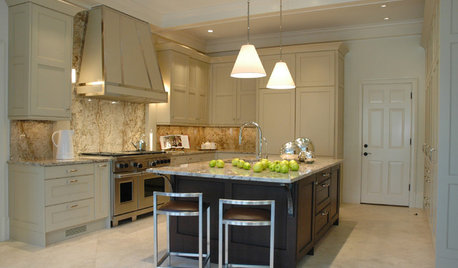
Vent hood and Wolf range

14 years ago

I'm planning a kitchen remodel and have decided on a 36" Wolf AG range. I"ll need to install a vent hood as there is no vent hood right now. Because I'm splurging on the Wolf range, I have to cut back on expenses somewhere so I thought about getting an "okay" vent. I can't afford the modernaire or the zephyr and the vent a hoods sound like a pain to clean. I've seen the posts about the KOBE brand and it seems like it's in my price range. I would like to spend less than $1000. My question is, is KOBE hood strong enough to use with my Wolf range? I just plan on doing some wok cooking but I don't see myself having more than 1-2 burners running on high heat often. Any suggestions would be greatly appreciated.

Comments (10)

  • 14 years ago

    How many cfm does your proposed Kobe hood draw? And how wide and deep is it?

  • 14 years ago

    The one I was looking into has a cfm of 720 and 42". would that be enough.

  • 14 years ago

    In my opinion, yes. It is 6" larger than the range, which is advised. 720 cfm oughta be enough for the kind of cooking you describe. I think the purists would argue that you could overwhelm such a hood with your 36" range, but your intended habits do not sound like that would be a problem. Sounds like a good match to me.

    Now we must insert the obligatory question of whether you have considered an allowance for make-up air (MUA)?

  • 14 years ago

    Thanks so much for your input Angie. I've been trying to read into this MUA and just don't understand it. I was hoping that by getting a smaller cfm vent hood I could avoid the whole MUA issue. Right now the location where I want the range to be doesn't have a vent hood so I will have a contractor install a vent hood that goes out to the side of the house (versus thru the roof). I figure since I'm not using the hood at it's max often I don't have to worry about MUA.

  • 14 years ago

    I have nothing to contribute to the hood selection question, but would like to ask what you're doing for make-up air. I read this week that if you install a hood over 400 cfm, that you have to provide make up air to prevent depressurzing the air in the house, especially in cases of vented dryer and water heaters or even fireplaces.

  • 14 years ago

    Thanks so much for your input Angie. I've been trying to read into this MUA and just don't understand it. I was hoping that by getting a smaller cfm vent hood I could avoid the whole MUA issue. Right now the location where I want the range to be doesn't have a vent hood so I will have a contractor install a vent hood that goes out to the side of the house (versus thru the roof). I figure since I'm not using the hood at it's max often I don't have to worry about MUA.

  • 14 years ago

    THe MUA issue is making me think twice about getting that WOLF stove. I've been cooking on an electric stove and just hate it and can't wait to get a gas range so I can simmer my sauces and use my wok. In the meantime that MUA is a real downer, I thought by getting a less powerful vent hood I could avoid the whole issue. Since the laws are changing regarding the vent hoods, I may have to re-evaluate the situation and see if it's worth the expense to already pay so much money for a professional stove and then on top of that have to provide adequate MUA. Does anyone know how much it would cost to get a MUA unit?

  • 14 years ago

    I live in Southern California, would opening the window when I turn on the vent hood be enough to solve the issue of MUA? My husband says the MUA is more of an issue if you live in colder weather climates where you don't want to open the window when it's 20 degrees outside.

  • 14 years ago

    And the MUA issue is also related to what kind of heating plant you have. For instance if you heat your HW with electricity as opposed to gas or oil then you have no flame/exhaust issues to be concerned about.

    Do you use gas or oil, or a wood-burning appliance (fireplace, pellet stove, etc.?) In the case of woodburning stoves - wood or pellet - if they are equiped with sealed dedicated outside air supply fittings and are always burned closed, then the MUA thing wouldn't apply either.

    If your gas-fired WH or gas boiler/furnace is the kind that is direct vented, then I think that the MUA thing wouldn't apply.

    In SoCal of course you could just open a window, but I don't think codes take that into account.

    I live in northern NY (down to -20F fairly commonly). Our house is so old and unsealed up that the MUA-achieved standard of exchanges per hour would probably be less than what I have right now. But I think the code may still apply to me, anyway. I'm going to try my darndest to argue that since we have no other gas- or oil-burning appliances (no central heat and only sealed intake air connected woodburning appliances for heat) that the code shouldn't come into play. Wish me luck!

    Code aside though, I have been cooking on my 48" pro range for nearly 20 years w/o a vent (only open windows and occasionally exhaust fans stuck in every door shenanigans -like the dedbacle that occurred when I tried really high heat roasting of a chicken!) But it's definitely not pleasant to live with the HOGS so MUA, or not, there's a high CFM hood in my future.

    L.

  • 14 years ago

    There are no MUA codes in our rural area. I had an extensive conversation concerning MUA with our local HVAC company. Sure, they would love to add a few more $$$$ to our bill, but asked about how we cook. We have geothermal, electric water heater, a sealed gas fire place and a gas dryer. The HVAC company told me to open a window closest to the range for the duration we may use a high setting. I chuckled when he provided this solution as this is what we have done for years.