Software
Houzz Logo Print
kippy_the_hippy

Cl Cecile Brunner?

11 years ago

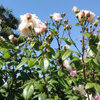
This rose grows on the property line of a relatives apartment. It is a once bloomer and just happened to be starting to bloom for our Christmas Eve celebration.

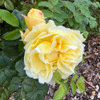
In the dark I borrowed some scissors and clipped a bit off as I was leaving last night. These are almost spent blooms, the newer ones had more color, but I could not see what I was clipping in the dark.

There is a nice old rose scent, I pulled off 45 petals that left about 12 petaloids, the scent on my fingers was rather strong and reminded me of the scent of Grandmothers Hat when touched.

The graph paper is a 1/2" grid, so the bloom is just under 3"

I think the area was developed after WW2 probably from the old light station, this would have been creek side property

I am assuming this is a happy and old Cecile, what do you think?

{{gwi:2122303}}
{{gwi:2122304}}
{{gwi:2122305}}
{{gwi:2122306}}
{{gwi:2122307}}
{{gwi:2122308}}
{{gwi:2122309}}

Comments (18)

  • 11 years ago

    She looks like it to me, Kippy. Now, imagine a jelly made from its petals where the underlying taste is mild currant with that scent as the "after taste". It was amazing! Merry Christmas! Kim

  • 11 years ago

    Wow Kim that must have been something I need to read how that is done

  • 11 years ago

    Dup

    This post was edited by Kippy-the-Hippy on Thu, Dec 25, 14 at 23:14

  • 11 years ago

    My only comment is that Cl Cecile Brunner, especially in a warm zone, is not a once bloomer. I realize that the climbing one blooms a lot in the spring and then only scattered bloom later, but it does bloom a bit in the summer, and more in the Fall, although not as much as the bush form (unless you get the magic clone Jeri talks about).

    Jackie

  • 11 years ago

    It depends upon which climbing form you have, Jackie. It isn't an "on or off" proposition. It's a continuum, with greatly varying degrees of plant size versus rebloom. There are multiple forms from the dwarf (relatively), perpetually flowering bush; through the huge shrub/semi-climbing, perpetually flowering Spray; all the way to quite large, fairly continuous flowering climbers to the rampant, enormous (in the right climate), once-flowering climber. It all depends upon which expression of the gene combination the plant has and how suited it is to the climate in which it grows. Many climbing sports have expressed themselves similarly, but the closest would be Climbing Iceberg. Originally, it was once-flowering and quite large, but smaller, repeat flowering expressions of the climbing form were isolated and are now the standard. That hasn't occurred with Cecile. You can still obtain cathedral eating, once-flowering plants. Kim

  • 11 years ago

    It is as Kim says -- There appear to be multiple forms of Cl. Cecile Brunner.

    The one I had wasn't "cathedral-eating," but was definitely a climber of some size. It repeated somewhat in the manner of a Hybrid Perpetual ... That is to say, it bloomed hugely in the spring, scattered bloom through the summer, and put on a respectable fall flush. It was actually almost never without SOME bloom.

    I bought it as a tiny own-root plant at Green Thumb Nursery in Ventura, back around 1988 or 1989. Gave it up eventually, for other, "better" things, and wish I still had it.

    Jeri

  • 11 years ago

    Kim - which kind would you say mine is? It is actually is wider than it shows in the pic, but it wouldn't post until I cut it down. It is three stories high. It blooms as Jeri describes. It actually had quite a nice Fall flush (for it) this year - about 20% of the blooms of Spring, but evenly distributed all over.

    Jackie

  • 11 years ago

    It's difficult to say, Jackie. The more rampant "cathedral eating" climbing mutation generally isn't reflowering, but, in a suitable climate with sufficient resources, it just may. Often, rebloom is highly climate dependent. Think Banksiae along the coast where "spring" weather lasts for many months and they appear to repeat, when it's really just continuing its spring/summer flush until the real summer heat arrives. The same as how O'Neal blueberries continue flowering and bearing fruit from spring through fall in the same areas.

    I've not encountered a Spray Cecile achieving the size yours has, so I would say yours is the climber, but whether it would repeat as well elsewhere, somewhere there is a much greater spring to summer season change, such as here where I am, or not, only trying it would answer. Yours is on old, deep soil which hasn't been compacted and, even in 'drought', your area receives a great deal of rain compared to us down south. It definitely gets what it wants/needs, or it wouldn't perform as it does for you. Kim

  • 11 years ago

    Also, I think, "mutation" could be infinite. There are probably endless degrees . . .

  • 11 years ago

    Precisely, Jeri. That's what I meant by it's a continuum, with multiple plants expressing each possessing the traits along it. Kim

  • 11 years ago

    Thanks Kim and Jeri! I had not realized CB was such a variable rose. Mine, in addition to a small Fall flush, puts out (very) scattered bloom all summer. It does get fed once in the Spring, and irrigated during the Summer, so that makes sense. It is growing in a bed where I have old B&W pictures of roses growing since at least 1920. (so much for rose replant disease - luckily we don't seem to have that here..).

    Jackie

  • 11 years ago

    I think maybe one reason we see so many variants of CB is that the rose absolutely LOOOOOVES California.

    Jeri

    (This bloom was from the plant shown above.)

  • 11 years ago

    I would just like to say that having roses blooming at Christmas sounds lovely, no matter which one!

  • 11 years ago

    'Spray Cecile Brunner' - which has been stated, rightly or wrongly to be a synonym of 'Bloomfield Abundance' - is a different, more vigorous cultivar, producing some buds with foliose sepals (visible in above photo) and deformed shapes in often quite large, branching heads not seen on 'Cecile Brunner'. True 'Climbing Cecile Brunner' displays a rambling habit, with long, arching, flowerless canes appearing after the spring bloom. Both of these are prevalent in my area, with garden centers here for some years having been supplied the spray cultivar by one or more of the wholesale growers as 'Cecile Brunner'.

    One large, long-established independent garden center in this market has their own 'Cecile Brunner' type that they sell small, in-house(?) propagations of under what appears to be their own completely different, made-up name (something like 'Jeni's Rose', but I really don't remember now). There may not be a galaxy of cultivariants* of 'Cecile Brunner' so much as a number of similar cultivars of independent origin, with the situation having been muddled by the growing and selling of some of this material under the wrong names. If you dig into the literature apparently unrelated forms of the same general type soon come up.

    Othographic note: Use of 'Mme. Cecile Brunner' as the supposed correct combination has appeared in later years.

    *Variably stable distinct forms resulting from variations in propagation methods or outcomes, short for cultivar variant - indicating that although differing in some way these are still considered examples of the original cultivar

    This post was edited by bboy on Sat, Dec 27, 14 at 12:17

  • 11 years ago

    Fred Boutin has unearthed a rose he feels fairly confident to be the actual "Bloomfield Abundance". There are photographs of it on the Spray Cecile Brunner page on Help Me Find. The Sacramento Cemetery and Dr. Manners both have it. I have buds of it pushing now from material Jeri was gracious to bring south for me this summer. The Spray form of Cecile has been determined through DNA testing to be a mutation of Cecile. Interestingly, both Climbing and Spray Cecile originated in Southern California, so, yes, I would say Cecile LOVES California.

    From observation, there are a number of quite different types of this rose, often sold interchangeably. Obviously, identifications have been made based upon the flowers, with little attention provided to the eventual plant habit. They very closely mimic what has occurred with Iceberg, which I have documented (previously referenced here) in an article published on Help Me Find.

    I should include that bluegirl has found Spray Cecile to make a marvelous root stock in her conditions. It seems everything she has put on it (and Pink Pet) push quickly and vigorously, which I find very intriguing. Kim

    Here is a link that might be useful: Poor Old Iceberg

    This post was edited by roseseek on Sat, Dec 27, 14 at 13:25

  • 11 years ago

    Since Kim mentioned it, I'll post here some images of the rose Fred Boutin has identified as 'Bloomfield Abundance.' It does seem to fit well as that rose -- AND it's quite lovely, even though still immature.

    Jeri

  • 11 years ago

    The real Bloomfield is an exciting find.

    I have a few Cl Ceciles, one from Otto & Sons that is busy throwing some massive canes and did do some sporadic blooming most of the summer. This one wants to rule the world and makes the older Felicite Perpetue look mannerly (of course they are both babies so we will see)

    One I rooted from a cutting picked up at a park, this one is only a year old so it does not count yet

    And an Everblooming Cl Cecile from Heirloom. Also staying smaller but a year younger than the big Cecile. I have Pink Gate down there too, it is also a baby and still very small.

    I think I need to invest in a welding suit and mask, I already have a machete

  • 11 years ago

    Well, not to sound like a broken record, but come to the Sacramento City Cemetery this spring.

    PARTICULARLY this spring, because I'm hearing exciting things about the things they're propagating this year . . . "If this don't beat all . . . "

    Of course, you might also want to save May 2 -- for an HRG Seminar, in San Juan Bautista . . .

    Jeri