Software
Houzz Logo Print
savannaicus

Self Watering Pot Question

11 years ago

Can you overwater a plant with a self watering pot? I'm thinking I did since my one violet is really struggling. The soil was pretty damp, I removed him and cleared all the dirt away from the roots, but there were very few roots and now I fear I may loose him. He has a ton of green, slightly droopy leaves, so maybe he will survive. I always thought self watering pots were ok, any advice on these?

Comments (23)

  • 11 years ago

    In my opinion, self watering pots are a recipe for root rot. I would never use them.

    Christopher

  • 11 years ago

    What if the mix was gritty?

  • 11 years ago

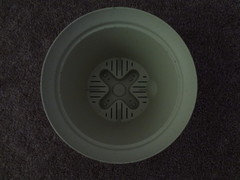
    I highly recommend a self-watering planter from Wal-Mart called "Plant Spa." I have never once encountered any problems with using these kinds of pots. In fact, they're the only kind of pots I use for the vast majority of my plants, except for my orchids and a few others. Even tho they're self-watering, only the bottom "X" portion of the pot actually sits in the bottom water reservoir. However the "X" is completely surrounded by slits that still let the plant's roots breathe. As long as you use a good draining soil that lets your plant's roots breathe, you can't overwater a plant using these pots. "Overwatering" is a bit of a misnomer. What's actually happening is the soil holds on to too much water and can't properly drain the excess water away. This cuts off the supply of fresh air to the roots and the roots end up suffocating and rotting away. The way these pots are designed, the plants have access to the fresh air they need as well as the water in the self-watering reservoir.

  • 11 years ago

    Thank you for that answer. I'm heading on vacation tomorrow but hopefully when I get back my violet will be still kicking and I can change the mix over. I currently have him in half potting soil and half perlite with some peat (I don't have bark), I took him out of the mix he was in this morning, so this is fresh and not soggy. But I did not fill the reservoir since his roots are very minimal (like 6 tiny roots and 2 longer ones), I just gave him a shot of water to settle the dirt a little.

    Thank you again!

  • 11 years ago

    On how to use self-watering pot, see the fifth post in this thread.

  • 11 years ago

    I have a bigoted opinion that a pot can't know that it shouldn't be wicking water during cold humid cloudy weather. I'd rather depend on myself to know when it's appropriate to water. That being said, I realize I'm a control freak.

  • 11 years ago
    last modified: 11 years ago

    I love these pots, but only after removing the saucer. They're not terribly stable that way though. After overwatering so many plants with a regular drip tray, no way I would try it. I understand it's not the same thing, but it's too close for comfort for me.

    I can empathize with wanting to remove the distress of not knowing if a plant is thirsty or not, but would encourage other approaches. Picking up pots that are small enough to do so to gauge their weight could be one. Using a more chunky/porous/airy soil that won't rot roots when moist would be one. I do both, as a former overwaterer of epic serial proportions, and plants now have to find another way to die if they're going to @ my house. And yes, some still manage to commit suicide, sometimes I'm still surprised by the faster-drying thing & something actually shrivels (too many steps in the right direction,) and sometimes I find other creative ways to kill them. Always room for improvement, within the constrictions of the conditions I have available to offer.

    Roots need oxygen & moisture at the same time to function. Only moisture, constantly soggy = rotting. Only air, too dry = shriveling. Avoiding these extremes is what I aim for. Overwatering is famous, but becoming too dry is also very stressful for a lot of house plants, so avoiding a situation where that's necessary to avoid rotting the roots is a good plan, IMVHO. I'd rather grow plants with as little stress to them as possible, at least that which I can control.

  • 11 years ago

    Yes, I use both the saucer weight and a visual inspection of the top of the soil and the plant itself. If you inspect your plants religiously once or twice a day, you will learn their 'I'm thirsty' look and can catch it before their 'I'm nearly dead of thirst' gasp.

    Fast draining open potting mix coupled with often shallowed rooted plants, like most of the African Violet family, have me either using azalea pots or filling about half the pot cavity with large stones. The plants this winter have shown how much they appreciate not having damp cold soil for long periods in the winter. My plants look three times as good as they did last winter. The corrollary is that the pots need to be watered about every 3 days, but the plants are SO much happier that it's worth it.

  • 11 years ago
    last modified: 11 years ago

    Plants that are shallow rooted in situ (where they naturally occur) are that way because they need the aeration provided by the first few inches of soil. If the soil was structured so soil gases exchanged as efficiently at 30" as they do at 3", the plant would gladly colonize the deeper soils. There is no real reason to think the roots of plants with reputations for being shallow rooted won't colonize very deep pots, as long as the soil is well-aerated. In fact, there is really no limit to the depth roots will grow as long as aeration, water, and nutrient content all favor root growth.

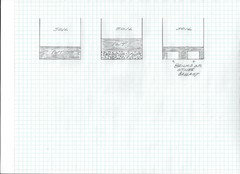
    Also, large stones are a good way of reducing the actual volume of water the soggy layer of soil that so often occurs near the bottom of the pot can hold (note the image on the right, below), but layers of smaller stones, like gravel, are actually counter-productive to drainage and can cause water to 'perch' atop the drainage layer, effectively raising the position of the soggy layer of soil and potentially reducing the volume of soil in the container conducive to good root health and root function.

    Tiffany's comment about reducing stress actually goes to the heart of the matter as it relates to husbandry. The best we can do for our plants is to determine what conditions are limiting them and correct those conditions; said another way - eliminate the conditions that cause stress. Stress leads to strain, and strain, uncorrected, always leads to the death of any organism because strain is a condition that sees the organism using more energy than (in the case of plants) it's making.

    Al

  • 11 years ago

    Al, I think you meant to say smaller here, 2nd ¶:

    "but layers of larger stones, like gravel,"

    Smaller gravel, yes?

  • 11 years ago

    Tiffany, in my latest stint at keeping houseplants (started last Nov, after being an abject failure the last time), I also went a little over-board to NOT over-water. I think I stressed some plants out by under-watering. I am learning. In addition to weight, I notice when I water that some plants will soak up a lot of water slowly. I figure they were reasonably dry before I watered them. Some the water rushes right thru, which tells me they went to long w/o water, and the soil shrunk. Some plants (mine are all in small pots) I let to soak up the water that has leaked thru the pot. And if they are soaking up the extra water really quickly, I consider that I may have let go too long. Also, as you said- or someone said- noticing the plant. My sage gets really limp when it is too dry, another salvia - the leaves curl up, and Rosemary's needles will droop. So, like all of us - trying to find the right balance.

  • 11 years ago

    Tiff - I have no idea what you're talking about! ;-)

    Al

  • 11 years ago

    Ahh, edited. TY!

    Ellen, IMO Rosemary & Salvia in pots for winter is like level 5 stuff, full-sun plants rarely attempted inside, let alone kept alive. Impressive! Keep up the great work!


  • 11 years ago
    last modified: 11 years ago

    Whenever I water my plants, I've got containers that are slightly larger, that I'll place the whole pot into. Then I'll fill it all the way up to the soil level and let the plant soak for a half hour. After that, I'll let the pot drain. When you do this, you'll notice how "brown" the water is. This is when I'll pour some fresh water into the pot, letting it slowly flush away the dirty water until the water coming out of the bottom runs much clearer. This helps flush out any excess fertilizer salts and other dissolved solids, preventing them from accumulating in the soil and building up into higher concentrations over time.

    Provided that the soil doesn't hold on to too much water, and isn't too compacted, preventing the plant's roots from breathing properly, you can't technically "overwater" it. A plant isn't going to absorb any more water than it actually needs. Sure, there are some exceptions to this, such as desert plants. But many houseplants come from our rainforests, where they can get rained on on just about a daily basis. However, the conditions in our homes aren't like the conditions of these habitats. So we have to adjust our care accordingly, while doing our best to provide the conditions that these plants are used to in their native environments.

    I read all the time about people that're having problems with their plants and then dousing them with fungicides, pesticides, and sometimes homemade concoctions, in order to try and mitigate the many issues that their plants may be having. Don't get me wrong, I'm not against using these treatments whenever they're necessary. But if people took a little time to understand their plants' most basic needs and then do their best to replicate them, you could easily avoid most of the problems that cause these issues in the first place. I don't even remember the last time that I've ever had to use a fungicide, pesticide, etc. In fact, I don't even think that I even own any of these products. Which is surprising, considering the number of plants I have, with new ones always following me home all the time, haha.

    The "Plant Spa" self-watering pots help tremendously in keeping my plants happy and healthy. I'm sounding like a spokesperson for them, lol, but that's only because these pots work great. They're the only ones I use for the vast majority of my plants. From those that love lots of water, to those that don't. I find that even with the bottom reservoir filled up with water, the plants still soak it up rather quickly. For the plants that don't need to be watered as often, when I do water them, I'll let the water drain away and I'll empty out the reservoir as well. I find that it also comes in handy for keeping any plants from leaking onto other surfaces, catching what little excess water that may come out of the pot later on. That was a problem that I used to encounter quite often, back when I still used ordinary pots.

  • 9 years ago
    last modified: 9 years ago

    I am currently trying to decide on the usage of a self-watering mechanism but not because I'm angst about water-starved plants- quite the reverse- I'm afraid of overwatering and root rot.
    Specifically, a Kumquat tree which I'm going to try growing in a large tree pot. Kumquats have been known to have roots suceptible to root rot, and this is where I fear I'm going to kill the plant.
    The self-watering insert here below from Home Depot (they have more expensive ones) claim- and even have a patent on the design- to allow the roots to breathe and always have water, while essentially making the process kill-proof by preventing you from overwatering. I'm all on board with that.

    The only caviat is this will be an outdoor potted tree all summer, so open to rain from above, as well as the pot below. In theory that would be okay- the tree would get natural rain but then always have access to water, making it impossible for me to overwater from above but defend against dryout.
    Anyone have any thoughts or experiences with these and fruit trees? I have a chorus of people saying "I'd never do it, but go ahead and be the guinea pig come back and tell us!" but the trees are rather expensive and I'd sure like to hear from some real experience in the area instead of winging it.

    One product is here:

    http://www.homedepot.com/p/Southern-Patio-6-3-5-in-x-4-in-Plastic-Self-Watering-Insert-SWI-038801/300492193?cm_mmc=Shopping

  • 9 years ago

    I'd opt for a fast free draining homemade mix over that.

    its much harder to over water in the 5:1:1 mix and the gritty mix.

    I would not use the self watering container.

  • 9 years ago

    Since you are asking advice about an african violet, I would recommend going into the African Violet forum. It is very active with a lot of nice people and good information. Rosie

  • 9 years ago

    May I pls. ask do you have experience growing other plants yourself?

  • 9 years ago

    Yes, I have grown plants since the very early 1960's. Worked in greenhouses, florists and plant nurseries. Have propagated everything from soup to nuts. Have many houseplants including violets, streps and gesneriads, epiphyllum and too many varieties to mention of "regular" houseplants. Rosie

  • 9 years ago

    The last question asked here is about kumquat. I think Karen's question was addressed to Jeff, the asker of the last question.

  • 9 years ago

    The very first question was about a violet. We have had many discussions about self watering pots on the violet forum. And while someone may get an answer about a violet in a houseplant forum, I would think they may get more answers in a specific forum. That is why they have so many forums here. Even though I responded to an older started thread,,,,,one never knows who will be able to get information from an answer.

    And last I knew,,,,anyone could jump into a thread. Do you have different rules here?

    Is THAT why you needed my qualifications???? Next time I respond,,,I will put a SPECIFIC name in my reply if that is what you require. Just let me know. Rosie

  • 9 years ago
    last modified: 9 years ago

    Another person who loves plants and wants to help is always welcome! :) I don't grant or rescind permission to anyone to do anything here, just someone like you who comes by to plant-chat, but as far as whatever my answer is worth about any kind of rules, post whatever you want, as long as it's friendly and on topic. Which, agree, started out being about an AV in this discussion but (I'm assuming) the title inspired Jeff to ask a new question about self-watering pots.

    I don't think anyone was asking for your qualifications. I think Karen was trying to gauge how much basic info Jeff might need to answer his recent question. She likes to help too.

Sponsored
AIS Renovations
Average rating: 4.5 out of 5 stars15 Reviews
Custom Craftsmanship & Construction Solutions in Franklin County, Ohio