Software
Houzz Logo Print
tamimfloyd

Backsplash design

11 years ago
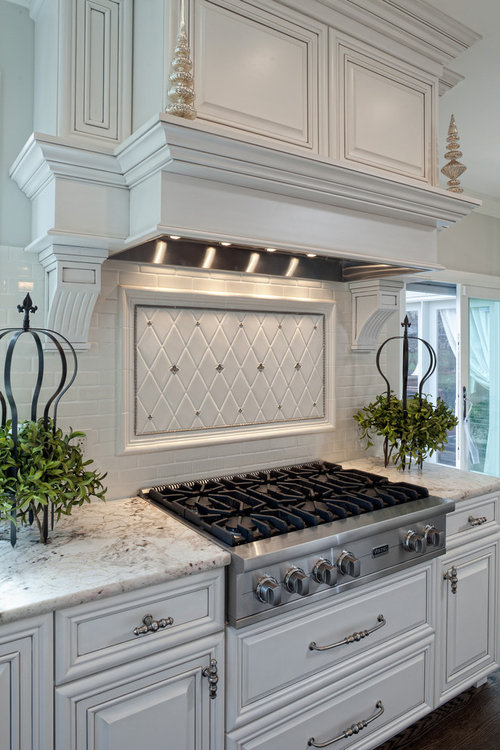
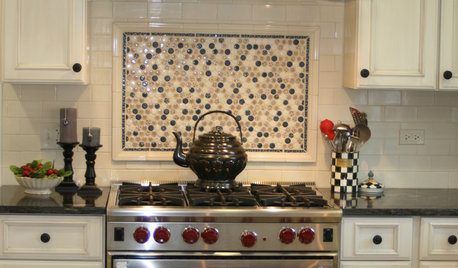
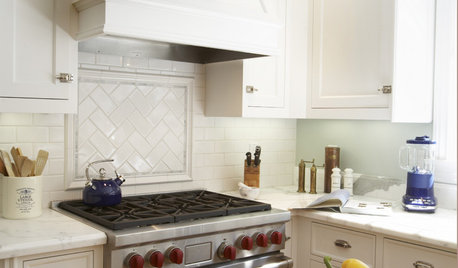
Could you tell me what the accents are in the backsplash and where to purchase them? Are they stainless steel accents, pewter or brushed nickel finish?
Well-dressed Traditional Kitchen - Glen Ellyn, IL · More Info

Comments (15)

  • PRO
    11 years ago

    Hi Tammy. The tile was from our local supplier and the design was by our designer. The liners and accents are a pewter metallic color.

  • 11 years ago
    Could I get the contact information for your supplier?
  • PRO
    11 years ago

    No sorry. We dont provide that type of information.

  • 11 years ago

    what sizes did you use for each of the metallic pieces?


  • 11 years ago

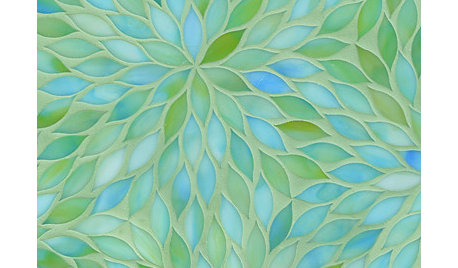
    Hi leoimbro! The insets are our Blooming Leaf pattern in two sizes: 1.25 inch and .63 inch. The beaded liner framing the panel is our Roman Liner, which is .38 x 12 inches. You can see them on our website at www.lowitzandcompany.com/bronzework-studio. You can find your nearest showroom at www.lowitzandcompany.com/showrooms.

  • 11 years ago

    Thank you so much! I will definitely be purchasing these.

  • 10 years ago

    The Roman Liner comes in 12 inch pieces. How many were used here? Thank you so much. I am going to do this design in my new kitchen and can't wait! It really is stunning.


  • PRO
    10 years ago

    Hi Teresa, I believe that is a 36-inch cooktop, and the tile panel appears to be a little wider than the cooktop. Based on this, I estimate that there are 14 Roman Liners surrounding the tile panel -- 4 along the top and bottom, and 3 along the left and right sides. In addition, there are 10 Blooming Leaf .63-inch inset tiles and 4 Blooming Leaf 1.25-inch inset tiles. It really is a beautiful layout! The designers at Drury Design have used our Talisman, Foundry Art, and Bronzework Studio tiles for many years, and we truly appreciate their inspired -- and inspiring -- design of this tile panel.

  • 10 years ago
    last modified: 10 years ago

    How were the metal pieces attached in this photo? We have purchased the roman liner and the blooming leaf tiles are attempting something similar and the tile installers are unable to cut the tiles to fit the metal pieces and were breaking the tiles so suggested glue on top of the installed tile. They also said the metal pieces were thinner than the tile and would sit below it if inset. Help!

  • PRO
    10 years ago

    Hi christinamgreenfortarget, the situation you face is easily remedied! We do not recommend affixing the bronze tiles and liners to the face of the surrounding/background tiles (whether it's stone or ceramic). It doesn't look as good, and it's a less secure way to install the bronze.

    Your installer should be able to cut the corners of your field tile, whether it's stone or ceramic. For the best results, the installer should use wet saw, which can be rented at most home stores. If he or she is already using a wet saw, but is still having difficulty, let me know and we can try to get to the bottom of the situation!

    As for the depth of the bronze tiles, the installer can build up the back of the tile so it sits flush with the surrounding material. We recommend using thinset cement for the installation. You can simply add more thinset to the back of the bronze tiles to build them out. In general, the installer should be following the guidelines of the Tile Council of North America. www.tcnatile.com

    Feel free to ask more questions! The photo that inspired you has inspired many people! I know you'll be able to achieve the look you envisioned!

  • 10 years ago

    Thank you so much! I will pass this info along.

  • 10 years ago

    The installer mentioned that we could not just cut the corners of these rhomboid tiles because the space to cut from the top tiles would be less than the amount needed to cut from the sides and leave a large gap? So they were trying to cut a point into the tile?

  • PRO
    10 years ago
    last modified: 10 years ago

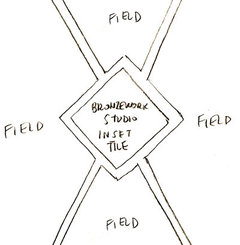
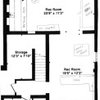
    I see what you mean. I zoomed in on the photo and noticed that the field tiles have an L-shaped cut in each corner to accommodate the bronze insets. This is a more difficult cut than simply clipping the corners, but I think it's the best solution if your field material is rhomboid or diamond shaped, as it is in the photo. (It would have been simpler if the field material had simply been squares tiles set on the diagonal!) Here is a diagram of the cuts. I hope it's helpful.

  • 10 years ago

    Perfect. Thanks so much for your help. You have beautiful pieces and we are so excited to have the finished product in our home.