Software
Houzz Logo Print
hawkeyext

Need Help with Hydroponic Tomatoes

11 years ago
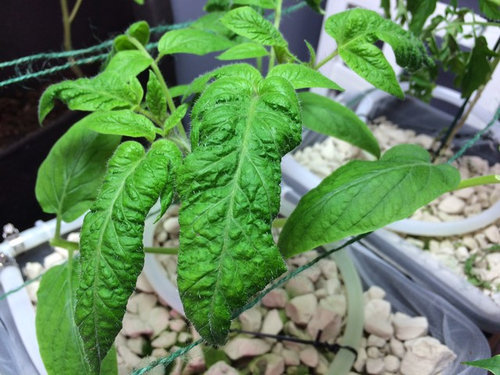
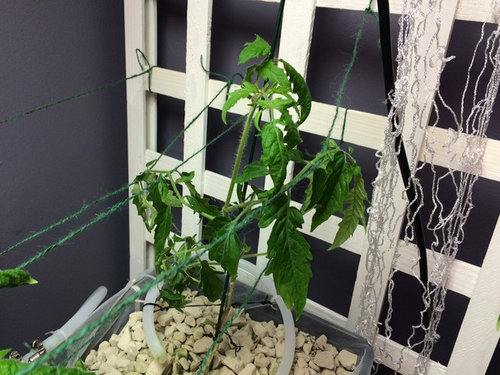
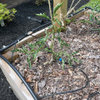
I started growing tomatoes hydroponically indoors using the dutch bucket method. The Brandywine Tomato plants seem stable for the most part, although some leaves are curling and have bumps on them. A search on Google is not providing any answers. Does anyone know the cause and is this okay? Photo 1 is a close up the Brandywine leaves with bumps.

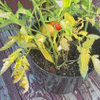
Photo 2 is an Italian Beefsteak plant who isn't doing well either. Just wondering if anyone has any ideas. This plant looked dead awhile ago, then revived, and now is incredibly droopy.

My current watering schedule is running the pump for 30 minutes, 4 times a day. It's receiving 16 hours of light.

Thanks for your help.

Comments (12)

  • 11 years ago

    Top pic looks like leaf edema to me - a sure sign of over-watering. And the follow up pic reflects what happens when the edema fades.

    But the folks over on the Hydroponics forum here could probably help more.

    Dave

    hawkeyext thanked digdirt2
  • 11 years ago

    Thank you both for the responses. I just readjusted the timer to 3x a day, 5 minutes each like PC said. The seedlings were under two 2 foot T5 fluorescent lights and they are now under four 2 foot T5 fluorescent lights which are higher up. The lights are on for the same amount of time so I don't think it should be a huge factor. I'll look into buying an EC meter to check that out. I'll let you both know how the situation works out. Thanks!

  • 11 years ago

    Be sure the roots are not immersed deeply in a puddle in the bottom of the Bato bucket when the small like this since they won't have a chance to drink enough to ever get above that water.

    PC

  • 11 years ago

    Very interesting point. I put a layer of medium sized Growstones on the bottom to provide some air. I would imagine this would help prevent that kind of situation. Would you actually recommend digging down to check out the situation? Maybe I'll give it a few days on this new watering cycle and if it doesn't look better I will investigate.

  • 11 years ago
    last modified: 11 years ago

    The problem I see is more that since the plants are small, they do not drink much, and cutting down the watering times may solve that and be good to go. I don't think the growstones were a good idea but also would need to check. When replacing the perlite bottom with growstones, in my estimation they will remain waterlogged by capillary action longer than perlite, similar to porous hydroton which is a superb medium *as long as not immersed in water*. The difference isn't their theoretical capacity to hold air which is greater than perlite, and which the salesman at the hydro store would quote, because that is when they are *fully drained*, which is not happening in your case. Actually, I believe we've solved your explanation but please do check. When the plants are drinking more it likely won't make any difference, as long as you prevent any rotting from happening now, so you don't need to mess with the media as long as you sufficiently restrict the water until the roots become heavy drinkers. At this point they are probably drinking a pint at most per day and probably less. When big, they can drink three quarts! The height of your bucket's drain plays a role here.

    Also the perlite pieces if they are perlite, look huge/coarse. That would contribute to waterlogging as it lowers the ability for aeration.

    PC

    hawkeyext thanked PupillaCharites
  • 11 years ago

    I did not know that about Hydroton (the immersed in water bit). I read it was a superb medium like you said but since it has been discontinued I was looking for a suitable replacement. I read up on Growstones, Viastones, Plantit, and others and Growstones looked most promising of those options. My buckets are layered with Growstones on top and bottom. In the middle is a mixture of Perlite and Vermiculite which take up most of the bucket. 2 parts perlite to 1 part vermiculite.

    Cue you telling me the Vermiculite wasn't a good idea...

  • 11 years ago
    last modified: 11 years ago

    Ah ha! So the most important factor yet comes out (vermiculite sponges plugging up the perlite too) ;-) Sometimes it is great to get all the experimentation out of the way up front, so you can learn how the system really works. As you can see, that mixture is not appropriate for Bato buckets as it will effectively hold far more water than tomatoes can handle, and the long watering time was just rubbing salt into the wound. You can still buy generic hydroton as LECA even from Home Depot online (which is a good deal). It is largely the same stuff, same as hydrocorn, etc., but not what you are looking for in this system. It works great in EnF, and, in DWCs as a netpot filler sitting above the water line. It could be used instead of perlite, but cutting back on the timers. However it is significantly more expensive so there is no reason to do that unless you have a pile of it to recycle from some other system on your hands.

    PC

  • 11 years ago

    I can't begin to tell you how much research I did online before starting this. Ugh... I guess no amount of research can surpass "in the field" experience... I'm just glad I kept a few in dirt pots as backups. Thanks for all your help and advice!

  • 11 years ago
    last modified: 11 years ago

    Believe me, you don't have to tell me how much time one can spend researching these things. Now, just because it is not appropriate for Bato Buckets, doesn't mean you can't go with the flow. There is a reason you designed your media the way you did and they happen to be in this system. If it is too much trouble to redo it, keep it going-don't toss it- and measure the flow rate by pulling a few emitter hoses when the pump is on and test measuring the discharge in a 2 liter bottle to see what you are dealing with.

    Then treat the buckets like a simple container grow on an automatic irrigation system. Maybe your selections of substrate media are quite good, just not for soaking several times per day. The vermiculite will drain as well given time you can determine. Rather than tossing anything, I would simply water them every other morning or so at this point maybe with a liter's worth whatever that translates to in minutes if your timer is sufficiently accurate to water for short times. I can say a 1/4" emitter line gives in the ballpark of 1 liter per minute for a properly sized sized sistem when it is wide open. Just keep observing everything and if there's wilting and drying out, or if there is a soppy bottom, adjust accordingly. You already know now what to look for in the leaves, so the next round you'll be expert and doing the learning you wish you had had hindsight to do before ;-) (Sounds familiar for me too!)

    PC

  • 11 years ago

    Hi PC, just wanted to say that the tomato plants have skyrocketed since your advice. The three Brandywine's are doing great and growing very nicely. (The beefsteak is another story but she's given me problems since she was a seedling.) But all the new leaves on the Brandywine's are looking great and the stems are very thick now. Thanks so much!


  • 11 years ago

    I agree with all wat said about the amount of watering recommendations and the kind of medium should be used in different situations I also would recommend to use a magnifier to check out tomato leaves for possible red mites spiders or other insects infestation may also contribute to bumpy leaves! SZ