Software
Houzz Logo Print
soc_jones

Landscaping pine forest back yard

11 years ago

Hi,


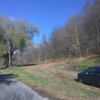
We have a house and the backyard is entire pine forest. So high canopy pine lots of needle bedding on the ground. Very shady.


We would like to enhance the usability of the space and are seeking advice on which way to go. We had though to remove a few closer to the house but we had an arborist out there and he mentioned we might have drainage issues as there is a slight slopage to the yard.


I am wondering:


1. Is pine needles ok to walk around on for dogs? People? Are they full of bugs?

2. Do people hardscape under there, what do they do?

3. Would removing a few trees impact erosion badly?

4. Dealing with pine cones / pine needles?

4. Any ideas / direction

Comments (19)

  • 11 years ago
    last modified: 11 years ago

    Here is a general pic

    http://imgur.com/Ott42Zp

    This is in central NC


    If you notice there are scrub trees coming through.

  • 11 years ago

    Ken makes several very good points. Especially, the one about getting to know your yard for a year or so. so many things have been destroyed, often unknowingly, by new homeowners on a rampage!

    There will gradually come to be ideas for what you can do and grow there. I would urge you, forests are being leveled at an all-time high for development. Can it be we can learn to love what we have, before it is gone? And no, fire would not be your friend under pines!

    +oM

  • 11 years ago

    For information and inspiration, The American Woodland Garden is a great book well worth taking a look at.

  • 11 years ago
    last modified: 11 years ago

    Personally, I love the unique wooded look of a carpet of pine needles. But I live in an urban environment where I get sick of hardscape and see the alternative as unique and special. Think of it as mulch.

    Yes, pine needles are perfectly safe for people and dogs to walk on. I haven't noticed them being particularly full of bugs, but I imagine that depends on your climate. They may be in a wetter climate...but then, grass can be full of bugs, to.

    Hardscape would be slightly trickier then it sounds. Water soaks into the dirt. Trees drink that water. If you pave around the trees, you drastically reduce the amount of water (and oxygen) the roots get. Some trees can survive this, many can't. (There is a reason there are like five or six species of trees people constantly put into urban sidewalks...they are the ones with the best chance of surviving with pavement around their roots) All this is if the person putting in the hardscape manages to put it in without damaging the roots. Also, water tends to pool on hardscape because it doesn't soak in...you'd need some sort of drainage system.

    The reason you don't have underbrush is either a.) The trees suck up all the water b.) The trees shade out the competition or c.) The prior owner regularly removed it. (Someone on this forum put a lot of effort into trying to get to the equilibrium where the trees prevent underbrush and you are left with pine needles.) If the reason is a or b, removing trees will create an opening for underbrush to grow. You will have to mow regularly.

    I know from experience that if you remove the pine needles, there is a good chance it will trigger erosion. We had a sudden increase in erosion after someone raked the pine needles from my parent's summer house.

    My idea to improver the usability would be to add some tire swings, a tree house, and a picnic table. Maybe plant some ferns, Virginia Blue Bells, and May Apples.

    Out of curiosity, what is the obstacle to usability you see? If we knew precisely what problem the trees were creating, we might be able to advise you as to how to mitigate it.

  • 11 years ago
    last modified: 11 years ago

    We have exactly the same situation and live east of Raleigh NC.

    I have to disagree with the statement that nothing will grow under pine trees. Naturally pine forest will fill up with all types of vines. The bad one are poison ivy and oak. Followed by the green briar type of vine with the thorns. These should be remove for obvious reason. I have spent over three years with poison and an axe getting rid of these thickets.

    Grape vines are another problem that has to be dealt with, but I am still working on a good solutions. I have tried to maintain them as bushes but that has not been successful. When they grow into the tree tops the fruit is not accessible and they do not add any thing to the yard, except these big vines growing into the trees.

    There are also good natural growth under the pines. Virginia Creeper is one of them and can be confused with poison ivy as it is a vine also. You should learn the difference as one is good and one is unacceptable.

    On the floor of pine forest there are some plants you will want to keep. Ground Cedar/ground pine/ running cedar (Names vary.) This is a semi rare plant that you are lucky to have in your yard, and should encourage it. There are other native plants that you will want to encourage but you will have to take your plant book back there and watch the area for a year or two to find them.

    To incorporate the pine woods into my yard I have done the following.

    To make the area accessible I have created paths that wind through out the area. These are easy to make with a leaf blower, or a yard rake. We also have some stepping stone paths in some parts.

    Considering the natural plants we are planting azaleas and camellias, and other shade loving plants so we have flowers and their color.

    We have some bird house at the edge of the yard for blue birds, and feed the birds (and squirrels). The open area and pine trees make an excellent area for attracting birds. Note: If you feed the birds, don't get upset if an occasional bird become feed for a hawk. It is part of nature.


    Leave a little cover back there for the deer. Last year we had a doe and twin fawns in the yard. She would put them in the cover, and then several times a day she would come and feed them and let them play in the yard.

    Pine forest can become a very attractive part of your yard, just don't expect to have grass.

    Also People think of natural areas like I have described as low maintenance. They are not, they are just maintained differently.

  • 11 years ago

    Making paths is a good way to get to know your property. Get a book or two so you know good from bad when it comes to plants. Maybe join a garden club and meet some local gardeners. Lotsa valuable info there.
    You have a lot of possibilities of what you can do there, and
    just think, you won't be a slave to your lawn because you won't have one there. Maybe the front yard will have a lawn. :-)
    Mike


  • 11 years ago

    I have pines everywhere on my property, and the pine needles (aka "straw") will get thick if you let it. Every winter I drag the water hose back to the wooded area and I burn off some of the straw layer, this keeps it from getting too thick and becoming a wildfire hazard. Obviously this can't be done if it's too dry or windy, or of you live in a crowded neighborhood. Any desirable hardwoods or shrubs need to be wetted to prevent them from being burned.


    But yes, I have all sorts of plants growing under those pines... native blueberries, sparkleberry, Yaupon holly, American holly, native and Indica azaleas, oakleaf hydrangea, wax myrtle, etc.... All of these love the dappled shade and the acid soil.

  • 11 years ago

    Soc jones-just one heck of a lot of good ideas presented here. One other item I'd like to share: Very often, pines will develop many dead branches down lower on the trunk. These do not indicate a problem but are merely the result of natural shading-the tree is growing taller year by year and its upper portions are shading out the lower. With a good pole saw, you can cut off these dead branches-right at the trunk, leave no stub-and thereby improve the appearance and accessibility of your site. Results will be rather immediate and very gratifying, I think you will find. The types of pole saws, pole saw blades, etc. available to the homeowner have improved enormously in the last decade or so. A blade with the modern, in-line teeth with several cutting surfaces will go through those little pine branches like butter.

    +oM

  • 11 years ago

    I have to disagree with the statement that nothing will grow under pine trees.


    ==>>> boy tough audience ... lol ...


    to be more clear ... it will not be easy.. to TRANSPLANT in foo foo flowers and stuff ... due to water competition ... and lack of sunshine that actually hits the floor of the area ...


    of course.. ma nature.. has all kinds of things the can grow in this type of situation ... of low water.. low light..

    your best bet.. would be to research native understory plants ...


    ken


  • 11 years ago

    ah ha... words mean things ... i finally figured it out ...

    you dont LANDSCAPE a forest floor ... you utilize.. what is there ...

    i think that is what we are all trying to explain ...

    when your title asks.. how can you 'landscape' it.. we all start thinking about garden beds.. flowers.. etc ....

    and i dont think any of us .. well i dont.. think thats possible..

    that is the idea i am trying to get across ...

    ken

    ps: since you are new to it... step out your door.. and take a big whiff ... a pine forest ... has an incredible.. ever changing fragrance ... frankly.. its to die for ... do not lose that.. trying to make it into something it isnt.. and never will be ...


  • 11 years ago

    Cutting those lower, dead branches off has another benefit. It limits the ability of a ground fire to 'ladder up' up into the canopy. It also looks better and helps to get a little more light and water to the ground.
    Thinning the pines will also help you to be able to plant more in the understory, but go easy. Appreciate the pines and the pine needle mulch for what it is. Work with it, instead of fighting it, and the experience becomes so much more enjoyable. Think enhancement.
    Mike


  • 11 years ago

    I lived in Ponderosa Pine country when I was a kid. My friends and I had a lot of fun making camps and forts in the woods. We would take the thick layer of needles and stack them up in a large circle almost like an igloo, and then cover it with the dead branches and then cover that with more needles. Lotsa fun! After a few weeks the needles would settle, leaving a place for rabbits or coyotes. That was in the woods, not our backyard.
    Mike .....thinking nice memories.


  • 11 years ago

    I was always interested in forestry, even as a youth. I remember often hearing the phrase, "a pine plantation is a biological desert", uttered by wildlife people and so on. Now that I've spent a lifetime involved in this and related areas of study, I know that to be false. Maybe a red pine (sorry for the regional reference) plantation of a certain age class, right around where complete crown closure takes place, is for a time, a place which is hard for any other organism to utilize. But given time, these plantations mature, the crowns become much higher, and light levels actually increase. The first "machine-planted" tree plantations in the world took place in Oconto County, Wisconsin, not far from my land. And I can tell you, these trees, planted on incredibly abused land, have grown to magnificent proportions and the understory is in many cases teeming with advance regeneration-usually of species other than red pine. So we must think in temporal terms when characterizing these stands, whether naturally-occurring or human-planted. They change with time! Just like everything else.

    +oM

  • 11 years ago

    thanks for comments all


    So this is actually in a neighborhood and this pine section might be an acre or so shared by multiple houses. There is a road behind it. It's quarter acre lot total and so this back space no more than a few thousand feet..a neighborhood yard size. Maybe i'll take some more pictures and add them so you can see.


    There is actually a dead tree near the house we will remove and I was wondering if it made sense to remove a few more trees to clear something in the canopy and maybe grow grass into the space.


    So from my perspective the issues are:


    1. We like the look to and want to preserve it

    2. We were thinking about enclosing for pets, does this even make sense?

    3. It's not a huge space. Think suburban neighborhood backyard size

    4. The pine forest itself composes neighbors lots

    5. There is a dead tree near house getting removed. Should we try to remove a few more? Clear a hole in the canopy. Would removing a tree cause erosion problems? Would grass grow if the sky above it was open? I don't love grass we just want to make the space more enjoyable to be in and i guess my brain only thinks about that in terms of walking on grass.


    So again it comes back to efficiently using the small space, what should we do before we enclose it, how can we MAXIMIZE the utility here on a suburban lot. Should we even enclose this?

    Thanks,


  • 11 years ago
    last modified: 11 years ago

    Quote: 2. We were thinking about enclosing for pets, does this even make sense? Quote

    Personnally I don't think the pine needle carpet will hold up to the constant presence of animals in a small space like a pet run.

    Quote3. It's not a huge space. Think suburban neighborhood backyard size

    4. The pine forest itself composes neighbors lots Quote

    My lot is about 300' deep with the last 100' in pine trees. I have managed it as I said in the previous post. Make your lot look attractive and the others will follow. Odds are they don't know how to manage it either.
    Quote 5. There is a dead tree near house getting removed. Quote

    Definitely remove the dead trees. It will be easier to remove that trying to get it out of the other trees if it comes down by itself

    Quote Should we try to
    remove a few more? Clear a hole in the canopy. Quote
    If the though behind this is "and then plant it in grass", The odds are it will not work because of the type of soil. There are areas under my pines that are almost peat, with the old pine needled, leaves, and roots.

    Quote Would removing a tree
    cause erosion problems? Quote
    The removal of the tree itself will not cause erosion. It is what you do to the area after the tree is removed. Like any where else, you must understand the natural flow and grades to control erosion. Some times on slopes it is best to create swales across the slope to slow down and control the water.

    Quote: Would grass grow if the sky above it was open? Quote
    Probably not well

    QuoteI
    don't love grass we just want to make the space more enjoyable to be in
    and i guess my brain only thinks about that in terms of walking on
    grass.Quote

    Walking in the pines give you a different kind of enjoyment with the woods plants, squirrels, birds, and what ever is happening back there. In our area when the Azaleas and camellias it will be pleasant walking through the flowers.

    Walking among the pines in the summer is always cooler than walking across the the sun drenched grass. Of course it limits the time you get to play with the lawn tractor or mower.

  • 11 years ago

    Agree with krnuttle on all points but one, that the removal of a tree in and of itself does or does not increase erosion, to which the correct answer is yes, due to the loss of the tree canopy itself, the force or impact on whatever bit of ground the tree covered is now exposed to the full-on effect of heavy rains, etc. These effects are well understood and documented in a great many stormwater engineering studies, etc. Doesn't mean don't ever cut down a tree, just something to be aware of.

    I totally agree with the basic idea being to retain as much of what is there, as possible. Once lost, it won't be back. And really, if the whole neighborhood could come to recognizing they had a valuable resource in their collective backyards, it would be possible for better results to follow, in whatever management plan was to be adopted. That's what I'd do!

    +oM

  • 11 years ago

    How old/tall are the pines? Typically in a closed-canopy situation there will be a thinning out of the pine trees as they are competing against each other for food/water/sun. Either you do it or they will die naturally. The bigger they are the further apart they should be.

  • 11 years ago

    In the pine (and spruce) stands I'm familiar with, total production-as if this stand were being maintained for wood or pulp production-can vary surprisingly little whether the stand was ever thinned or was not thinned. It seems that you can have fewer trees, but more fully-developed trees, or more, but more crowded trees, but that total production remains stubbornly about the same. So it's really just down to what you, the property owner wants. Up here, old red pine plantations which have gone through all of their initial thinnings, IOW's, all the trees that remain are the final stand members, can be amazingly like native stands in appearance and general condition. That's what I like to do-thin the worst trees out over time, leaving the best to grow on. Most pine species can be very long-lived, measuring their lives in centuries.

    +oM