Software
Houzz Logo Print
tracey3345

What am I doing wrong???

11 years ago

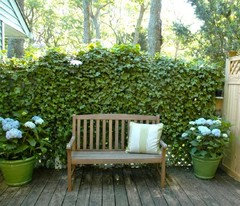
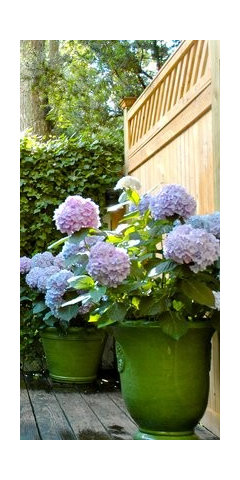
Each summer I have several "Endless Summer" hydrangeas (both regular and "pygmy") in large pots on my deck on eastern Long Island (which is generally a great climate for hydrangeas). The first summer or two, they bloom like crazy, but by the second or third summer they stop blooming altogether, while nevertheless growing wider and taller and sporting enormous leaves. The first time this happened, I was convinced that the pot was too small, so I transplanted them into my garden -- but they don't bloom there, either; they just keep getting wider and taller with huge leaves but no blooms! The light conditions are good (shade and dappled sun), they generally get enough water, and I fertilize according to the package directions (I use the one for hydrangeas/rhodies). I also trim them back every winter, mulch around the base, wrap the pots in burlap, and shield them from the wind. I think I'm doing everything right, but I still can't get them to bloom. Any ideas what the problem could be? (And yes, I am certain they are "Endless Summer"!) Thanks much!

Comments (13)

  • 11 years ago

    A couple of thoughts - These bloom on growth from the current year as well as previous years growth, if you are pruning in winter, you could be losing the flower buds on older wood. If you are getting no blooms on current growth but are seeing healthy large foliage, I suspect you may be over fertilizing and getting foliage while sacrificing blooms. They will need some sun for best flowering, you said shade and dappled shade, are they receiving bright light at some part of the day?

    I haven't found reason to fertilize hydrangeas in the ground, I have mildly acidic soil that is high in organic content. My own fertilizer regime for things in pots is just about half, sometimes less, what the package directions indicate. Seems to work for me, I don't find plants showing symptoms of needing more fertilizer.

  • 11 years ago
    last modified: 11 years ago

    Oh, yeah, it sounds like an Oops... you pruned off the invisible flower buds created in July-August that open/bloom in the Spring. The good news is that these ES shrubs will produce more buds & blooms later in the growing season but please do not prune them a second time or you may cut the late blooming flower buds too. Hydrangea flower buds are invisible so it is hard to tell if you have any; they are usually located near the end of the stems.

    And try not to feed them too much as some fertilizers -especially those that are water soluble- may contain 30% nitrogen or more. That helps keep the leaves lush and dark green at the expense of bloomage. You can get/buy one of those cheapo soil test kits and use it to check your potting medium or ground soil to see if they are high in nitrogen.

    Too much water on the potted plants can be a problem if the water does not drain well. You can nix this suggestion if the pots have several holes to let the water out.

    Finally, transplanting can kill the flower buds if the plant goes into transplant shock. It is more common when you move a plant that is in the ground to another location though, because you are disturbing the root system quite a bit. If you move a potted plant into a larger pot and do not mess around with roots, the plants may not abort all or any flower buds.

  • 11 years ago

    Well, I'm glad to hear that the issue may have been overzealous pruning and not the pots I'm using - I keep buying larger and larger ones, thinking that will solve the problem, but it never does!

  • 11 years ago
    last modified: 11 years ago

    So, any advice as to how I should be pruning in the fall? I typically remove all the dead blooms and then trim all of the stems down to about 10-12" tall. It sounds like that's too far. Should I even be pruning at all?

  • 11 years ago

    I had a similar problem with my ES (lush growth, few blooms) and a nurseryman told me they needed to be fed heavily. Conventional wisdom speaks otherwise, but after I fertilized the snot out of them (that's a botanical phrase) they bloomed quite nice for me after that. With nutrients leaching out of your pots every time you water, I'd use ferts at full strength.

    As for testing the soil for nitrogen, forget it. Most university soil tests don't even bother to test for N as it is too variable and volatile based on temps, moisture, bacterial activity, etc, etc.

    tj


  • 11 years ago

    Tracey, I find that you don't really need to prune the endless summer. Mine are five years old and I have never pruned them. As the previous members mentioned, the blooms are set soon after the shrub is done flowering more or less in August. If you trim the shrub anytime after you are cutting off the flowers. If the shrub needs some trimming the right time to do so would be immediately after the shrub is done blooming. As for old blooms, I usually leave them on for winter interest and then crumble them off carefully with my hands in the spring. If you want to remove the bloom at the end of the season do so by clipping right above the leaf nodes located right below the bloom. It shouldn't be more than a couple of inches below the bloom.

  • 11 years ago

    Thanks, everyone! They did so beautifully in past years that I was over the moon (and actually thought I knew what I was doing!). Now, thanks to your suggestions, I have a game plan. Time to get my blooms back! :)


  • 11 years ago

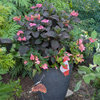
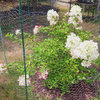
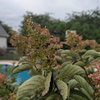
    Enjoy and have a great season. Nice pictures too!


  • 11 years ago

    Nice area you've set up there.

    tj


  • 11 years ago

    Thank you! :) One final question: For my existing "amputees," is there any hope of them ever blooming again, or should I replace them? Even if they will bloom again, I'm afraid they'll get too gigantic for their pots (and I will get too scissor-happy!) before that ever happens...

  • 11 years ago

    They will have reduced or no bloomage this growing season (due to the pruning) and I would hope they will rebloom if not pruned again but they will produce the invisible flower blooms in July-August and bloom again in Spring 2016 if left alone. Transfer them to larger pots during the winter months if necessary.


  • 11 years ago

    the components of your fertilizer is important, too. You know those three numbers you see on fertilizer, like 10-10-10? They refer to amounts of NPK, or Nitrogen, Phosphorus, and Potassium (in that order).

    Nitrogen (N) – nitrogen is largely responsible for the growth of leaves on the plant.

    Phosphorus (P) – Phosphorus is largely responsible for root growth and flower and fruit development.

    Potassium (K) – Potassium is a nutrient that helps the overall functions of the plant perform correctly.

    So it sounds like you're giving them plenty of N, but need to up the P.

    For pruning, sounds like it's best done in late spring, before the blooms start to form in July/August.