Software
Houzz Logo Print
james_xikis

emerald green arborvitae dying

11 years ago

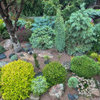
I have several emerald green arborvitae on my property on Long Island, NY. Many are doing well but several along my east property line stated to turn brown last fall. Now they are in bad shape. Can anyone tell me what's happening from these pictures?


ega · More Info
ega · More Info


Comments (15)

  • 11 years ago

    Agreed-they look poor. I don't have your answer, but sure is amazing to see the lack of vitality of many of these cultivars, when juxtaposed against the tremendous vigor and almost complete lack of problems of any kind-of the straight species in its native haunts.

    One thing I will say though-we're right on the cusp of another growing season. You may as well wait another month or so and see if they bounce back with lots of new, green growth. Then I'd get rid of them.

    +om

  • 11 years ago

    how long ago planted.. last fall???

    how bad was winter ... any freezing cold wind storms???

    what is that hard wood tree .. and how well watered were they last year ...

    is the lawn sprayed ... did the damage start on the lawn side???

    ken


  • 11 years ago

    Planted several years ago (they were about 12-18 inches high) and thrived well until last season when they started to show signs of browning. The get water from the lawn sprinklers fairly regularly.

    This past winter was particularly harsh, which may have made matters worse, but I think the problem started before.

    The hard wood tree in the picture is a red oak.

    -Jim

  • 11 years ago

    Hard, for me anyway, to imagine a lack of winter hardiness per se, on any T. occidentalis cultivar. These are tough, non-fussy plants in their home range. Temperatures lower than minus 30 F were recorded this past winter very near to where my land (full of straight species arbs) is, and they look perfect this spring. And Long Island is a much milder climate than where my wild ones grow with abandon. Something's happening here, not just unsuitable species. Almost looks like spider mites damage. Maybe in out-of-native-range areas, that becomes a problem. I really don't know.

    +oM

  • 11 years ago

    should be fully established ... but i wonder how they were planted ... did you do any root surgery ... were the roots badly circling for having been growing in the pot too long???

    i personally.. wouldnt rely on lawn sprinklers.. for watering after planting ... but then.. on the other hand.. i would NOT water an established conifer in any manner.. and for sure.. not by wetting the foliage every day ...

    i also wonder about drought last summer.. followed by the the bad winter ...

    how much fert have you been putting on them.. growing them from 18 inches.. to what looks like 3 to 4 feet in just a couple years ... is there any history of late fall fert'g??

    frankly.. i dont hold out much hope... but would wait another month or so.. to see if they leaf out at all ...

    are the back sides.. away from the lawn.. greener??? what about having the lawn sprayed????? .. is that side out of the sun????

    ken


  • 11 years ago

    When I established them I used a soaker hose for a month or two. If I remember correctly they did not appear to be root bound at all.

    As for fertilizer - they have probably gotten some "over spray" from when I fertilize the lawn but I have not deliberately fertilized them otherwise. I do a late fall fertilizer for the lawn and I'm sure some of that gets to them as well. Should I avoid them when I fertilize?? I have a bunch of others that are outside the reach of my broadcast spreader that have grown similarly - and are growing well.

    The back sides seem to be the same in terms of browning. The foliage on the back sides get very thick in the late spring/summer so the back sides of all of them have thinner growth.

    I've never had the lawn sprayed.

    Is it possible that the sprinklers wetting the leaves are damaging them?

    -JIm

  • 11 years ago

    James, I cannot see one thing wrong with anything you're doing. This is a non-fussy species, in nature easily colonizing very poor, waterlogged sites as well as drier uplands. Water on foliage means nothing to a plant like this. And you're in the wet east, which should be ideal. I still wonder if somehow, during one of your relatively brief dry spells (have there been any?), spider mites didn't get going on these things. And no, whatever little bit of fertilizer is ending up in their rooting zone is also not a problem. There's just nothing, from a management perspective, that sticks out. Sorry.

    +oM

  • 11 years ago

    We thought about the neighbor thing, but there's a 50 foot empty wooded lot between these trees and the neighbor - so he would really have to hate me to do something like that! :)

  • 11 years ago

    That is odd. Keep an eye on the nearby brush to see if they leaf out properly.

    tj


  • 11 years ago

    James, you didn't have a lot of salt spray by chance?

    +oM

  • 11 years ago

    No. It looks just like that though, doesn't it!

  • 11 years ago

    Sure do. I'm fortunate enough to live in a place where bagworm does not typically appear, but that is a pest of arborvitaes further south. But I think you'd see the bags this insect leaves. Maybe somebody will chime in and correct my information if needed. But that is, at least, one possible insect pest of arbs. Once the weather is reliably warm, if you still have these things, take a clean sheet of white paper and hold it under a branch as you tap and shake the branch. See if any mites-tiny relatives of spiders but quite destructive to trees-fall onto the paper. That is one diagnostic tool to see if you have spider mites. One common type-red spider-can build up to high numbers on some conifers. I'm not sure if arbs are on its menu, but it's easy to check.

    +oM

  • 11 years ago

    what I notice is the bottom of the tree trunk is fully cover by the rocks. From what I been told you need to leave some space out to ensure bottom of the trunk is not cover by any mulch or rocks( avoid fungus and disease). but I can be wrong.. when did you put those rocks there? what if you try to give it some space under the trunk say about a half feet wide of circle.

  • 11 years ago

    While it is true we don't advocate placing organic mulch materials-things that retain moisture-up against the trunks of trees we plant, I really don't think that's got anything to do with this issue. First, rocks readily drain water away, so don't stay wet for long. second, there has not been enough time for some slow-moving crown rot to have developed. Third, there does not appear to be any such rot going on, nor is there likely to be in such a resinous species as this. These things-well, the tree-size species plants anyway-make great fence posts. The wood is extremely decay-resistant. Unfortunately, I think we're still flummoxed.

    +oM