Software
Houzz Logo Print
dbbyleo

Starting a New Raised Bed for a Veggie Garden

11 years ago
last modified: 11 years ago

Hi all,

I'm new to gardening. I have done some research and I'm ready to start building my veggie garden. I've decided to go with raised beds. The plot I'm going to use is part of my yard lawn. My initial bed will be able 4 feet by 50 (approx 200sqft). My plan was to:

1. Remove the grass that is on the lawn now.

2. Break up and till the ground, which will essentially be my sub-soil.

3. Buy 70% Topsoil, 30% Compost mix (from Pioneer Sand Co). Lay about 12 inches of that on top of my sub-soil.

Any concerns with this? Or other suggestions?

-Leo

Erie, CO

Comments (12)

  • 11 years ago
    last modified: 11 years ago

    Hi Leo,

    I don’t have raised beds, but it sounds to me like
    everything you’re planning is really good.
    In my opinion the part about tilling the soil that will be below your
    raised bed is very important so the roots of your veggies will be able to
    easily grow into it, and so root crops like carrots and parsnips will have “somewhere
    to go.” One thing you can do that will
    improve the “flow” of water is to put part of your new soil into the raised bed
    and then mix it at least somewhat with the existing soil before you fill it the
    rest of the way, that will prevent stratification between the two layers of
    soil, which can sometimes create watering problems. Mixing the soils will allow the water to more
    easily move from the top layer to the deeper soil.

    Just thought of this!
    I assume you're planning to put the bed in a full or almost full sun
    spot. Most veggies need as much sun as
    they can get.

    Otherwise the only thing I can think of is to be sure you
    get rid of the roots of things like bindweed, thistle, and dandelions/milkweed
    if there are any in there now, before you fill it with the new soil. And if there are any of those things there
    now, don’t just “till them under.”
    Breaking the roots into small pieces will just give you a lot more of
    the weeds since those things can sprout from very small pieces of root left in
    the soil.

    Build it – fill it – and have fun Veggie Gardening this summer!

    Welcome to RMG,

    Skybird

  • 11 years ago

    Leo, it sounds like you've got a good plan to me! The 70/30 mix is pretty much what I use though I generally make my own mix from HD bagged dirt. Not that either way is better, but I generally build small beds so 5-6 bags is all I use at any one time.

    I will second Skybirds recommendation of mixing some of your mix into the subsoil, especially if your subsoil is clay (and I'm assuming it is).

  • 11 years ago

    I did a raised veggie bed a few years back. . . I read about lasagna beds on here and did that instead of removing the grass and tilling, since I had a huge weed problem and didn't own a tiller.

    I just cut the grass down as far as I could with the weedeater then laid down a double layer of cardboard, wet it good then set my soaker hose in place, added a 4-5" layer of compost, wet that and then grass clippings, then wet, then more compost, wet again, then finished off with top soil. As soon as your last layer is on you can do seeds or plants. The cardboard keeps the weeds at bay (they did for me anyway). Then I laid all my grass clippings in between the rows to keep moisture in as well as help with the weeds.

    I grew carrots, beets and radishes (all went in the ground just fine). I am a lazy no dig kinda gal, I love the lasagna bed way. You can google it hear to read more about it.

    Every flower bed I have was done this way and I used some fairly large plants when I started. The beds do shrink down over time but they are only going into the existing soil and that's a good thing.

  • 11 years ago

    I third the 'make sure you incorporate the machine-made soil into the native to ensure best drainage and to avoid a perched water table'. I also find with machine-made soil that the first year isn't as productive, as all the critters haven't moved in yet to make soil naturally productive. No need to purchase a product to do that, just wait or work in a handful of native soil every few feet to speed up the process. An extra application of fert the first year likely will be necessary if you are starting now. We got the soil for our raised bed here from Pioneer, no problems.


    You'll have a good chance of turfgrass rhizomes moving into the bed after a couple years, you'll want to figger out a way to keep that from happening. Do the work now so you won't have to do much more later - pulling grass out of zuke or pumpkin or carrots is no fun.


    The other thing I'd recommend is to figger out in advance if/how to extend your garden season, as the growing season here is so short. I already have in all my carrots, onions, shallots, lettuce, spinach, peas, and have been covering the past few nights. I use hoops, row cover and cheap roll plastic over all to cut wind, takes three minutes after dinner and two after breakfast to expose. Carrots, lettuce went out March 15-ish and I can push cool season plants into November. Thinking about rebar positioning for hoops now will save trouble later, and you can also use for hail protection if you can get home in time or plan ahead. Just a thought.

  • 11 years ago

    All of my vegetables are grown in raised beds, I think it's a great way to go. A few things that occur to me.....think about irrigation plan before you go too far. Personally I find a few beds to be more versatile and manageable than one giant bed. Not all plants have the same water needs for instance. Three or more beds might make crop rotation a little easier (you don't want to grow the same plant in the same place year after year). Think about the orientation of the sun too; plan so that tall plants don't shade others too much. Worms! I lay down something like chicken wire before filling with soil to discourage burrowing creatures from infiltrating. The quality of your soil will determine the success of your garden....get the best you can, think about having it tested, and add amendments accordingly. Worms!

    Have fun, and good luck

  • 11 years ago

    Oh wow... thanks everyone for all the generous feedbacks and input. I think I came to the right place.

    I am taking this project slow and plan to spend this Spring gathering knowledge and info ... and you guys are helping a lot. I'll probably start "breaking ground" this summer and hopefully have my first bed built by fall... with my first grow season in Spring of 2016. If I'm lucky enough, plant some cooler season variety before the end of this year. I'm also hoping to grow some seedlings inside later this year in prep for Spring 2016.

    I want to start small, but I want a "big picture" already drawn out so I can expand in phases and hopefully - if I'm lucky - full realize the full plan. At some point, I want to draw it all out and have an overall plan for this "addition" to the yard... and have it in a way that maintains, or even enhance, aesthetics of the yard. So though I want to start small, I'm gathering as much as I can so I can plan for the rest of the garden. I'll start off in one area and build from there in subsequent years following the plan.

    Again - thank you for all the responses.

    Skybird... I get the point of making sure to get all the weeds out of the lawn (where I will place the beds). I'll have to google it a bit to see what's the best way to exterminate weeds, including their roots once I clear the area of grass.

    I've got an area in the backyard that I think is a good candidate to be carved out for the garden. I haven't measured, but I'm pretty sure it gets at least 6 hours of sun.

    Mix in some of the topsoil into the subsoil - dully noted! Thanks for that tip!

    Dan... turfgrass rhizomes. I assume you mean rhizomes shooting under my bed walls and surfacing inside my bed. The plan I have is to have the garden completely sectioned off from the rest of the yard - fence, paths, and all. At the turf edge, I'll like install edging to keep the lawn at bay. My initial recon has gotten me some good ideas on how to install plastic sheeting as to extend my growing season - using PVC pipes as my wall support and hoops placed into the pipes, etc etc. I definitely plan on having plans for that.

    Maxin... Yes... irrigation will be a big factor in the plans. Based on what I've read and watched, drip systems seems to the the ideal and overhead irrigation is discouraged. I definitely have some specific questions around this topic, but I think I'll save them for another thread. But at this point, I think much of my initial leg work will be setting up the new irrigation lines, but also re-routing/displacing the existing lawn sprinkler heads.

    Anyway... I'll post my initial plans/layout soon and have you guys critic it.

    Lastly, I wanted to share a video I found in youtube where I'm getting a bunch of my initial information. It seems to be a video made in the 80's by a gardening author/expert name Jeff Ball - seems to know what he's talking about. 53 minutes long - he take the beginner from start to finish: https://www.youtube.com/watch?v=cO2CLU-O6mU

  • 11 years ago

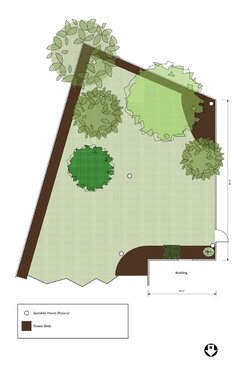
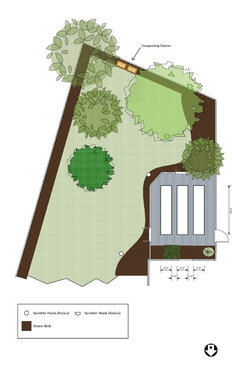
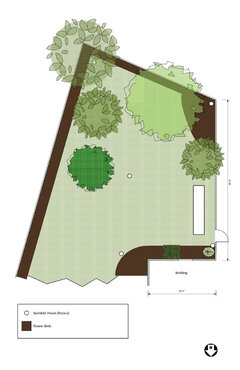
    Hi guys... so here's a mock up of my plans for the backyard and this new veggie garden. The "before" drawing is my yard now.

    The "after" is the what I hope to realize in a few years... complete with paths, picket fencing around, gates, etc. I'd also like to have a composting station and that upper corner of the yard I think is ideal (though I might have to research if very shaded area is good for composting).

    But like I said, I wanna start small, so my plan is to start the first bed this year... without anything else (paths, fence, etc) - see "interim" drawing. And if I have enough success in that, then I'll start the second and third... and the rest of the plan. For now, just the one bed and probably some chicken-wire, rudimentary fence around it to keep my dog out.

    I know the proximity to the trees aren't ideal, but this is what I have to work with. But this part of the lawn gets a tremendous amount of sun, though portions of the south side of the beds will be in shade at different times of the day. The westerly bed will also get some shade from the 5 foot perimeter fence as the sun sets.

    The paths I have is 4 feet all the way around and 2 feet in between. I think that should be ample space for even a wheel barrel or carts, etc.

    Each bed is 72 sqft. So all three, and once fully realized, will be over 200 sqft of garden space. I heard 200 sqft, if productive, will provide plenty for a household of 5. And my two little ones aren't much into veggies, anyway, so I assume this will be plenty for my wife and I :)

    My biggest challenge displacing the existing rotary sprinkler heads in the interim. I'll have to do something somewhat of a temporary rigging if I want to keep the first bed free of overhead irrigation. And later, I'll have to figure out have to run another zone of water supply to this area for the drip lines in the bed, but the whole irrigation system will be for another post. But once realized, I can close off one rotary head, and replace another with a radius sprinkler... will save a bit on watering the lawn... and lose some lawn I have to mow.

    Thoughts on the practicality or aesthetics of this lay out, or any comments - welcome and appreciated. Thanks!

  • 11 years ago

    Hi Leo,

    I don't have time to really look at the (wow! fancy!) plans, but just want to say that all my veggies are watered with sprinklers. No time or (especially) money for fancy drip systems here. With our dry climate, I've never had a problem. Not trying to convince you that's the way to go, but just want to say that you CAN grow veggies with overhead sprinklers. I water everything with sprinklers--including roses--and I often water after sunset to keep it from all evaporating right back off!

    Skybird


  • 11 years ago

    Aside from the fact it is nice to have such good renderings, what species of tree is that tree directly to the south?

  • 11 years ago

    Tree directly south of the garden: I believe this is an Ash.

    Big Tree in the middle: Cottonwood

    2 Trees Next to Cottonwood: Not sure, but they deciduous.

    Dark Green Tree: Pine, evergreen

  • 11 years ago

    Ash will continue shading until it dies in a few years, so the bed next to fence will have to be for plants that don't require full sun & for cool seasons summer-planted. Otherwise IMHE orientation of beds is easier to provide sun if E-W rather than N-S, plus can trellis more things with E-W orientation, and northernmost bed will be mostly sun and W side some shade for cooling.


    .02