Software
Houzz Logo Print
gbehazinb

Tricks of The Trade,

11 years ago
last modified: 11 years ago
Do you have any ?

Growing tomatoes in our cool PNW is challenging. Although our USDA zone number is almost 8 butlet that mislead you. That is just for winter hardiness. Atlanta, GA is also in zone 7b.

We have over 230 days of frost free growing season but practically for growing tomatoes it is like 130 days. Even then our warmest temperatures RARELY reach an exceed 85F. Maybe one or two days in a season, in average. That is how our heat zone of ONE is all about. A lonely number.

So if you want to beat those conditions, need to do something to beat the mother nature.

I will explain later about my tricks. But right now I want to see what your secrets are.

Sey

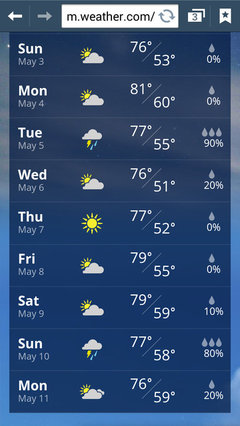
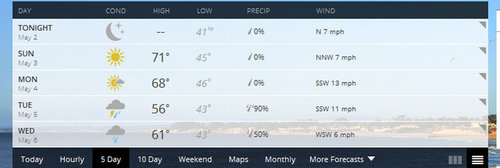
PS: here is our current 5 days outlook.

Tonight will be 41F


Comments (12)

  • 11 years ago

    Sey, your plants are out and mine are not but look at what's ahead in Jersey. Actually, my pots are sleeping outside for the first time tonight :-)


  • 11 years ago
    last modified: 11 years ago

    sey, did you think about building a greenhouse ?

  • 11 years ago

    Goodground ,OMG ... those are more like our August temperatures. I couldn't wait that long to plant out. LOL

    Daniel, ... Greenhouse would be nice but there is no room to put it

    Sey


  • 11 years ago

    As I said, I am challenged by the poor growing climate here. An so I do things to deal with it.

    NUMBER ONE:
    Though our late winter/early spring is not too cold but it takes for ever to warm up. On top of that add constant rain. Not too heavy but it rains maybe 2 out of 3 days in average. This not only cools down the soil also makes it real soggy.
    Put to bed the beds and cover and tuck them in with black plastic.
    I do this in the beginning of February ; That is 2 months before the LFD.

    This is just the beginning. I have to do more... coming up soon in this thread..hehe

    Sey


  • 11 years ago

    Keep their feet warm !
    As first step, covering beds with plastic helps the soil warm up faster. Tomato plants need a soil temperature warmer than 50F..
    So what if your soil temperature is slightly on the cool side ?
    Hear is what I do:

    -- dig a hole an take the soil out and spread it out, giving it a nice sun bath, until it warms up ( 65F ++).. You may cover it with clear plastic to get it done faster.
    -- Then fill about 2-3 inches of that warmed up soil at the bottom of the hole.
    -- Put the plan in the hole.
    -- Fill the rest of the soil around the plant nicely. Now that is some cozy place for the plant.
    --- Water with lukewarm water ( 75F -85F). Hmm. that should keep the plant's feet warm for quite some time.

    Sey


  • 11 years ago

    I have good luck resorting to cool tolerant tomatoes. Some that do well for me are Stupice, Glacier, Kimberly and for a larger tomato Siletz. I also have good luck with Caspian Pink, surprisingly cool tolerant for a very large tomato.

  • 11 years ago

    The tricks of the trade in this area are a bit different than in most other places. They tend to be the polar opposite of what they say to do in areas with a more mild climate.

    1. Get the biggest plant you can into the ground. The season here for the first part is short. Too small of a plant will get you a plant that sets maybe a couple of fruit. Then you get a plant that should be giving beef steak sized fruit. Instead the heat kicks up, and you get golf ball sized fruit that will not ripen at all.

      2. Be patient trying to start too early here will cost with plants that get set back from low temps. Covering, and uncovering every day may seem like one is getting a head start. I can say that has not been the case here. This year I started plants inside earlier, and planted in ground later. The weather has been warmer for the night time lows as well. My plants are easily twice the size this time of year as they were last year. It was not easy to wait either. I am glad I did. We had a late cold snap that had day time temps at slightly above freezing for only a couple of hours at the warmest point of the day. Covering alone would not have worked this year. Last year I had to replant more than once. This year I have only had to plant once.

      3. We do not have long season here regardless of the fact that we have so many days of frost free weather. We have two short seasons for tomatoes. There are a few small fruit cherry tomato plants that will give fruit in peak summer here. The rest once the fruit has been harvested off the plant. Either take a cutting of a healthy part, or start a new plant in late July, or mid August. The plants that do stay in the ground during peak heat time tend to grow large, and produce little. A fresh plant while it may not be as large will give far better production once the cool weather hits.

      4. Avoid being sentimental of a plant. Once it is done in the heat here it is done. Yank it. Wait a few weeks. Plant another in its place. Also this will take care of the late blight problems. Also we have septoria problems here like no tomorrow. Proactive use of fungicide will keep it in check long enough to get a good harvest though. By the time septoria becomes an issue the plant is done anyway.


      5. Be ready for crazy weather. This goes big time for the late season. Projected First Frost Date is November 20. I have seen frost as early as the last week of Sept. . It is not uncommon for it to happen sometime in October as well. 3 years ago the weather cost me not getting a single ripe tomato large than a cherry tomato. I did have a good green tomato fry though.


  • 11 years ago
    last modified: 11 years ago

    Also being in the PNW, I appreciate this thread. (Although reading this forum, it's been fascinating to learn about growing in the hot south! I never would have thought it's so difficult to get tomatos in Texas, Florida, etc.)

    I have another thread I started on cloches I have been meaning to update. I keep forgetting to take pictures when it's still light. But in short, this year I am experimenting with three different cloches as season extenders (wrapped cage, Wall-O-Water, and "Better Reds Greenhouse" - a perforated plastic bag that slips over a tomato cage). All three definitely make it warmer inside, especially when in sunlight, and that is a good thing for a plant that operates on heat units like a tomato. On the other hand, I think only the WOWs actually keep it any warmer at night.

    So, I believe the cloches will definitely speed growth. But will they aid fruit set on cold nights, making for earlier first fruits? Hard to say. The only fruit that's set yet has been indoors at night when it did so.

    Sey, we tried a bubble wrapped cage too but stretch wrap worked much better for a tapered cage. I will explain when I update my cloche thread :)

  • 11 years ago

    I hesitate to add this because I have not tried this due to lazyness, but...
    I often see the recommendation to cover the soil with black plastic to warm the soil, the problem with this is that hot black plastic will lose a lot of its heat to the air, especially if there is wind. Clear plastic is said to warm the soil more as the solar heat reaches the soil, the plastic holds the heat in, but boy does it encourage the weeds! So why not combine the two? Cover the black plastic with a layer of clear plastic, the black gets hot, the clear holds the heat in.
    Let me know how this works. If it works well, I suggested it; if not, I have no idea who suggested such a silly idea ;P


  • 11 years ago

    Know the characteristics of your growing season so that you can adapt to it. Not just USDA zone, but also length (number of frost-free days), the temperatures you can expect over the season, and heat intensity.
    Here in Northern NV, on the wrong side of the Sierras, we have a short, intense, highly variable season. Length of frost-free days has a range of 90-120 days, but they are not necessarily consecutive. It's normal to have a 30-40 degree swing in temps over one day/night . Last frost in mid-May. Planting out sans protection (WOW, plastic, cloche, etc.) shouldn't happen any sooner, and most people wait until June. But this means that the plants have as few as 4 weeks to grow, flower, and set fruit before the convection oven of July and August is turned on (temps in July and August rocket up past 90, and there's that ever-present desiccating wind).
    So you adapt by either planting as big a plant as you can get in early June, or by planting smaller plants earlier (say mid-April) and working a bit more to protect them from the cold nights. Black plastic to warm up the soil, but that has to be removed before July and a good layer of mulch added to keep the beds from drying out. Regularly watering any bit of dirt out here will be a siren song to weeds, some of which have giant taproots and the rest of which are prickly and spiky and just painful, so weed control is huge. Soils here are always lacking OM and are generally pretty alkaline, so add compost every year and either amend with sulfur or bring in better soil and grow in raised beds.
    Find and make friends with experienced gardeners in your local area. If you have one, your cooperative extension is a valuable resource.
    Mine, the University of Nevada Cooperative Extension, has literally hundreds of searchable publications and staffs master gardeners to answer the phones. They also offer free lectures and classes on everything from pruning to composting to growing veggies. You can walk in with a picture or sample of a sick or diseased plant and they'll help to diagnose the problem.
    Don't be afraid to experiment and take calculated risks. Diversify.
    Growing from seed lets me try a couple new varieties of tomato each year. I grow both cherry and slicers, which lets me harvest all season long. I plant half my tomatoes early, and the rest at the normal time, which is insurance against early disaster.

  • 11 years ago

    Alright. We see that different climates have different set of tricks. For example, in our PNW we have different set of tricks than in Southwest Texas and South Florida. While we try to beat the cool weather, you are fighting the heat. While we try to provide more air flow by pruning, you might need that foliage to shade the fruits and the sol underneath. We pray for more sunshine and you try shade your plants.

    The morale of the story is : KNOW YOUR CLIMATE !

    Sey