Software
Houzz Logo Print
hzdeleted_20219254

Newly replaced window leaks

11 years ago

I had 10 windows replaced yesterday and one is severely leaking along the top edge . I was not totally impressed by the install. These are finless/smooth vinyl replacement windows. The window in question had little to no roof overhang, however the old windows never leaked. The RO were solid and rot free. I accept that the caulk may not have had time to fully cure but I don't think that is truly the problem

The installer is returning today to fix the problem. I requested that he install a drip cap as a more permanent solution. I felt being picky about his installation while he was installing it would be disrespectful since he is the "expert" Now I feel I should do what is in the best interest of the house even if he needs to make 10 trips to fix it.

Is it acceptable to directly request the remediation I want , the drip cap?

I plan to test all of the windows with a garden hose to be sure they are totally right.

Any recommendations on other measures to ensure a leakproof window? Other than get a better contractor.

The contractor and I are still on good terms, though maybe a little stressed, I'd like to keep it that way if possible.


Mick

Comments (25)

  • 11 years ago

    Things happen to the best of us. Bottom line, he is coming to fix it. Im sure he knows what he is doing.

    However, what brand of window is it?

    User thanked krypton
  • 11 years ago

    The windows are Milgard. Would that impact the way it needs to be repaired?

  • 11 years ago

    Id wait to see what the installer thinks the cause is.

    User thanked krypton
  • PRO
    11 years ago

    If the windows are in siding, a drip cap would be recommended. If there is a 1x4 around the window, you might also have him check the top of it to see if it's sealed against the siding.

    User thanked Ultra Windows
  • 11 years ago
    last modified: 11 years ago

    UPDATE:

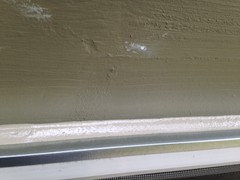
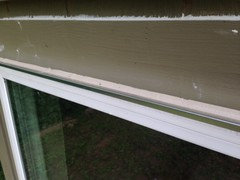
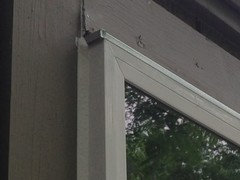
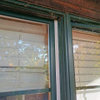
    The installer stopped by and noticed that the seal(caulk and foam) along the top was broken he also installed a drip cap as per my request. Im excited to see how this holds up under the next rain. I intend to leave a tarp over the window to allow proper curing of the caulk and foam. Does that sound right? Below are images of the new drip cap. I think it looks good. I cant tell if he ran it behind the siding or just the trim, I asked if he did or not (waiting for reply) and it looks like he pulled the trim down. See the images below. thanks all for your comments! I was at work during the repair.

  • 11 years ago


  • 11 years ago


  • PRO
    11 years ago

    Drip caps need to be under the siding and not just the trim board in order to be effective. He probably can't get this done without pulling the window back out first. He has most likely stopped the leak by sealing the 1x4 against the siding, however this will need to be checked every few years and re-caulked as needed.

    User thanked Ultra Windows
  • PRO
    11 years ago

    Wow. That last picture is not good. He's got the window sitting outside the trim and that's a bad idea. That window should be moved to the interior until the exterior edge is just inside the outside trim edge. Is this a Window World job?

    User thanked Ultra Windows
  • 11 years ago

    I know I don't like how the windows sit proud of the trim. I guess he didn't want to cut the returns which are only drywall. I'm not going to comment on who did the job. Lesson learned on my part...


    I'm sure he is not going pull the window and reset it. What do you think of installing a thicker trim board to compensate.


    In the long run I plan to extend the overhang

  • PRO
    11 years ago

    A thicker trim board will help to some degree at least with appearance, but Ultra's comments are spot on.

    1) the drip cap should really be at the siding to trim interface, not the trim to window (unless it is in both which is fine).

    2) The area where the siding or trim laps over the drip cap should NOT be caulked. Will it result in an imminent problem, maybe not, but it is not correct. That drip cap is positively lapped in order to direct moisture that gets behind the siding OUT of the opening, not INTO it. Caulking that area essentially prevents that, meaning any moisture has no escape route.

    This is speculation to a certain degree, but based on your pictures, it looks to me like this installer is not very well qualified. I'd expect that you will have long term issues. I would speak to someone in management at this company regarding your concerns. At this point, the weather-tightness of this installation is very much dependant on caulking, and the excessive exterior projection will only further stress that seal.

    User thanked HomeSealed Exteriors, LLC
  • 11 years ago

    HomeSealed and Ultra

    Thanks for your comment. Yesterday in a not so pleasant email to the company. I recommended that they utilize the InstallationMasters training program for their installers... I dont really know if that is the best, but I have seen it recommended by several manufacturers. Also I believe they demonstrate proper installation and weather sealing for all of the various situations from new construction to reno. I also viewed a nicely put together video on insert windows on the Finehomebuilding website. I am hesitant to inform the contractor at this point because I think I would just get a bunch of static in response.

    I was strongly considering doing the install myself...I even posted questions to this forum. I think from now on I should follow my gut.


    Frankly this is the second time I have dealt with a contractor for home repair, my last experience was quite good and the contractor actually did a few things beyond what we had agreed upon.


    ~Mick


  • PRO
    11 years ago

    Mick, you are on the right track. The AAMA Installation Masters procedures are the industry's best practices, and will ensure an excellent installation when followed. That said, I will add two caveats:

    1) Not every installation can use those procedures to a "T", nor does every install need to meet every requirement of it to be considered sufficient, or even very good. It again is an excellent, and comprehensive process, but some deviation is acceptable in many cases.

    2) The verbiage in your contract and installation procedures agreed upon will likely dictate what is or is not acceptable in this case. A bare minimum installation in legal terms will be nowhere near the level of protection that would be achieved by AAMA standards. Essentially, if the window is functioning as designed, not leaking excessive air or water, and/or the installation procedures used do not contradict what was explained to you or spelled out in your contract, you may not have a ton of recourse, at least as far as litigation or the threat thereof is concerned. That is not to say that you shouldn't pursue getting the issues corrected, however, approaching them tactfully may result in a more streamlined process.

  • 11 years ago

    Last night we had torrential rainfall almost 2 inches in 1 hour. The other 9 windows are well protected by the overhang and didnt get any rain on the head of the window, so I don't see them being a problem unless we have a biblical flood. Ironically two of the windows are set into the trim due to the bizarre half stone facade/half siding part of our house. These windows were on a long list of home improvements the next of which is gutter installation... only half the house has gutters. (We just moved in a few months ago.) I think I might extend the overhang over the problem window plus the gutters. I hope that can prevent water infiltration at the head. As for the sides I will have to keep an eye on the caulk, trim and paint for the long haul. The installation is guaranteed for one year from install. I know that is not a long time. The window itself is guaranteed for life... I dont know how much of a poor installation they are willing to remedy, my guess is not much. The contract we signed states that our only recourse would be reinstallation of the windows if we were to go to litigation.

  • PRO
    11 years ago

    HomeSealed is correct, not every installation can be done in accordance with the AAMA guidelines as it is heavily tilted toward the new construction methodology. There's no excuse however, for installing those windows the way he did. Cutting the sheetrock and sill back to allow the window to be recessed is time consuming to be sure, but it's the right way to do the job.

    User thanked Ultra Windows
  • PRO
    11 years ago

    +1.... Another acceptable option would've been to downsize the windows to sit inside of the sheet rock and add stops to interior and exterior. Either way, it should have been discussed up front.

    User thanked HomeSealed Exteriors, LLC
  • PRO
    11 years ago

    That's right.

  • 11 years ago

    It seems you need to specify exactly what your expectations are before you start... I also see their is a list of installation masters certified installers as well. Wish I knew about that beforehand.

  • 11 years ago

    How difficult would it be to remove the window once it has been installed? Does anyone have experience with that? Is there any reason not to remove a replacement window if it is not done properly? I suspect it is probably easier than removing the original windows.

  • PRO
    11 years ago

    Removing the replacement window is very easy, particularly if the installer didn't use foam around the perimeter.

    User thanked Ultra Windows
  • 11 years ago

    He did use foam I think, two applications. Once it is removed can it just be cleaned and reinstalled properly?

  • PRO
    11 years ago

    It can still be removed and reinstalled, it will just be more work.

    User thanked Ultra Windows
  • PRO
    11 years ago

    +1. Shouldn't be too bad to get it out and reinstall.

    User thanked HomeSealed Exteriors, LLC
  • 11 years ago

    Thanks! I might try one myself....