Software
Houzz Logo Print
joe_tanzi

My first lawn

11 years ago
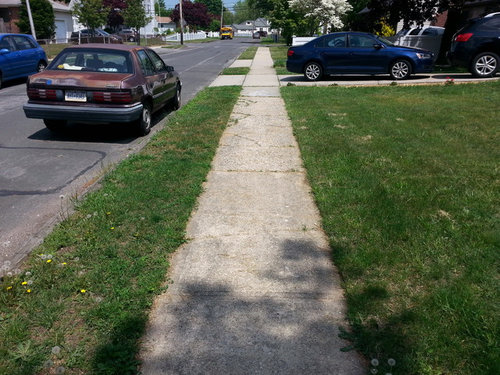
So my wife and I moved in just about 2 years ago, and we're expecting our first child during the first few months. Needless to say this is my first full season where I am able to tackle the lawn and I'm hitting some rough spots (literally and figuratively). I want the same thing as everyone else: a plush green lawn that my son can enjoy.


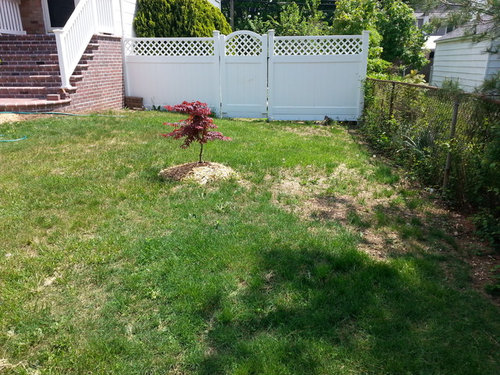
The lawn has been severely neglected, with two trees being removed by the last homeowner which were filled in with sand and bricks. I think I've gotten all the brick out and have added topsoil to offset the volume.


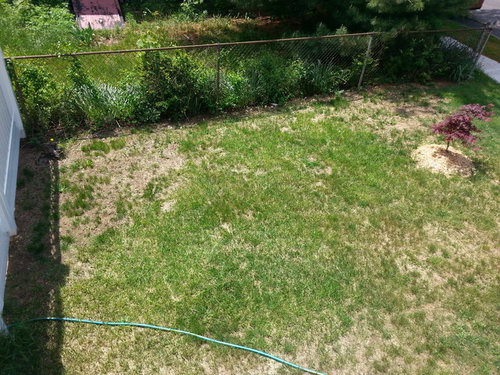
My issue is that I simply cannot get grass to grow. I have thatched, limed, raked, seeded and fertilizer multiple times (only once with the lime) and still have multiple bald/brown spots/weeds etc. I'm starting to truly get frustrated. I live in NY so I'm using a rye/bluegrass/fescue blend. My lawn gets plenty of sunlight (too much if anything).


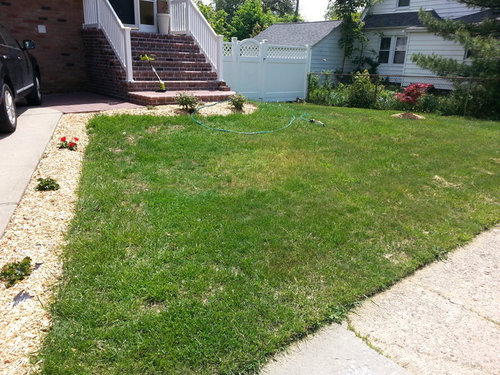
I've added a flowerbed along the driveway and planted a baby Japanese maple to try and pull your eyes away from my grungy lawn, but I really need to fix this mess. I'm planning on aerating in September as the lawn gets plenty of traffic and I'm told that's the best time to do so.


Thank you all for taking the time to read - I greatly appreciate any advice you all can give. I don't have "before" pictures, but attached are some that I snapped last weekend so you can all see what I'm working with.


hopefully green,


J


Comments (3)

  • 11 years ago

    What lawn? All I see is a gorgeous Japanese maple.


    Here are the basics of lawn care. You might be able to determine what you're doing incorrectly after reading. Please come back with questions/clarifications, because these can be controversial. They're correct, but still controversial. I've tried to make them apply generally for everywhere but sometimes there are exceptions.

    Basics of Lawn Care

    After reading numerous books and magazines on lawn care, caring for lawns at seven houses in my life, and reading numerous forums where real people write in to discuss their successes and failures, I have decided to side with the real people and dispense with the book and magazine authors. I don't know what star their planet rotates around but it's not mine. With that in mind, here is the collected wisdom of the Internet savvy homeowners and lawn care professionals summarized in a few words. If you follow the advice here you will have conquered at least 50% of all lawn problems. Once you have these three elements mastered, then you can worry about weeds (if you have any), dog spots, and striping your lawn. But if you are not doing these three things, they will be the first three things suggested for you to correct.


    Watering
    Water deeply and infrequently. Deeply means at least an inch in every zone, all at once. Infrequently means monthly during the cool months and no more than weekly during the hottest part of summer. Do not spread this out and water for 10 minutes every day. If your grass looks dry before the month/week is up, water longer next time. If that does not work, then you might have to water more than once per week during the summer's hottest period. Deep watering grows deep, drought resistant roots. Infrequent watering allows the top layer of soil to dry completely which kills off many shallow rooted weeds.

    You will have to learn to judge when to water your own lawn. If you live in El Paso your watering will be different than if you live in Vermont. Adjust your watering to your type of grass, temperature, humidity, wind, and soil type. It is worth noting that this technique is used successfully by professionals in Phoenix, so...just sayin.' The other factors make a difference. If you normally water 1 inch per week and you get 1/2 inch of rain, then adjust and water only 1/2 inch that week.

    Mowing
    Every week mulch mow at the highest setting on your mower. Most grasses are the most dense when mowed tall. However, bermuda, centipede, and bent grasses will become the most dense when they are mowed at the lowest setting on your mower. In fact there are special mowers that can mow these grasses down to 1/16 inch. Dense grass shades out weeds, keeps the soil cooler, and uses less water than thin grass. Tall grass can feed the deep roots you developed in #1 above. Tall grass does not grow faster than short grass nor does it look shaggy sooner. Once all your grass is at the same height, tall grass just looks plush.

    Fertilizing
    Fertilize regularly. I fertilize 5 times per year using organic fertilizer. Which fertilizer you use is much less important than numbers 1 and 2 above. Follow the directions on the bag and do not overdo it. Too much is better than too little*.

    At this point you do not have to worry about weed and feed products - remember at this point you are just trying to grow grass, not perfect it. Besides once you are doing these three things correctly, your weed problems should go away without herbicide.

    * This used to read, "Too little is better than too much." Recent test results show that you cannot get too much organic fertilizer unless you bury the grass in it.

    joe_tanzi thanked dchall_san_antonio
  • 11 years ago

    Thanks for the reply. So should take your underhanded compliment as I should just rip and replace the whole thing? The area is fighting a losing battle to weeds/crab grass. I'm looking for some advice and direction here.

    Thanks


  • 11 years ago

    Heh.

    Let's begin at the beginning because that lawn you have? It's actually not that bad. But I do notice some things.

    The basics of lawn care above are correct--water as rarely as possible and at higher amounts at a time. Mow high and often enough not to be hacking down a jungle. Fertilize at the correct times for a northern lawn (Memorial Day, Labor Day, October 1 if doing it synthetically, May 1, August 1, September 1 and [optional] October 1 if organically with a synthetic when growth stops).

    Just those things will take care of 80% of major issues.

    In your case, I'm detecting some soil issues, as I often do. I'd spring for a $25 soil test through Logan Labs as I suspect your rather sandy soil has some shortages. You can read that as "I can see your sandy soil has some shortages."

    Aeration is rarely required (although there are exceptions). Instead, we recommend the shampoo method (which you can look up via the search function or ask if something's unclear).

    Weeds and crabgrass can generally be wiped out with spot sprays (or a blanket spray if the whole area is badly infested) of Weed B Gon with Crabgrass Control. One shot should take down the vast majority. After that spot spray using a 1 gallon pump sprayer and the concentrate as new weeds arise. Once the soil's fixed and the lawn is back in the swing of things, weeds will become uncommon to very, very rare. I've had two weeds this year so far, and it's been a bad year.

Sponsored
Wannemacher Interiors
Average rating: 5 out of 5 stars26 Reviews
Customized Award-Winning Interior Design Solutions in Franklin Cnty OH