Software
Houzz Logo Print
ryan_hatfield

Please Help: Darkened tile grout in master shower (pics attached)

11 years ago
last modified: 11 years ago
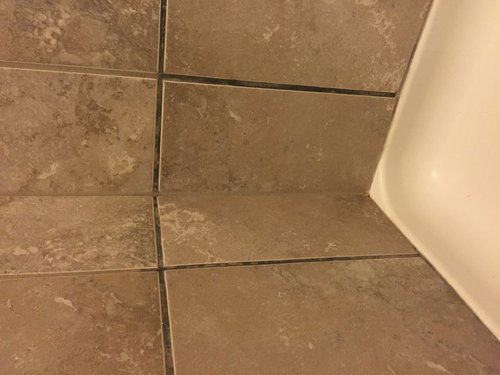
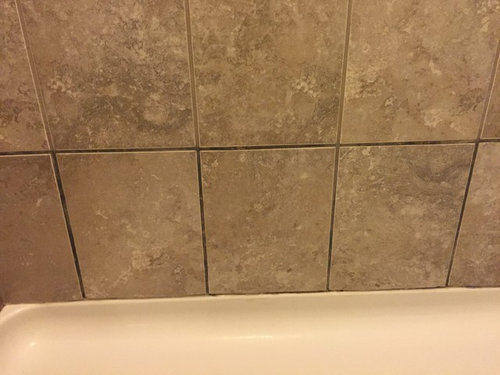
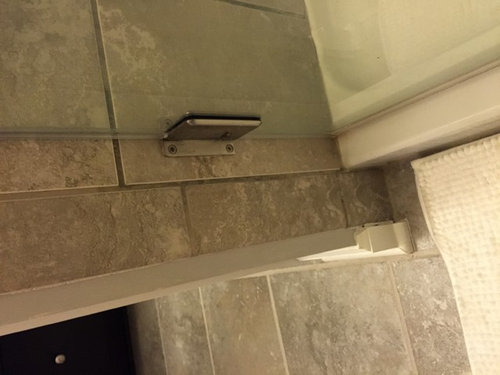
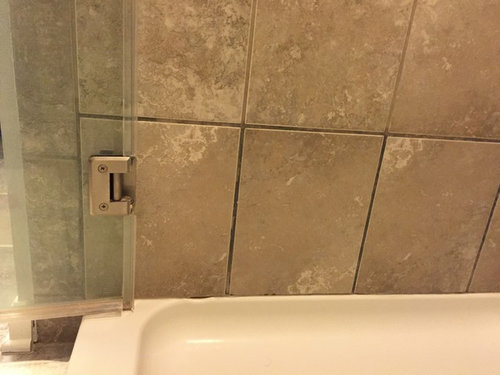
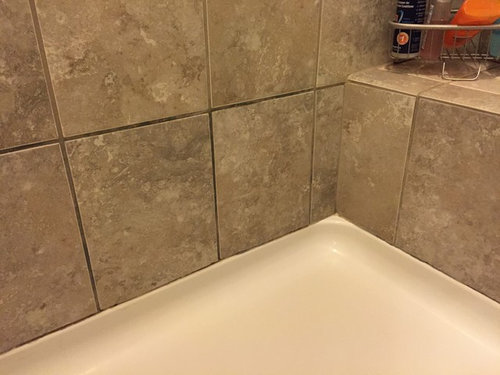
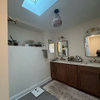
Hi - I could use some help from some experts. We built a house and moved in Nov 2013. A few months after moving in we noticed that the bottom row of grout in our master shower was growing darker than the rest of the shower and never lightened back up. When we moved in, all of the grout was the same color. We did seal the grout when we moved in.

We've asked our builder to look at it multiple times and were originally told it was soap scum or something and just needed cleaned, although when they scratched the grout, nothing came off. We since shave bought $50 worth of cleaner including Finnazle and other soap scum and grout cleaners we found in these forums and nothing has helped. Most recently, the builder came out with the tile installer and they scraped off some of the caulking along the bottom of the shower pan (there is caulk all along the bottom of the plastic pan where the tile meets the pan, except for leaving the weep holes clear of caulk). They then stuck a paper towel back between the tile and pan and noticed some wetness. The installer said they wanted to recommend removing the bottom row of tile to investigate because they couldn't know what's going on without doing so; however, when the builder called to schedule the appointment they said the new recommendation was to just use a tile grout stain sealer to match the grout color that is now darkened to the rest of the tile. Sounds like a cove rip job to me, but not sure and I'm worried there could be a bigger issue.

Can anyone help or has anyone experienced this? I'm also concerned that there is dark color behind the caulk along the shower pan, which in past experience has been mold.

Please help...


Comments (19)

  • PRO
    11 years ago

    With the darkened grout so high up I would think the tile was dot or spot set. Most likely drywall as a backer board.

  • 11 years ago

    I honestly don't know what material was used, but I know it wasn't drywall from when I visited during construction. Don't recall if it was the orange synthetic backer board or a concrete backer board, but drywall wasn't used (I made sure if it due to another builder using drywall in a prior home and me having to strip the shower and re do it)

  • PRO
    11 years ago

    I can't imagine fixing this topically. Not permanently anyway. Bottom row of tile's gotta go.

  • 11 years ago

    Jerzeegirl - what ended up being the moisture issue in your case?

  • 11 years ago

    When my house was built, it was okay (code) to use green sheetrock, which must have been constantly getting wet and drying out over the years. The grout would get black in certain locations and we thought it was just dirty. After a while we realized that it wasn't dirt, it was moldy. My tile guy also told us that he wouldn't be surprised if roots had started growing up through the slab because he had seen that happen before. Luckily we didn't have roots. He demo'ed the whole shower and treated the studs with mold killer. Then gave us a wonderful Kerdi shower. There have been absolutely no problems ever since.


  • PRO
    11 years ago

    Looks like the used cement board and no water proofing so it holding moisture

  • PRO
    11 years ago

    A properly built Kerdi install usually solves the issues.

  • PRO
    11 years ago

    Sorry I don't drink the orange schluter cool aid. I don't believe in the product. 95% of all the work we preform are mudset jobs due to tight tolerance of the material. You can't do a mudset job on schluter substrate and there is only a 2 year limited warranty with Schluter. On top of that it is way overpriced.

  • PRO
    11 years ago

    Probably because you don't NEED a mudset job on a Kerdi Shower. If the framing and walls are true, why the mudset? Make no mistake, I have done tons of them and they certainly are great. Straight, plum and true.


    As to being "overpriced," yes, there is a proprietary drain assembly....which looks MILES better than the average PVC/FHA $9.00 drain and will cosdt you a hunnerd bucks or so. (big whoop!)


    When I factor in the time differential of mudding walls, putting in a preslope, setting and folding a rubber liner, metal cladding the curb for fat mud, putting in a final slope....all before you tile, as opposed to simply ONE mudbed, Kerdi the walls and floor and tile away...in many cases, I'm less expensive than the "Traditional" way...simply because of time.


    Warranty? Don't care about the Company. I warranty my stuff for life...and have yet to have a callback. What is "Life?" Until either you die of I die.....lol

  • PRO
    11 years ago

    Oh, and by the way, you certainly CAN use Kerdi on a mudset job.

  • PRO
    11 years ago

    I spoke with a sales man for schluter and I told him most of our jobs were mudset and the foam board I thought was so flimsy. He said that schluter doesn't recommend mudsetting your material on top of the board but instead correcting the frameing prior to installing board and then installing the tiles using only thinset.

  • 11 years ago

    Regarding Kerdi and mudset. I'd never float mud over kerdi, or kerdi board. I agree that that type of installation makes little sense. Practical or financial. I'd guess that from the technical point, the weight of the mud might even be too large of a shear force on the fleece membrane, not to mention possible adherence issues of mud-to-fleece.

    If someone wanted a topical membrane I could see using Kerdi or some other sheet or liquid membrane on the wall after floating the walls. And that's Kerdi membrane, not Kerdi Board.

    If 95% of your work is mud walls, then you really have no need for Kerdi, especially Kerdi Board. No argument there.


  • 11 years ago

    So the builder is now saying that there's record that the bottom row of tile had been removed and replaced with new grout, which he claims he's confident is the reason the grout s discolored. Looking at the pics (and seeing in person), this doesn't at all look like a "different batch of grout".


    He's "willing" to open the wall from the rear through the drywall to confirm there's no moisture problem, but from the above it seems like a moisture issue wouldn't be noticed going this route since the moisture would not be on the back of the cement board, which is all you could see by opening the drywall on the other side of the wall, but rather a moisture issue between the tile, grout, and water barrier, correct? If I removed some of the discolored grout, would I be able to notice a moisture issue that way?

  • PRO
    11 years ago

    Same advice you got at JB Forums.....


  • 11 years ago

    Haven't seen a reply to this question posted tonight on JB. Which advice are you referring to?

  • 11 years ago

    Any thoughts from anyone on the latest? Can I see if there's a moisture problem just by removing grout?

  • 11 years ago

    Does it HAVE to be moisture from behind? Can't it just be soap scum and water that has turned moldy? When I looked at your picture, my first though was to spray that with Tilex (mold & mildew - not tile cleaner) and let it sit. I bet when you go back an hour later, the grout would be clean again.


  • 11 years ago

    Debbi - I've used Tilex, Finnazle and a couple other soap scum removers and mold/mildew removers multiple times and none of them have had any effect.