Software
Houzz Logo Print
snowwinter

Need simple design for front yard

11 years ago
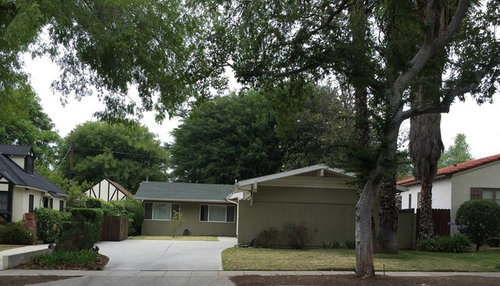
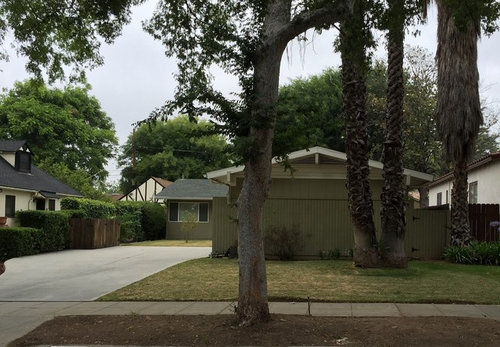
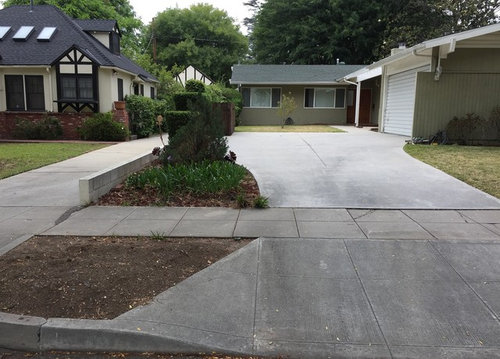
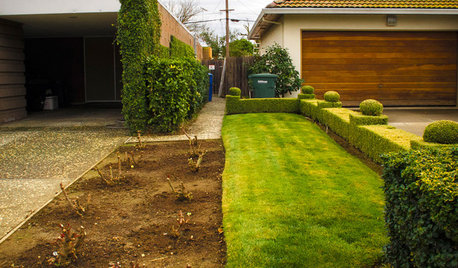
Wife and I want to remove all the grass (we started the curb section already, used to be ivy) and design/install a simple look with drought tolerant plants. Don't know where to start, if anyone with an eye for these things can take a look at what we have now and offer some ideas, I'd appreciate it!


Comments (18)

  • 11 years ago

    It would be a great help to people trying to advise you if you give your approximate location and hardiness zone. Also, although it looks like the area is full sun, which direction is north.


  • PRO
    11 years ago

    If not grass or ivy, what will the main groundcover be?

  • 11 years ago

    Berries.

  • 11 years ago

    This sounds more like a plant choice question than a landscaping question. Try the perennials forum, or google drought resistant plants. And your zone is vital information.

  • 11 years ago
    last modified: 11 years ago

    laceyvail - it looks like the OP has now changed his screen name to provide zone and location details....

    My main question is - why remove the grass? The normal rainfall (~3"/month) in the Hamilton area is adequate for growing grass, although the grass may go dormant in late July/early August when summer heat and dryness is at its worst. Is your soil sandy or clay? (Grass on sandy soil will go dormant sooner than on clay....)

    What kind of trees are those between the house and the road and what is going on with the trunks?! They look very odd....

    Your comment 'berries' in response to the groundcover question sort of implies you have a particular vision/plan for the space. Can you explain what that is?

  • 11 years ago

    I'm a little confused. It looks like 3 full grown palm trees in front. Do they even grow in Canada?


  • 11 years ago

    I am not the OP...

  • 11 years ago
    last modified: 11 years ago

    I should've been more clear in my original post. I'm in Southern California, Los Angeles, and there's a drought issue currently. The city is encouraging residents to keep lawn irrigation to a minimum and is even offering to give a rebate to home owners to remove sod to further drive down the water usage. Directionally, north is to the right edge of the photos. Thanks for all the replies so far!

  • 11 years ago

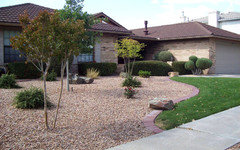
    Time to xeriscape, the pic is just an idea to show what can be done. I would eliminate all of the grass if it were my lawn. If you want some plants put some cacti and maybe even some ice plant here and there.


  • 11 years ago

    There must be some public gardens in the area. Go to a few and see what you like. Ask questions - the staff and volunteers at such gardens are often glad to share information with visitors. Contact your state's cooperative extension service. If the state is encouraging people to ease up on irrigation, even to the extent of providing incentive in the form of rebates, surely they've got some information on how to do it.


  • 11 years ago

    Kudos for dumping the turf grass.


    Gravel would get the job done quickly and cheaply - but I think gravel looks like a parking lot.


    I think the best way (without dropping $10k+ on a professional landscaper) would be to buy sacks of native wildflower seed...all kinds. Remove the grass like you've done, scatter the seed at the right time of year, follow watering instructions, and let nature decide what goes where. You'll wind up with a wildflower meadow,

  • 11 years ago
    last modified: 11 years ago

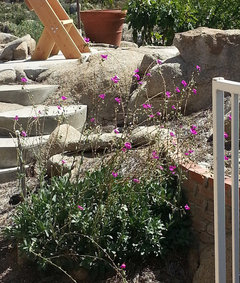
    In Southern California native wildflowers will NOT become a meadow. It's too hot! I would put in an automatic drip system so you can water individual plants. Most plants take water to get established. In the photo below, the succulent gets no water, but the pot contains an avocado and next to it is a fig tree, all for 45 minutes on 2 gallon emitters on the water district allotted watering days.

    I watered this spreading succulent by hand every other day for a couple months until I saw it was establishing new heads and spreading. It is in a rock garden that we are working on currently. I got a cutting from a friend last year and here it is today. It's name is Calandrinia Spectabilis, and the cutting I put in ground here in partial shade is doing much better than the ones in full sun. It gets zero water unless it rains.

    You should read this other thread posted by a man in Long Beach in the California Growers forum. He got his rebate accepted and he had your same questions. The thread is here: http://forums.gardenweb.com/discussions/3050880/rebate-form-accepted-how-to-budget-for-my-space?n=14

  • 11 years ago
    last modified: 11 years ago

    You can call them "native wildflowers" or you can call them "native grasses" or you can call them "native plants" but they will grow in your yard with minimal effort because they have been growing in the Los Angeles area for thousands of years.

    You can remove your existing turf grass and wait for the natives to seed naturally. They will eventually come on the wind, even from a mile away. You'd probably have to identify and weed out some aliens that compete with them. But nature will fight to reclaim if you give her a chance.

    You can harvest native seed from wild areas nearby. You'd have to find a wild grassy area nearby and go in season and collect seed.

    Or you can buy native grass/wildflower seed by the sack. If they sell them in Austin Texas, I'm sure they sell them in Los Angeles.

    Or you could do a combination of all 3 methods.

    You don't have to listen to anyone telling you to buy specimens from the horticultural industry. Those products may not be native. They may not be right for your soil. They may be difficult to keep alive without pampering, soil amendments, and special watering schedules. Remember 75% to 90% of horticultural products sold to homeowners meet untimely demises. Stores are designed to make money. That's all. They make you feel like it's your fault if their plants die. There's a much simpler and cheaper way. Nature does it successfully every day.

  • 11 years ago
    last modified: 11 years ago

    UC Davis' Arboretum has put together an all star plant list that might be of some interest.

  • 11 years ago

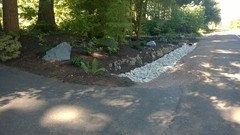
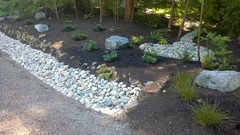
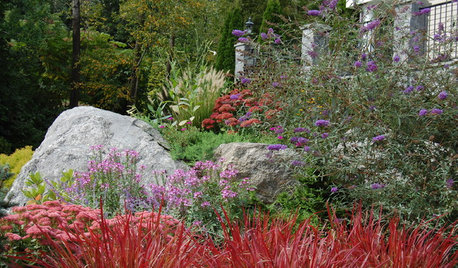
    Here is a nice option for some contrast and easy to maintain. This area is obviously not the same as your climate snowwinter but you could use low water choices for the plantings and such:


  • 11 years ago

    Rocks in a ditch is a recipe for disaster. Rocks won't keep the weeds out....even if you put landscape cloth down first. They won't help it drain any faster either.
    Mike


  • 11 years ago
    last modified: 11 years ago

    While the borders shown are not as simple as you might have in mind, you can get a visual of a number of plants that will work well in your garden. (Skip photos #4 & 5 -- those plants need a wetter environment.) The ornamental grasses, succulents, and plants from Australia will provide color and form without ratcheting up your water bill. But remember, plants do require regular water until fully established. Link: http://www.sunset.com/garden/landscaping-design/garden-border-designs/purple-fountain-grass_2