Software
Houzz Logo Print
daniel_ny

Lesson(s) you've learned this year (2015)

11 years ago
last modified: 11 years ago

Last year, I've made a thread:

Lesson(s) you've learned this year.

Let's hear lessons THIS year - 2015.

Comments (106)

  • 11 years ago
    last modified: 11 years ago

    > I was wondering where the "yellowish/brownish"
    leaves were…

    Linda, when I wrote: > “I suggest you to prune a little
    bit: the yellowish / brownish bottom leaves…” I was talking IN GENERAL, not
    specifically RIGHT NOW.

    Two 2x2's joined together have LESS strength that one 2’’ x
    4’’

    Linda, sorry for repeating my questions:

    Did you mulch ?

    Do / did you fungicide ?

    If you don't prune soon, that jungle might get diseases - especially if it rains a lot.

  • 11 years ago

    Daniel,

    I agree that it's always a good idea to prune off anything that looks yellow or diseased.

    Before I forget, yes to the mulch question. Black plastic on two rows and newspaper covered with grass clippings for the other. No to the fungicide.

    It's raining right now - sigh!

    Linda

  • 11 years ago
    last modified: 11 years ago

    Any particular reason you don't fungicide ?

    I hope you did NOT use chemical fertilizers for the lawn from where you got the grass clippings.

  • 11 years ago

    I try not to use ANY chemicals on my property. The worst thing about lawn clippings is weed seeds!

    Linda

  • 11 years ago
    last modified: 11 years ago

    There are a few fungicides that are considered ORGANIC...

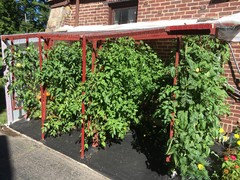
    I used fabric mulch - see my picture above - and I was very happy.

  • 11 years ago
    last modified: 11 years ago

    Daniel_nyc,

    i loved your design to support cucumbers. Can you elaborate more on it. I want to replicate it in my garden next year. I grow only pickling cucs. I found several cultivars resistant to bacterial wilt and grow them vertically. But I see they suffer from the luck of general local humidity.

    I couldnt find your pict with cuks again. Can you post it again? How do you irrigate? How far from the soil is your elevated bed? What is your experience with other diseases in such a design?

    thanks a lot.

    that's my lesson from 2015

  • 11 years ago

    Sey,

    I just went outside to prune (well to remove some extra lower leaves on) my tomato plants. I thought of your saying about the bunny and it seems about right. I don't think a bunny could hide in there now and not be seen{LOL}.

    Next year I will try to prune better from the start. I always say that, but never have the heart to actually do it. Then I have to contort myself in order to remove leaves without knocking off the fruit!

    I do have to say that perhaps cages aren't the best thing for dwarfs. Many have their interior leaves trapped under the fruit and between the wire of the cages. I think that stakes might be a better way to go!

    Linda

  • 11 years ago

    Daniel,

    I'm going to try some Actinovate next year!!!!!

    Linda

  • 11 years ago
    last modified: 11 years ago

    tigrikt,
    this thread is about “Lesson(s) we’ve learned this year (2015).”

    I thought
    that making a big comment about cucumbers in a tomato forum (and in this specific thread) would be off-topic, so - in order to reply to your question - I
    decided to open a new thread titled: Cucumbers support in the Vegetable Gardening forum.

    Please
    check it out. Feel free to ask more details.

  • 11 years ago

    Since I didn't know GardenWeb existed last year I have learned a lot of lessons; but I think my number one from is year is...

    ignorance is bliss :D

  • 11 years ago

    Ha ha! If ignorance is bliss, 'tis folly to be wise!

    L.

  • 11 years ago

    seranata, share with us some of your lessons.

  • 11 years ago
    last modified: 11 years ago

    I may start a new discussion as many of my 'lessons' come because of my way distant past and there is a little backstory involved to make sense of it all.

    But I guess to sum it up...

    When you read a lot of comments here, if you apply the advice of the majority (especially those in your zone or with similar conditions) to your gardening you should do OK or possibly at least better than you had before.

    However, if you read too much you can just go crazy and may have been better off if you had never traveled down that dark path. ;)

  • 11 years ago

    > However, if you read too much you can just go crazy and may have been
    better off if you had never traveled down that dark path. ;)

    Can you give us a few examples ?

  • 11 years ago

    Haha I have to agree Seranata. This forum (and all web forums really and even the Internet in general) tends to breed anxiety and many of the "you are doomed" pieces of advice are often overstated.

    I'll give you an example daniel, fungicide. It might increase your yield, it might protect you from losing everything from late blight - which is unlikely early in the season. It might also make bacterial diseases worse if it is a pure fungicide, or do nothing for wilts. But to say your chances of success are unlikely if you don't use it (as I have seen claimed more than once recently) is demonstrably false - most home gardeners do not use it and harvest plenty of tomatoes. I haven't used it this year and have already harvested a bucket of tomatoes. I went to three nurseries this weekend and saw an extremely sad display of neglected near dead tomato plants never sold, did not recieve any care whatsoever, and they had plenty of tomatoes on them. It was the same last year.

    Another example, Squash Vine Borer. They most certainly do not kill your plants overnight, at least not in my experience.

    I am not saying there is bad advice in the most cases... just that the importance is often overstressed. Most gardeners do not strive for the same perfection as the hardcore who post here.

  • 11 years ago

    >Can you give us a few examples ?

    Peter is spot on with his first and last paragraph.

    Examples...I've been starting my own plants for 4 years now but after reading in the seed starting forum I got totally paranoid about damping off this year. (but I've never had it before so I must be watering correctly, right?) And of course '24/7 is too much light for seedlings!' Even though that's what I do and they're all strong and bushy but I'm still doing it wrong I guess.

    In the dahlia forum I learned that to get earlier blooms you can actually start the tubers in large pots and then transplant them out. Did it and it worked! However, more reading got me all paranoid that slugs were going to eat all my plants and I'd better get some slug bait! (Even though I haven't had slugs in the 5 years I've been growing dahlias.)

    >>Most gardeners do not strive for the same perfection as the hardcore who post here.

    This, this, this. What I'm looking for when I come here is how can I make "insert type of plant, problem or question here" better. If I can improve my plants and harvest each season I consider that a successful year.

  • 11 years ago
    last modified: 11 years ago

    I can give one more example - that tomatoes "need" or "require" 6-8 hours of direct sunlight. This is commonly touted all over the Internet. I can say this is without a doubt not true. I grow some of my tomato plants in 4 hours of direct sun with little issues. Do I get ideal results? Maybe not, but I still get an abundant harvest. In addition, with the varying sunlight a specific spot receives over the course of a season, the "hours of direct sunlight" measurement is pretty much a useless metric.

    Another one - greens tasting terrible the second they show signs of bolting.

    Reading about just any plant disease online, you would think the second your plants show signs of any disease they are going to be dead tomorrow - when in reality, the vast majority of plants live with some kind of disease throughout most of the existence, and it kills them very slowly if at all.

  • 11 years ago

    Yeah. There can be information overload.

    Also there are different schools of gardening eg. Organic, in-organic, prune or not to prune, spray or not to spray, .To till or not to till. ..You have to pick a camp.

    It took me a while to sift through and decide what to do. But there are certain fundamentals that one needs to learn and they are universal. Not knowing those , one can make big mistakes. JMO

    Sey

  • 11 years ago
    last modified: 11 years ago

    >But there are certain fundamentals that one needs to learn and they are universal. Not knowing those , one can make big mistakes. JMO

    My ignorance was bliss, but definitely not the best way to get a good crop of tomatoes in my current garden.

  • 11 years ago
    last modified: 11 years ago

    I think it's a good thing that here, people have DIFFERENT opinions.

    Somebody wants to fungicide... OK. It worked ? Awesome !

    Somebody else doesn't want to fungicide... OK. It worked ? Awesome !

    Simple !

  • 11 years ago

    In my experience, the most important aspect of having a successful tomato harvest is keeping the plants from sprawling over the ground. Every year I grew tomatoes before realizing this, late blight would easily wipe out a huge plant with lots of unripe fruit in a week or less. My climate is usually wet, hot and humid during the tomato season, though. To be fair, however, I am also dealing with at least a couple diseases on my tomato plants (including early blight) despite the fact that they are growing up off the ground this year. And I have been trimming diseased leaves off like crazy.


    I don't know if I really learned any lessons about growing tomatoes this year, but I did try my hand at growing tomatoes with the Florida weave method. There is a bit of a learning curve to it, but once you figure it out, it seems to be fairly effective way to grow tomatoes. I found it to be the cheapest way to reliably support more than one tomato plant at a time. I spent about $55 on 8 ft. T-posts and about $10 on twine. Saved $40 and my sanity by going this route instead of CRW cages.

  • 11 years ago
    last modified: 11 years ago

    I visited my stepdad's garden today. His cukes have powdery mildew, the zukes and yellow squash are dying back hard from every problem imaginable, and his tomatoes are yellowing and fading out from one disease or another.

    The thing is... he has already harvested all the tomatoes he needs and every one more he gets is extra. He's made pickles, is getting tired of cucumber salad, and my mom swears that if he brings one more zucchini or yellow squash into the house she's divorcing him.

    He doesn't spray a thing (although he threatened to break out the sevin on the flea beetles which completely destroyed all but one of his eggplants.) Yet, his garden lasts exactly how long it needs to for his purposes.

    They are going away for a visit, and he won't care in the least what happens to his garden.

    So, a lot of what we learn from year to year depends on our goals, our expectations, our level of commitment (or whether we should be committed for OCD treatment,) and really, just our general interests.

  • 11 years ago

    What I learned this year I should have learned years ago: I don't have to save every single seedling that sprouts in the seed-starting cells and grow them to maturity. I don't need six different varieties of tomatoes. I can be more selective and thereby reduce my garden to a more manageable size.

  • 11 years ago
    last modified: 11 years ago

    >I don't have to save every single seedling that sprouts in the seed-starting cells and grow them to maturity.

    But, but but, they're alive! you just cant let them die! JK :) This is a hard one for me as well. It seems I have to try to find a spot for all of them. I have been getting better at giving some away though.

    This year I learned I should take better care of my plants rather than just keep putting in more plants to make up for poor performance.

  • 11 years ago

    Labradors

    Sey,
    I just went outside to prune (well to remove some extra lower leaves
    on) my tomato plants. I thought of your saying about the bunny and
    it seems about right

    &&&&&&&&&&&&&&&&

    Way to go., Linda

    That kind of trimming is just that " TRIMMING. and it is different from pruning to control the top growth. You can still have as many lateral branches that you want, if you can support them. Given your 2015 wet season, I think you would notice its merits.


    Sey

  • 11 years ago

    Any lesson(s) ? Anyone ?

  • 11 years ago

    I learned that starting tomatoes in a new well amended bed, mulching, and adding CRW cages was all I needed to do this year to have a great tomato year. And add more stakes to support the cages. Abundant weekly rains have made additional watering unnecessary.

    Due to health issues I have been unable to do anything in my garden since early July. DH has been harvesting more than we can use, no canning as I had planned, and others in the neighborhood have had an abundance of tomatoes also.

    While I always have a few yellow and or spotted leaves at the end of the season the plants remain healthy and productive so I do not use fungicides or other disease fighting products. Usually I remove the yellowing leaves but note no addition problems not removing them this year,

    Next year I will plant fewer and space them further apart so they are easier to harvest. I have thirteen varieties this year, mostly single plants, as I like to try new to me heirlooms. Time to cut back to a few favorites.

  • 11 years ago

    I think I learned that my new raised bed is NOT an automatic avenue to better tomatoes. Keep in mind...I have learned much in 3 years of container growing (mine do well). Also, with my containers... I learned that too long between feedings (while vacationing) certainly can stunt maters.

  • 11 years ago

    I learned that my compost heap is warm enough at the top to place my freshly sown tomato seeds there to germinate. Hooray!

  • 11 years ago

    I learned that - when pruning - it is very easy to mistakenly cut the STEM instead of the SUCKER (especially at the top of the plants when the diameters of the stem and sucker are pretty similar.)

  • 10 years ago

    I learned that when growing the artisan tomatoes, you have to prune out branches or you cannot find the tomatoes. Also, I need to prune out more leaves in general for better air flow and ability to see tomatoes that end up becoming over ripe . And I have to better manage the staking of my plants.

  • 10 years ago

    Two lessons...

    I need to use a fungicide (any advice here for a minimalistic approach for a garden visited/harvested by toddlers?)

    I really need fewer cherry tomatoes for my family. Making tomato sauce with cherries (so that they don't go to waste) is grossly inefficient!

  • 10 years ago
    last modified: 10 years ago

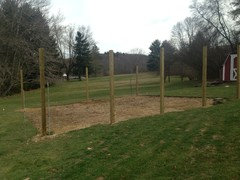
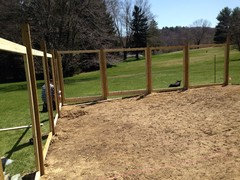
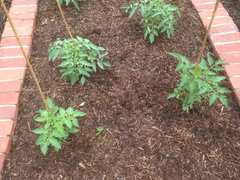
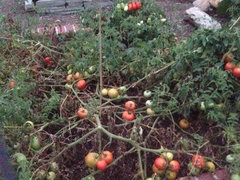
    This was really our first year with a real garden. We had attempted some small scale vegetable growing at a previous house we rented but when we bought our first house three years ago we began planning a permanent garden. We spent a lot of time last year building an 8 foot high fence around six raised beds. This year we really expected to be kind of a learning experience - and it was- but we also had a lot of success for beginners. We started three kinds of tomatoes inside and transplanted outside a little bit late but we wanted to be absolutely sure the threat of frost had passed - I think next year as long as the weather looks like it is cooperating we may be able to put them out a little earlier and get tomatoes a bit sooner in the season. The single biggest lesson we learned was that we need to support the tomatoes. We KNEW we had to but did not really do it at first and just figured we could later. Well, they got big fast and soon it was too late. Our tomatoes kind of just sprawled horizontally and wherever they wanted to go. We still got A TON of tomatoes but we also lost a lot to cracking and splitting. Another tomato lesson we learned was that we probably over watered. After it rained all June here, and barely rained at all in July we probably did not need to water as much as we did in July and August. Next year we will be better about those things. One other lesson (a positive one) is that we were VERY HAPPY we had a couple yards of compost delivered when we filled the beds. This very much improved the quality of our beds.

  • 10 years ago

    I meant to add a couple pictures and forgot. Here are a few from the beginning phases of making the garden last spring, through our little transplants, to our wild unsupported tomatoes, and some of the harvest. It was a FUN summer gardening and we will make a few adjustments next year.


  • 10 years ago
    last modified: 10 years ago

    I did not fungicide or mulch this year. I did use copper twice, once at plant out. I had an abundant harvest, with septoria being a late season issue but not a deal breaking one even with no treatment. I even gave up pruning dead branches at this point and it is not really progressing. However, it has been an extremely dry year.

    I would have mulched but I didn't trust the mulch I had enough. Next year I will use some shredded leaves from the lawn or something.

    I learned not to plant 3 Sungolds! And to expect 2 weeks of transplant shock in my soil.

  • 10 years ago

    Peter, last year I used fabric mulch and I was very happy.

    I made sure to cover the entire soil surface around the plants.

    The fabric mulch allows some water to go through, but not too much.

  • 10 years ago

    I used fabric mulch last year, and it did not work at all for me. The weeds grew right through it.

  • 10 years ago
    last modified: 10 years ago

    Not ONE weed grew in my garden, when I used this fabric mulch.

    What fabric mulch did you use ?

    Do you have picture(s) of the mulch with weeds ?

  • 10 years ago

    I used black plastic and it was great. Unfortunately, I didn't have enough, so I used newspaper with grass clippings on one row of tomatoes. That would have been fine if the chippies hadn't dug in it! I didn't have a problem with weeds by then because it was hot and dry.

    In another area, I used pond weed as we hauled it out of the pond, but with no newspaper underneath it, the weeds grew straight through it.

    Linda

  • 10 years ago

    It was landscape fabric. I was pulling bits of it out of embedded weeds all Fall last year and again this Spring.

    Black plastic is not the same as fabric. The plastic does not allow light or water through, and gets very hot.

    I'm glad you had success with the fabric. I most definitely did not; no I don't have pictures on hand. Your beds I think are highly manicured, mine was natural garden soil that was overrun with weeds the year before.

  • 10 years ago
    last modified: 10 years ago

    Peter, sorry to insist, do you have a link to the landscape fabric that you used ?

    Black plastic could be used for short periods of time - mostly to warm the soil before transplanting seedlings.

    Long periods of time will make ugly mold and even weeds will grow under the black plastic. I know, they don't have light, but I did find weeds under a plastic foil.

    Also, if you don't use drip irrigation, it will be pretty difficult to water the plants if the soil is covered with black plastic. And there is little watering control.

    While straw / fabric mulch allows soil to breath, the plastic mulch does NOT.

    So, it's very easy to get soaked soil - which obviously is not a good thing.

    To wrap up things, I do not recommend black plastic.

  • 10 years ago
    last modified: 10 years ago

    I was reading that Easy Gardener Weed Block Landscape Fabric’s reviews in Amazon:

    > Within a week of putting this product down, I had grass growing thru it.

    > For my purposes, it only blocked weeds for a few weeks. When it comes to stopping weeds, old carpet or other solid stuff will stop them. For this fabric, the young weed shoots poke their way through the mesh.

    > Within a month weeds/grass started growing through fabric.

    > This product claimed it would stop weeds for ten years - it hasn't even lasted ten months. Late last summer weeds were beginning to poke through, and this spring we had a bunch of weeds to pull from the rocks.

    > While most weeds are suppressed, in a couple of areas the weeds are actively growing UNDER this fabric, pushing it up and defeating its purpose.

    Maybe it’s time to try another fabric mulch ?

  • 10 years ago

    Nah, I would rather get organic mulches that benefit the soil, IMHO.

  • 10 years ago
    last modified: 10 years ago

    My definition of mulch is something that :

    == reduces weed growth

    == looks nice

    == conserves water (keeps soil moist longer)

    == lets water and air to go through with ease.

    == prevents splash

    == acts/works as soil amendment at the end of season.

    == stays dry , does not get mushy. So this excludes plastics, cardborad, newspaper, grass clipping.

    My preferred Mulch materials:

    == pine straw

    == wheat straw

    == hey

    == pine bark (mulch or small nuggets)

    YMMV

    Sey

  • 10 years ago

    I bought some cheap landscape fabric that completely disintegrated before the growing season had even ended. What a waste of time it was installing it in my asparagus garden. Grass clippings work better and are easier to use!

    Black plastic works fine for me on my tomatoes. It warms up the soil early on, and then the plants grow big enough that it doesn't matter. It doesn't let water in, but it doesn't let it out either! I water my tomatoes a few times when they are first transplanted and then I don't bother for the rest of the summer and they do very well. It's not so organic, although this particular plastic is a special, less toxic one used by some strawberry growers. This its second year of use.

    Linda

  • 10 years ago

    Linda, .. I also cover my raised beds with black plastic starting couple of months before plant out, for the same reason as you do : To warm up the soil and keep it dry. But when the weather improves ( In July) I remove the plastic and mulch the beds. So I don't consider BP a mulch.

    We all have different methods, don't we !

    Sey

  • 10 years ago

    I learned having a vegetable garden is great! No kidding, it's my first year having my own. Pretty modest start, with a single 4'x8' raised bed, then again, I don't have a ton of estate on my small suburban lot. What I grew in there: two red tomato plants, three cherry tomato plants, one Italian, three cucumber plants, a few green beans, some shallots. Got a nice steady harvest of cucumber starting in mid-summer. Got plenty of tomatoes from all plants, but season was late for everything and still have lots of green ones on there, but they are plump and large. Have started to eat some a few weeks ago. Had our first frost a couple of days ago, but I cover with a tarp whenever there is a nightly threat. September weather has been really nice so far though, maybe not ideal for kick-starting the ripening process, but it's starting to get a bit crappier now, maybe things will progress a bit faster. I may have 50-60% of my crop still on the plants.

    I was lucky and did not get any significant pest or disease and I did nothing to prevent it really. For next season, I plan on having two more raised beds of same dimension as well as growing a few plants in large containers/buckets.

    I learned I should space tomato plants more than 12" apart, as I was told by someone who gave me seedlings. I should also figure out the support scheme before I need it. Same for cucumbers.

  • 10 years ago

    I have learned that leafy greens(also carrot tops, cucumber foliage, and snap pea seedlings) are very appealing to animals, and they will demolish everything if you don't protect them.

    Don't underestimate the size of most tomato plants. I had a few plants get shaded by tomatoes this year, and they were stunted and didn't produce as a result. Know your plants' height and width at maturity and lay them out accordingly. If you're limited on space, use a trellis-like support for any vining varieties.

Sponsored
Peabody Landscape Group
Average rating: 3.5 out of 5 stars8 Reviews
Columbus' Reliable Landscape Design & Contracting