Software
Houzz Logo Print
sistereinstein

Pulled weeds that have started decomposing

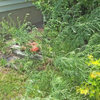
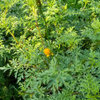
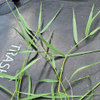
Hi everyone! Before I make a mess for myself I wanted some advice on some pulled weeds, mostly unseeded, that are in a garbage can in my garage. There must have been some wet weeds or that some dirt helped to activate the rotting process.

I have a small area of willow tree branches and cut straw, waiting for me to decide to try composting or just burn them.

Should I combine them? At this time it looks like I have about equal amount weeds to twigs/hay.


Anry ecommendations would be greatly appreciated,

Comments (11)

  • 11 years ago

    Yes.


  • 11 years ago

    Yes, you've already begun composting. Keep up the great work!


  • 11 years ago

    Just watch out for seeds in your weeds. They will not be killed by the composting process.

  • 11 years ago

    Some seeds could be killed, if you make a pile that gets hot enough. Good point though, pulling weeds before they make seeds is the way to break the cycle. Most weeds I pull are way too small to bother doing anything with, (because I check often.) They shrivel where pulled.


  • 11 years ago

    Thanks everyone. I ended up putting the most rotted vegetation (green) down first that also had some dirt clumps stuck to it (the layer of soil that is needed), then a layer of broken down sticks/twigs/hay (brown), then a layer of chopped up freshly pulled cat nip that was had not yet gone to seed (green), then a thin layer of soil.


    I chose the rotted vegetation as my first layer as I saw worms in there and wanted to make sure they didn't have to travel far. I really don't know the mind of worms. Or do I? Maybe I'm on the path to being a Jedi Gardener. Actually, according to one article I really should have used a layer of straw, but in the same article if straw is mixed in that helps to aerate the pile.

    So I still think it'll be OK.


    All of the articles I read says the right size for a proper compost heap is 3 x 3 x 3, which I don't have, and probably won't until fall when I have a nice pile of leaves to use so I'm doing what I can and may consider putting a tarp over it to help trap moisture and possibly heat the pile.


    I plan on reporting back my findings, as the idea of composting seems very easy but what I'm seeing out in the interweb is that it is not easy. Wish me luck!

  • 11 years ago

    Bah, don't worry about that stuff. Dead things that used to be alive, organic matter, is going to decompose with or without your intervention. Composting is simply the act of manipulating decomposition, by gathering & moving organic matter. If you lay a banana peel on the ground, you are sheet composting. If
    you add something else on top, you've started to make a pile.

    OM can be scattered around the plants, (a fine way to keep the ground "mulched,") gathered in a bin or particular pile spot,
    slightly bury anything smelly, as long as organic matter stays on or is
    returned to the ground somewhere, you're making improvements to the
    soil. There's no wrong way to do it, though some actions will lead to unintended or unwanted results (usually some kind of odor or critter habitat.) It's still composting, decomposing, but if that happens, you'll probably tweak your method & improve, get past it. Unless something toxic is added, there's no combo of organic matter you could concoct that wouldn't be a positive thing, rotted stuff. There are no required ingredients, or procedures. Turn if you want, or don't. Take the temp if you're curious, I never have. After doing it for a couple years, you'll get in a groove that works for you, your location, the materials you have.


    sistereinstein (Z5a WI) thanked Tiffany, purpleinopp Z8b Opp, AL
  • 11 years ago

    Do not burn garden waste. If there is no plant disease to be of concern all garden waste should be composted, and those "weeds" are beginning to do that already. Mix the "weeds" and willow branches and straw to begin a compost pile.

    kimmq is kimmsr

  • 11 years ago

    That's great if you have straw and willow branches. If not, there would definitely be no need to seek those particular materials unless you want to. Whatever OM one has will decompose & help improve soil. The wider the variety of materials, the better.


  • 11 years ago

    @Kimmq,

    Originally I was planning on using the willow branches for kindling but found that I was short of brown materials as I haven't taken the plunge yet to save kitchen scraps yet (the concern is more the odor and attracting raccoons).


    @Tiffany,

    Straw and willow branches is what I currently have on hand and soon will have to start scouting for brown materials as I'll be able to save grass clipping.

    All in all, I think I'm off to a good start. Because of everyone's feedback I feel much less concerned about "doing it right" and it's really appreciated. I plan on attempting leaf mold this fall.

    Grateful thanks to All, have a great weekend!

  • 11 years ago

    I hope so, TY! You too!

    FWIW, I've never attracted a raccoon, that I'm aware, by slightly burying kitchen scraps. But, your comment made me chuckle because we've gotten robbed by raccoons so many times when camping not far away. They *are* sneaky, strong & smart! They know *somebody's* going to leave something yummy they can get to in one of the sites, (especially if all it takes is slicing a small gash in a new tent.) I wouldn't want to risk starting them off on a bad habit of coming around for food either but hope you find something safe for your location, to prevent detection or access (or both,) to use the gold standard of organic matter - all of those wonderful kitchen scraps. Such variety of plant material in those.

    There's a soil/mulch/compost forum here too, if you have other questions along your decomposition journey.

    When you have 15 mins, I recommend listening to what this brilliant woman has to say about "dirt." There's an emphasis on agriculture, but the basic principals she explains are so relevant to an individual, home gardener too:

    http://permaculturenews.org/2013/09/20/soil-not-dirt-dr-elaine-ingham-talks-soil-microbiology/

    sistereinstein (Z5a WI) thanked Tiffany, purpleinopp Z8b Opp, AL