Software
Houzz Logo Print
mvb2128

Help!! Dying garden!!

11 years ago
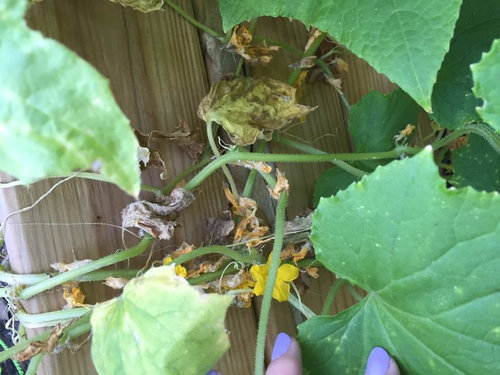
Hello! So I started my first square foot garden and about a month ago everything was going great; beautiful green plants and veggies starting to flower. Now all of a sudden half of my garden is dying and I can't figure out why.

Our tomatoes, jalapenos, bell peppers, banana peppers, salsa peppers and basil are doing amazing - but our squash, cucumbers, butter lettuce, bibb lettuce, spinach, kale and pole beans are wilting and dying quickly.

We tried more water, less water, and fungicide spray but it's getting
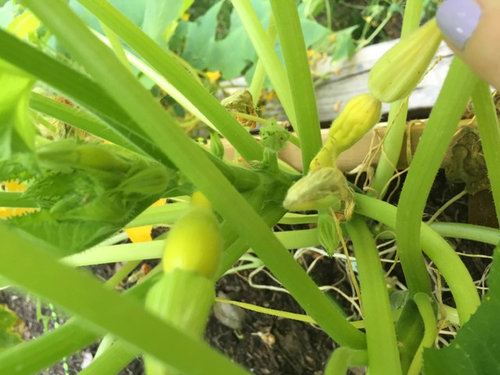
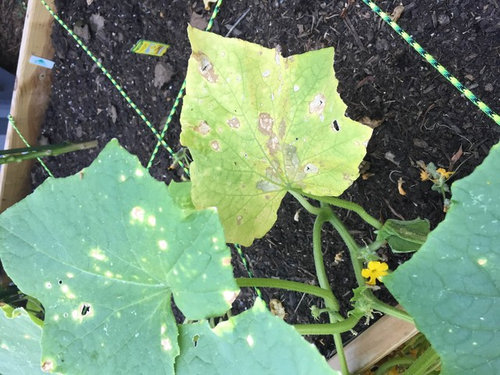
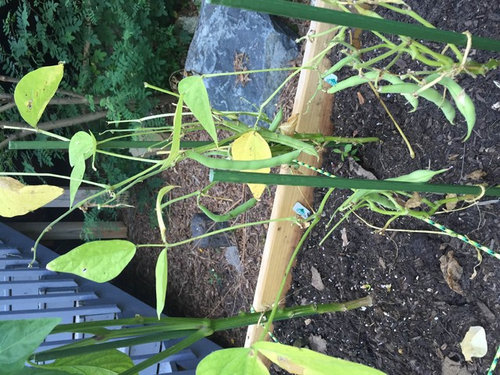
worse. I have attached several pictures of our beans, squash leaves, and
cucumber vines. For the cucumbers, the vines are healthy near the end
(far from the soil and box) but at the soil the leaves are spotting,
wilting, and dying. The pole beans have stopped producing and are
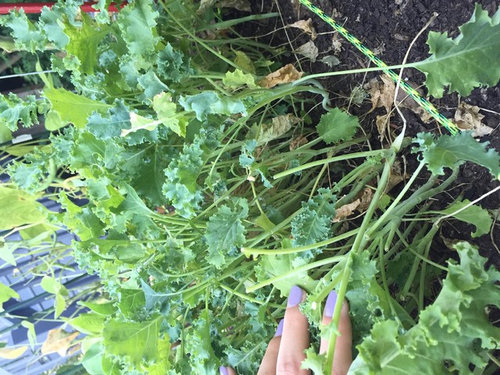
yellowing and dying. All of my lettuce and kale is wilting, yellowing,
and dying. And the small squash that started to grow are now wilting.

This past week we have had an awful heatwave (100+ degrees) so we upped the watering a bit, but the lettuces, kale and pole beans have looked sickly for 2-3 weeks now.

Like I said, our tomatoes, peppers and basil are flourishing - so I am not sure what the problem is.

Any advice would be great!!! Thank you!

Comments (3)

  • 11 years ago
    last modified: 11 years ago

    I think you may be over reacting a bit, like I do when I started. We need some broader view of your garden. Where are you located, what zone are you in, what the weather like, the type of soil you have, is it alkaline or acidic, clay like or sandy. What is the soil you made of, how much compost does it have. It would be nice to see the fuller view of the raised be and growing area.

    I can only guess from the things you mention, I don't think your plants look too bad. With 100*F heatwaves it can hard on the plants, so some yellowing and dying leaves wouldn't be a surprise. Here in Florida if I forget to water my cucumber it looks like that too, and once it's too stressed and lost a lot of green, it might not be possible to bring it back to full health. Sometimes, some crop or variety might just not be ideal to grow in such heat. Some of the plants you mention are more cool weather crop, leafy greens like kale, lettuce and spinach. Tomato, peppers and basil will handle the heat better.

    Unless you specifically know that a plant have fungus, I wouldn't spray it with fungicide, that can put stress on the plant and harm it. Especially if it's copper fungicide, which I avoid using and opt for sulfur. When I started, I mistaken nutrient deficiency for disease and sprayed fungicide on my plants which just made it worse.

    Your kale are too closed together and won't be able to grow large, I know this is squarefoot gardening, but they still need enough space to develop roots.

    Make sure to amend soil with a lot of good compost, having a rich soil biology is the key for me. You will want to do a lot of mulching which will help retain moisture in the soil longer. Since it's so hot there, even 2inch layer of mulch. Just be careful that woodchips will tie up nitrogen if mixed in the soil, so don't mix woodchips into the soil. But you can use leaves or hays as well.

  • 11 years ago

    Thank you!!! So we are in Charlotte, NC and we have been having unnatural heat for the past 1.5 weeks. The lettuces started wilting about 3 weeks ago but I would guess because of the heat as well. It's a new raised garden and we used organic garden soil and black kow compost mixed in (I think we did a 1 to 3 ratio compost to soil) and for the first 2 months it was growing like gangbusters!

    Seems like we just may need to water the other items more, we are going to mix in some more of the compost to give the soil a little boost and also add the mulch for the moisture.

    Thanks so much - we were panicking that something was just wrong with our plants!!! :)

  • 11 years ago

    In 100 degree heat a lot of plants will be droopy by the afternoon. Make a habit of sticking your finger down in the top 4-6 inches of your soil; if it is cool and moist you don't need to water more. Look at your plants again in the morning; you may find they are no longer droopy! Yellowing lower leaves can be a sign of over-watering.
    When you do water, give them a good deep soaking, especially your cucumbers and squashes. They need an inch a week ( so do melons). It's nice to have a watering wand to apply the water right around the base of the plant where it will do the most good.
    I like to use liquid fertilizer on vegetables. I apply it often since we are using organic stuff like fish emulsion, seaweed, and Tiger Bloom.
    Our community vegetable garden has no exposed soil except for the paths; elsewhere we have laid down several thicknesses of newspaper and covered it with leaves and grass clippings. Every week we add more grass clippings plus anything which has bolted (cilantro, dill) and tops of flowering bulbs. Earlier in the season we laid down wheat straw; we don't wait for the weather to get hot to start mulching.
    For every vegetable there is a hungry customer which is hatching out now to share the harvest; you can pick cucumber and squash beetles and tomato horn worms manually, and clip off leaves which have tons of eggs on the back. Mostly, I feel that some insect damage is inevitable and plants can still produce even if the foliage is damaged. We know we'll lose some squash plants to borer so we plant a couple extra; likewise, cucumber will succumb to viral diseases so we have multiple hills.
    We're in the South too--SE Virginia by the NC line. Our lettuce and spinach are done thanks to this heat, so we are pulling them out. They are more cool-season crops for us; first to be planted and first to finish!

    HTH.


Sponsored