

choosing residential vs. commercial dishwasher
Comments (29)
 13 years agoI know nothing, but would think about this: Are commercial ones sound proofed to the extent that those for home use are? Have you considered a larger one plus a drawer sized one in an island just for glass and crystal maybe?
 PRO13 years agoDacor has a 30" dishwasher, or I've had many clients install 2 D/W. Sometimes one is in a separate pantry room. You can panel them to look more like cabinets than appliances. in My experience many commercial DW are much like a drive thru car wash. Used in a clean up area with water spraying everywhere. A tray is slid in for a few minutes then slid out. They do not dry. Everything is blasted with steam/heat & then air dry. Hence the trays with grid. If you are serious about getting one, go talk to a restaurant supply store.. you might be surprised with all the requirements etc. Urbana Kitchens, Victoria, BC
Related Professionals
Decatur Interior Designers & Decorators · Fargo Interior Designers & Decorators · Stockton Interior Designers & Decorators · Idaho Falls Interior Designers & Decorators · Evanston Interior Designers & Decorators · Honolulu Interior Designers & Decorators · Florence Architects & Building Designers · Baton Rouge Architects & Building Designers · Boston Architects & Building Designers · South Sioux City Architects & Building Designers · Wenatchee Architects & Building Designers · Oxford Kitchen & Bathroom Designers · Petersburg Kitchen & Bathroom Designers · Niles Kitchen & Bathroom Designers · Buffalo Kitchen & Bathroom Designers 13 years ago*bump*
Does anyone else have any experience with commercial dishwashers for home use? We are building a new house and I am loving the idea of washing a load of dishes in just a couple of minutes! 12 years agoWe have two residential dishwashers and I would trade them for double ovens all day long.Ashtoe thanked tcufrog
Ashtoe
Original Author12 years agoWoodsywoman- thanks for replying. I'm curious if you know the brand of the home dishwasher that takes 29 minutes? I have looked at the Bosch because I read that they have a 30 minute wash. But if there is a better option I would like to look at it. I thought if I went with the Bosch I would put one in the baking center and one in the cleanup center.- 12 years agoI remodeled our kitchen in 2012, and decided to put in a commercial dishwasher. At that time, I selected the CMA DishMachines model UC-50E. It was an under-counter, high-temperature machine. The way it works, when you turn it on, the wash water fills the tub, then the heating elements turn on (30 amp, 220 volt). There is a separate water tank for the hot water rinse, which also begins to heat up.
The wash detergent and rinse aid are pumped in from gallon jugs, and I used EcoLab chemicals.
So once the water heats up, you're good to go. You load the basket, which is as others here have said, a slide in commercial rack. You can get many types, with or without pegs, or utensil baskets, etc. When you push the start button, the heated wash water immediately begins spraying. The cycle is 90 seconds, then there's a short spray with the sanitizing rinse water. As others have said, there's no dry cycle. But, that's not a problem. The dishes are so hot from the wash/rinse, that as soon as you open the door, they pretty much dry themselves in about 30 seconds...UNLESS there's something plastic. If you're washing plastic containers or bins, plastic doesn't heat up and dry off that well so they're still wet even after you open the door. That wasn't really a problem. Just have a dishrag ready to quickly wipe them off.
Subsequent wash cycles use the same water, unless you manually change it by pulling the drain plug and pressing the drain button. So, scrape/rinse the dishes before you load, and you can get many washes out of one fill up. For home use, that's could be all day, then just be sure to drain it and leave the door open when you're done.
The problem is that it leaks. The door has no rubber gasket to seal it. That is by design. The metal of the door has folds around it and matches the frame and that is supposed to keep the water in. And it might, on a cold, chemical sanitizing system. But on the heat sanitizing ones, the water is so hot when the wash cycle starts, that the blast of water causes a blast of pressure inside the cabinet, and water spurts out the bottom left and right corners of the door. It ranges from a teaspoon worth to several tablespoons spurting out.
I reported this to the dealer, and they had people come out to address it. They tried adjusting the door, it didn't work, so they decided to replace some door parts. That didn't work either. So they ordered a second replacement unit. Same issues with that. A third unit came in, and that also had problem. Finally they had the unit removed, and installed at the service center so the CMA DishMachines district manager could come and look at it in action. It leaked and sprayed water there too. They ultimately said that this is the way it is, and that in a commercial restaurant kitchen, the dish washing area always has lots of water on the floor, and that this little bit of water spraying out was acceptable... They refunded my money.
After talking to the dealer about what else to try, they said that all of the commercial washers would have the same caveat, that they're intended for commercial installation, in a dish room, where some water on the floor is to be expected. They would not guarantee that I could ever have one that would not do this. So, they refunded my money and I went in search of another dishwasher.
I could never find anything on the residential side that could compete time-wise, with a 2-minute cycle. What I ended up with though was an acceptable compromise. I got the Miele Professional model PG 8080i, 220V version. About $6500. The loading/basket arrangement isn't quite as convenient as I would have wanted, though it is extremely quiet and fast, and the wash/rinse does go to 185° F like the commercial one. The quickest cycle time I could run was between 27 and 30 minutes. They have another model (G 7859) that boasts a 10 minute cycle, but it required a 220V 50 amp circuit, and during the remodel I had only installed a 220V 30 amp circuit for the prior dishwasher, and was not about to have things torn back up to install another line.
Would I ever install a commercial 2-minute cycle time washer again? Not unless I could get a guarantee that it would not leak. Until that time, if I ever remodel another kitchen, I'll make sure I put in a 220V 50amp circuit and put in another Miele.
OH, one last thing. Although Miele does sell a pump system to use the same liquid wash chemical directly from the bottle like the commercial washer did, they apparently aren't approved for use in the USA (don't have some kind of certification, or so I was told) so I ended up using liquid Cascade. Not that big a deal, but it was certainly nice when it pumped in on its own for each cycle.
Good luck with your future projects! - PRO12 years agoyour experience with commercial DW brought back memories. As you say, the separate wash up room in a restaurant kitchen is commonly "awash" with water. If not focused in the sink or floor, very likely an itinerant bus boy would aim the faucet & blast you with water as you ran by. The speed was amazing, but best suited to that application only
- 12 years agolast modified: 12 years agowoodsywoman - Im interested to know more about your experience with commercial dishwasher. Can I please get your email for a quick chat. you can contact me on nabilmhanna@outlook.com Thanks
- 11 years ago
Went with a high temp hobart undercounter.. absolutely love it. Never used my old standard dishwasher as it was quicker to hand wash. A commercial dishwasher is like an oven in that you need to 'preheat' the unit but then it is good to go. I have a pre- rinse spray in my ' dirty sink' setup in the pantry to give a quick food particle cleanup before loading. The detergent and rinse agent containers which auto feed are stored under my sink. No water leakage, noise is not as loud as I thought it would be. By the time I unload a rack, it is ready for another. I have three racks, one with pegs, flat rack and half size utensil rack I use with the flat rack. Incredible to wash so many dishes so quickly!
- 11 years ago
Hello aheith - what was the Hobart model you installed? If there's no leaking around the door, I may try one in my next project.
 11 years agoWhen my boys were ravenous teens I used to dream of a commercial dishwasher in my house! We are past that stage now but I still want to learn about the options for some vicarious pleasure. Maybe I'll be ready for a set up like that again once I enter grandparenthood.
 11 years ago
I have a professional zanussi machine at home and I don't have leak. I believe this is not of being zanussi, I think any good machine should not be leaking.
The main problem, in my opinion, for using this at home is that it uses a big deposit of water, which can be used for a big quantity of washing cycles - which you don't have at home. So, or you through that water away (waste of water), or you have your machine in stand by all day (waste of energy), or you turn your machine off with water inside (health hazards).
About the quick time of washing, that is true, but I have to turn on my machine 30 minutes in advance in order to warm up. So, you have to consider this.
The only reason why I have this is because I have a catering business running based at home.
- 10 years ago
My Hobart is a LXe high temp.... Still no leaking ..this was the first Thanksgiving with a commercial dishwasher and clean up is crazy fast. Dishes were washed and put away in 20 minutes total! My kitchen was designed with many speciality items i.e.. Foot pedal sink, stacked commercial bar refrigeratoration, teppanyaki and aN AGA cooker, but my Hobart is my favorite addition. Just enjoy cooking and baking so much more knowing the cleanup will be effortless
- 9 years agoWithout question my favorite kitchen item and worth every penny. This one is several years old now. The new ones are much nicer and don't have any steam when you open them.
The cycle is less than 4 minutes, Detergent is under the counter and dispensed automatically and water efficient!
You can also fit almost anything in it, large pans, grills, and all your stainless. It is also wonderful when you are with smaller groups or just by yourself. Instead of stacking dishes in the dishwasher and letting them sit for days until you have a full load, a single person can fill the tray much quicker. The high temperature sanitizes everything.
I don't know why there not in every high end home or custom kitchen.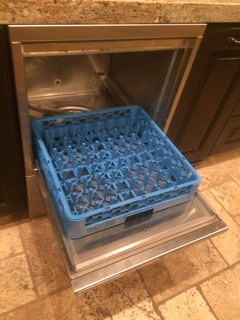
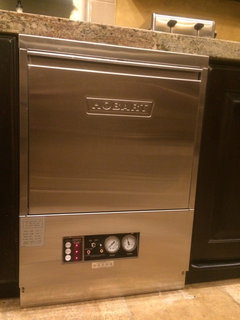
- 9 years agoI should add I use three trays, two peg trays and one for wine glasses. I use silverware inserts (round, plastic that fit into the glass slots) to wash silverware. The dishes come out spotless.
When entertaining, I use a bus system similar to a Resturant where you soak your silverware in a container prior to washing.
As the table is cleared, the food Is scrapped, silverware is dropped in the bin, dishes rinsed (if necessary) and stacked in dishwasher.
Everything is purchased at a restaurant supply store.
If you are designing your own kitchen, one idea is to create a rolling bus tray that is hidden at the end of your kitchen island that can be pulled out. That is helpful when the dishes are done. That way you can transfer one tray over to let them cool down if you are busy. It can also be used to roll tray items to another location for others to unload. That bus tray can also store the extra trays. - 8 years ago
Thecluessone - would you please share with me the model of your Hobart? I am excited to hear someone that is in love with their commercial dishwasher! Thank you for your help.
 8 years ago
This tabletob dishwasher was just announced at CES and it uses the same principle as the commercial dishwashers - came here to read more about the differences (thanks @woodsywoman and @sfchef). Looks like it might actually work but it would have to sit right next to the sink so you rinse residue off plates before you put them in, and so you can fill and drain it (no plumbing).
I would love to be able to quickly wash everything during/right after a meal…
 8 years ago
This topic is a few years old now.... just wondering if anyone new has put a commercial dishwasher in their home or if those that have one still like it.... We have 5 boys and a lot of dishes!! We have a commercial dryer now and are seriously considering a commercial dishwasher in the new house.
thecluessone what do you mean by a bus tray please?
thanks
Ashtoe thanked Rosie Hughes PRO8 years ago
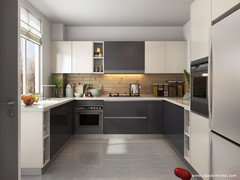
choose dishwashers embedded in the kitchen cabinets. Maybe you should choose two like these
- 8 years ago
We're in a new home and finally getting ready to replace the dishwasher with a Hobart LXeR model. Electrician coming this week to put in the circuit, and will get the dishwasher ordered from the local restaurant supply after that. I'll keep notes and update this thread with details as they happen.
Ashtoe thanked sfchef Ashtoe
Original Author8 years agoWe did build a new house but decided since our long term plan is to only live here 10 years, we would not do a commercial dishwasher. We ended up doing a meile that has a 15 minute cycle. The cycle that we end up using the most is almost 2 hours. So the dishes do stack up some days. I would love to hear updates sfchef!
- 7 years ago
Woodsywoman...did you make your copper dishwasher? When I was researching copper sinks I was thinking how great a dishwasher with a copper tub would be, even better than stainless; but of course nobody makes one like a lot of the would-be nifty things I think of. Like others here I'm looking into the feasability of a commercial dishwasher, not for the speed but the durability as this is the major appliance with the most moving parts and will thus wear out the most quickly. The lifespan of the average "consumer" dishwasher is crap, and people should demand better.
 7 years agolast modified: 7 years ago
I just installed a used Hobart LX30H commercial undercounter high-temp dishwasher in my kitchen. I will talk a little about the process of doing that, in case anyone is interested in the nuts and bolts of doing this, especially if you will be doing the work yourself.
Electrical: 1) This model, being a high-temp machine, requires a 220 V, 50 A, four wire circuit with a 50-14R receptacle. Fortunately my main panel is in the basement under the kitchen, so it was feasible to install the circuit. Don't cut corners on the electrical; whether you hire an electrician or do it yourself, carefully follow the Electrical Code where you live and be safe. 50 A is a lot of current. 2) The low-temp machines that use chemical sanitizer may be able to use a standard 120 V 20 A circuit, but I cannot say for certain.
Supply water: 1) This model supposedly requires 140 F supply water. You might have to adjust your water heater's thermostat higher. That said, my unit works fine with incoming hot water that isn't quite that hot. I know some keep their water heater set to a lower temperature for energy saving, to reduce scalding risk to small children, etc. 2) The supply hose has a female 3/4" GHT fitting, like a garden hose, so you will need about $10 in adapters to connect it to your kitchen sink's hot water supply valve - a good hardware store will have them. 3) Hobart's instructions require water pressure to be 15 to 25 psi, which is much lower than typical residential water pressure of 40 to 80 psi. I installed a $15 valve between the hot water supply valve and the machine's supply hose, and turned the valve partly closed to reduce the pressure. I'm not sure what difference it makes, though.
Drain water: 2) This model comes with a drain hose that is 5/8" ID (inside diameter) automotive heater hose. I guess it is meant to simply be inserted in the commercial kitchen's floor drain. I connected it to my garbage disposal's dishwasher drain with a $5 rubber adapter that you can get at any good hardware store. You can extend the drain hose, if needed, with some heater hose (6 feet for $5 at your local autoparts store), a barbed connector, and hose clamps. 2) If you drain the unit through your garbage disposal, you may get some drainwater backing up in the sink, in which case just run the disposal for a couple of seconds. 3) I read that the 180 F drainwater is hard on plastic drain pipe. I haven't noticed any problems yet but think I might get in the habit of running some cold water down the sink drain when the Hobart is draining, just in case.
Physical: the Hobart fit in my undercounter dishwasher location, with about 1" extra vertical clearance. The machine is quite deep, so the front might stick out an inch or not, depending how deep your lower cabinets are. I took two scrap strips of 1/2" plywood, screwed them into the floor under the counter, and waxed the upper surface with some furniture wax, to make "sliders" so it would be easier to slide the dishwasher in and out. This unit is very heavy, and I didn't have a helper! Two short lengths of broom handle, 1/2" PVC conduit, or similar to act as rollers will also help.
Starting Up: If you buy a brand new machine, there's instructions about startup in the manual (and hopefully you're having it professionally installed, which would certainly be the easy way to go). In my case this was a well-used machine of unknown history. At first it operated normally, then it started giving some error codes, but a little Googling and reading an online manual led to the solution (basically, cleaning some sensors that are in the tank). It's working fine now.
Operating: I can't tell you much about this yet. I've run a bunch of test cycles but haven't actually cleaned up after a meal with the machine. I'll post later when I've more experience. For now, I am not experiencing any leaking or splashing around the door, but can vouch for the cloud of steam when you open the door. The machine is noisy, but not ridiculously so, and it only makes noise for two minutes. I'm not in the habit of napping in my kitchen so I can't think why two minutes of noise matters.
For now, I'm quite happy. I have been without a dishwasher for three years, when my not-that-old Frigidaire was declared obsolete and unrepairable, which made me mad and vowing to never get another consumer dishwasher again. Um, but commercial dishwashers cost a lot, like $3,000 to $5,000. Hence the three years of hand-washing while I looked for a used machine. This one was the spare machine at a bar that closed, and I got it for $250, which seemed like way too good a deal to pass up.
Ashtoe thanked John Liu- 7 years ago
Thanks for that! Seems like a lot of trouble to set up, looking forward to your reports on how it goes for you.
- 7 years agolast modified: 7 years ago
So far, one way to use this Hobart seems to be:
1. When you start prep, turn on dishwasher. It takes about 5-10 min to heat and fill. Put a flatware dishrack (no pegs or compartments, just a flat mesh surface) in the dishwasher.
2. Keep one side of my double sink full of hot soapy water. When I'm done with a mixing bowl, pot, spatula, whatever, put it in the water.
3. When I have a spare moment, take the stuff out of the water, use a sponge or brush to knock off large food bits, and put it in the dishrack in the dishwasher. Run the dishwasher. Do something else. In three minutes, open dishwasher and take the clean and steaming stuff out. Hang the pot, toss the utensil in the drawer, etc. It air dries very quickly. Go back to cooking.
4. Repeat.
This is basically a way to "clean as you go". Dirty cooking stuff doesn't pile up - unless it has food burned onto it or something like that.
I'll experiment some more.
Ashtoe thanked John Liu - 7 years agolast modified: 7 years ago
Now for the table setting cleanup experience. Had a dinner party for 10. Thirty pieces of stemware, ten pieces of other glassware, forty pieces of dishware, fifty pieces of silverware. Also various serving platters and utensils. All washed, sanitized, dried and put away in 20 minutes.
Same drill as described in my previous post. Fill a sink with warm soapy water, bus the dishes into the sink, then when it is time to wash, it takes about a minute to load a rack, 3 minutes to run the dishwasher, then pull the rack out and set it on the counter, by the time the next rack is loaded and being washed, the dishes in the first rack have air dried and are ready to be put away. Glasses don't need to go in the sink of water, they can be bused straight to the rack. You need three racks: a peg rack for dishware, a glasses rack for stemware, and a flat rack for silverware, pots, etc.
Racks cost $25-65 each depending on type. You can store two or three in the dishwasher, the rest need to find a home somewhere.
You don't need to find room for big jugs of detergent. Just put some detergent in a squeeze bottle and squirt an ounce or so into the dishwasher before every load. The commercial detergent comes in two gallon jugs, about $25 each.
It is an active, and rather noisy, wet and steamy, 20 minutes. You need some counter space to set the racks, and the ability to lift a rack of glasses or dishes (10 to 20 pounds maybe). The floor gets wet where the rack drips as you lift it out of the dishwasher.
Two standard dishwashers would (maybe) have fit and washed all of that with about 10 minutes of loading, then start the cycle, handwash the larger platters and whatever wouldn't fit, and go to bed. The next day, spend 10 minutes putting away the dishes.
If you have room for two standard dishwashers, and don't care about the "cleaning while cooking" capability described in my previous post, then that may be the way to go.
You can probably buy two very nice residential dishwashers for one-half the price of one of the less expensive brands of commercial undercounter dishwasher. If you have to pay an electrician to install a 240v circuit in your kitchen, or if you buy a Hobart which seem to be significantly more expensive than other brands, then make that one-third the price.
The commercial dishwasher looks, well, utilitarian. It is stainless steel, but not the shiny stainless of a residential model.
Finally, the commercial dishwasher is really meant for washing a lot of dishes at a time. If we're just cooking for two and have only a few plates and glasses, it isn't worth starting the commercial dishwasher, waiting for it to fill and heat, and running it. We'll just hand wash in that case. With a residential dishwasher, we could simply rinse off the dishes and put them in the dishwasher to be washed the next day.
As for repairability, I think the commercial dishwasher is likely to last for decades and decades in the very light-duty environment of a home (they are heavy-duty, designed to wash dozens of racks a day, seven days a week), and parts will be available for decades too. But I've no idea how much it costs to get a Hobart service rep to come to a house.
So, that's my report. I like this commercial dishwasher, because we have a small kitchen, give large dinner parties, and I don't mind the rather industrial appearance. But I don't think its for everyone. In a perfect world, I'd have this commercial dishwasher for the dinner parties and a single dishdrawer for when we only have a few dishes.
- 4 years ago
So the Hobart LXeR has been installed and in use for several years. I tend to forget to come here and use Houzz. Sorry for the delay.
In the months before we got it, we had an electrician install a new 220V circuit and run the wiring to an outlet where we'd install it, and a plumber come to put a faucet connection under the kitchen sink. Technically I think it's supposed to be hard-wired and not have a plug on the cord, but this isn't a restaurant and not going to be inspected, so we went with the plug. Makes it easier.
I've been thrilled with the performance and quality of the dishwasher. When we first got it, there was an issue that occasionally at cycle startup, because the spray of hot water was so sudden and full force, we'd get little bits of water pushed out the bottom of the door. But the dishwasher can be programmed for a "soft start" such that the spray of water is gentle for the first few seconds, then it goes full force. To do that I did have a service tech visit. Once that was done, no more issues at all with water coming out around the door.
I would say though that if you are going to use one of these in a remodel, you make your counter depth a couple inches deeper than standard of 25 1/2 inches. This was an old kitchen from the 90's that we put it in, without remodel, and it does stick out about an extra 1 1/2 inches. If this were a renovation, that counter would be deeper and it would end up being flush with the face of the rest of the cabinets.
When you turn it on, it does fill up with water and start heating. That whole process is about 10 minutes. But once it reaches temperature, you can do cycle after cycle without interruption. I use the 'medium' length cycle of about 2 minutes. You can program the default cycle time yourself. Even at 2 minutes, I sometimes find myself telling it to "hurry up!" LOL. It's like waiting for the microwave to work faster :)
Sometimes when I think I'll be washing more dishes later in the day, I'll put it in its standby 'energy saver' mode. In that mode, the heating elements go off, but it doesn't drain the water, so if you take it out of energy saver mode, it can be used right away without the initial time to come to temperature. If it's in standby too long, about 4 hours I think, it'll determine you're not coming back soon and it'll drain and turn itself off.
I use the liquid detergent, rinse agent, and de-liming chemicals from the local restaurant supply store. They are gallon jugs that I keep under the kitchen sink, next to the dishwasher. There are siphon hoses into the tops of those jugs, and the dishwasher just dispenses it automatically as needed. After a several hundred loads, maybe once every 4-6 months, the 'deliming needed' message comes on, and you have to start that cycle. It uses the deliming chemical during that time, and the cycle lasts about 20 to 25 minutes.
There is a food particle trap/screen at the bottom that you have to clean occasionally. But honestly, I do remove most of the food particles before I load it, so there's not much to do there.
That said, under the first food particle trap is a finer mesh screen filter, to prevent particles from making their way into the motor. That does occasionally need to be cleaned. Based on my use, I do that about once a month. It's a very fine mesh, like one of those reusable metal coffee filters. Running it under water doesn't seem to get it clean enough, and knock out all the tiny particles that have clogged the mesh. So I take it into the back yard and use the garden hose full force on it, and that does the trick.
The first couple of years we kept bought an extended service contract for it. But as reliable as it is, we stopped that, because it was getting to be around $900 a year. Which could easily be worth it if you're in a restaurant and actually need to have them come out frequently. But in a home setting, and as well built as it is, we determined it wasn't worth it. We may end up paying a lot if we do have service come out, but for now, it doesn't look like it's going to be necessary anytime soon.
Would I get another one in my next house? Absolutely.








woodsywoman