Software
Houzz Logo Print
melissaherbs

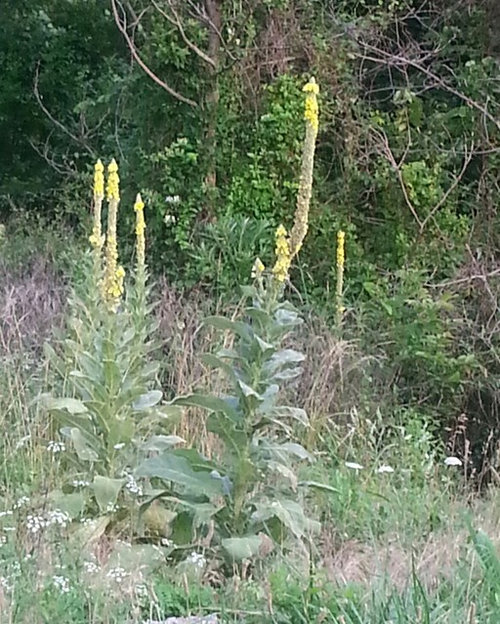
Can anyone identify this plant?

11 years ago
last modified: 11 years ago
Or this one?


Comments (17)

  • 11 years ago

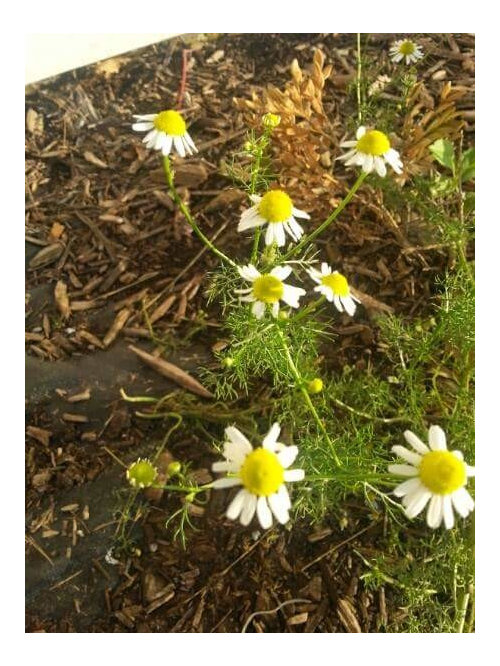
    The second one is chamomile. Pinch the flower and smell that unique scent.

  • 11 years ago

    The first one is Mullein, or Verbascum.


  • 11 years ago

    You guys rock tyvm

  • 11 years ago

    There are several plants commonly called Chamomile. This one could be German Chamomile, Matricaria chamomilla. However, if it is just growing weedily I think it is more likely to be Anthemis cotula, Stinking Mayweed.

  • 11 years ago

    And if it smells like apples?

  • 11 years ago

    I wouldn't describe either as smelling like apples. But smell is very individual.

  • 11 years ago

    I'd like to know where this plant is growing. If this just a roadside verge or somewhere it seems curious that Matricaria chamomilla would be growing there. If it is in a garden then it could well be.

  • 11 years ago

    The first is Verbascum olympicum. It is a Biennial. It's soft, velvety leaves were used by the American Indians as bandage padding, and it's very tall flower stalk was used as a torch when dried at the end of the season.

  • 11 years ago

    Oh... and the smaller birds love the seeds.

  • 11 years ago

    Flora, it is uncanny how similar chamomile and anthemis cotula aka fetid mayweed look. I was stunned and shocked moments ago when I googled! But I can't imagine how a nose could confuse a sweet smelling flower with a stinking weed. Smell is not all that individual.

  • 11 years ago

    That's what's odd, I found it just outside my apt in a mulch covered section that runs alongside the building that only has a few small bushes the are planned there, have lived in my apt almost 4 years and this is the firts I seen of this plant.

    But it smells sweet, very lovely smell.

  • 11 years ago

    Bardamu, I have to respectfully disagree with you about your comment regarding the sense of smell....it is actually highly individual!

    I taught plant identification classes for several years and the scent of foliage, flowers, or broken twigs can be an important ID feature.

    It was always a source of amusement to me to hear the different descriptions of the same flower (for example) from each student. I promise you, the reactions would include rapturous descriptives to holding their hands over their noses!

    Granted, there is the typical perception of an odor, but there are many people that don't fit the norm. Enough so that I couldn't use the smell of something as a quiz or test question.

    Interesting, isn't it?

  • 11 years ago

    CA Kate - what are the features which identify the first plant as V olympicum and not V thapsus? I can't tell from the photo but I'd lean towards the latter.

    BTW V olympicum is a perennial and native to the Mediterranean area.

  • 11 years ago
    last modified: 11 years ago
    rhizo, yes I agree---that is very interesting. I have seen my own small children hold their noses for anything that does not smell like cotton candy at dinner. Some people don't like the smell of apples because of how they have associated the actual smell with a memory, reponse, whatever. Some few individuals, I suppose, enjoy the varying degrees and details that are carried in the smell of anaerobic decay. There is a flower that blooms in my garden that has an amazing smell I can hardly describe and definitely love. My wife can't detect a thing in that flower, and she calls herself a super taster (I don't challenge that claim).

    "Chamomile" comes from a greek root word meaning earth-apple. Greece they say is where democracy started. The results of democracy can also smell sweet depending on the victory.

    Fetid mayweed (Anthemus so on and so forth) is one of several common names that reference a bad smell in a flower that looks remarkably like "chamomile". My favorite of these common names is 'pig-sty daisy'.

    However, there was one Anthemus named "scented mayweed", the Anthemus nobilis. This no longer exists, and it has been renamed (to Chamaemelum nobile, the perennial Roman chamomile). I guess someone thought it smelled not just scented, but scented like apples. And then they took a vote, etc. (Yes, I am sure there are actual scientific differences that are the real reason for the name change, just bear with me here).

    Both the annual German chamomile (Matricaria chamomilla) that is famous as a tea and the perennial Roman (or Egyptian) chamomile ( Chamaemelum nobile) reference apples in their name. Presumably because they smell like apples. Ah, semantics. Ah, poetry.

    Some animals have greater sense of smell than others, that is a fact. And some people have a more sophisticated taste than others, that is learned. And everything in between.

    But there is only one universal smell of one instance of a flower at that moment.

    To allow someone to have the opinion that a plant that has been commonly named 'fetid' and 'stink' smells sweet to them, lovely, and like apples ... well, I'm not sure if that is super open minded, or, on some level, nihilism--but do let us take a vote on it... the quiz shall not be graded with letters but with stickers of colorful shapes! When I grew up not too long ago, they told us what things smell like in a book. Which was a combination of grassy notes with a tang of acids and a hint of vanilla over an underlying mustiness.

    I have learned so much about chamomile this week. German chamomile is one of my favorite plants to grow. Thanks all, seriously.

    Last thing I want to add..something I found out is from good old Wikipedia that may be useful to this discussion.. Distribution: [M. chamomilla] often grows near roads, around landfills, and in cultivated fields as a weed...

    Wikipedia on Matricaria chamomilla

    Wikipedia on Chamaemelum nobile

  • 11 years ago

    To chime in on the first, Verbascum thapsus. Just because there are a couple of secondary flower spikes does not make it V. olympicum instead of V. thapsus. I've seen V. thapsus throw some of secondary spikes on occasion.

    FataMorgana

  • 11 years ago

    It could be V. thapsus In the given photo it could be either. It's hard to tell how velvety the leaves are.

    floral_uk: I've grown V. olympicum for many years. In CA it's a biennial. Right now I have a flock of babies that will be 8' tall next summer. If you cut off the spent stalk you'll get lots of side shoots that will also have flower spikes.