Software
Houzz Logo Print
clusty1

Getting rid of Hydrangea

11 years ago

Hey guys,

This is probably a slightly more unusual post, but i would like to get rid of all my hydrangeas since they are taking over everything.

I tired ripping them out, but it seems an uphill battle.

Is there some chemical solution that would not nuke every living thing in my front yard?

Comments (19)

  • 11 years ago

    Woody plants tend to respond to herbicides differently than do weeds or more herbaceous plants. Try cutting the topgrowth back and painting the cut stems with a brush killer or an herbicide with triclopyr as the active ingredient. It may take several applications.

    Hydrangeas are not all that hard to just dig up and remove. The root systems are not extensive and the plant will not regenerate or reshoot from portions left in the soil. If very large, just cut back the top growth first, then dig out along the drip line.


  • 11 years ago

    jhanifan, great idea.

    gardengal48, Mine recovered after being bulldozed a few months back.

  • 11 years ago

    What type(s) of hydrangeas are we talking about here??

    Also, from what I've seen, that "tough brush killer" spray seems to nuke everything. If you soaked the soil pretty good with that, about nothing would grow there.

  • 11 years ago

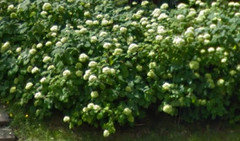
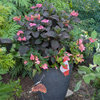
    springwood_gardens, white tiny flowers


  • 11 years ago

    They are beautiful I wish mine could look like those. The tough bush killer will kill it .

  • 11 years ago

    So... Where are ya? Haha. I'd dig em up.

  • 11 years ago

    Yep, that looks like an old Annabelle planting. Yeah, post a "u-dig" add. If you're on Facebook there are local gardening groups and flea market / for sale groups everywhere.

    This would place all the energy in the hands of people who don't mind digging all day. And they'd be getting something free -or- you could even charge money and people would still come and dig them up!

  • 11 years ago

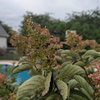
    Those flower heads are pretty small for an Annabelle type hydrangea - looks more like a snowball bush, Viburnum spp. Can you post close up photos?

    Regardless of the specific ID of the plant, manual removal or the use of herbicides applied directly to cut stems (NOT broadcast spraying) would take care of the problem.


  • 11 years ago

    Lop them to the ground, dig the root balls up with a heavy grubbing hoe and a good shovel. It's not hard to do other than a few hours of sweat and labor.

    I'd find a good home for them if you have the time to wait though as others here have mentioned.

  • 11 years ago

    I thought those looked more like viburnum too but without a closeup of a leaf wasn't convinced one way or the other....

  • 11 years ago

    I agree that they appear to have more leaves than I would have expected from a hedge of Annabelles. The blooms appear quite small too; if they were young blooms, I would have expected them to be green. Hmm, I think we need closer/clearer pics?


  • 11 years ago

    They might be a smaller-flowering breed of arborescens, but it looks to me like a neglected older planting. There are many that look like that in my area, where grass, weeds, and trees are also growing and they never receive a manicure or fertilizer.

  • 8 years ago

    I have a hydrangea that is probably 20years old and is taking over, how can I safely dig it up ?

  • 8 years ago
    last modified: 8 years ago

    Safely, hmmm? Hard to say exactly when they get 'old'. The more of the roots that you can transplant, the easier it will be for the shrub to become established... pick up and go in its new location. It will be better for tthe plant. Safer too. But when they are old, the roots are all over, which makes it hard to move/transplant without leaving some roots in the old location. I would get cuttings first if you have sentimental attachments and, once these take, I would transplant it when dormant. Water the soil the day before moving it. Dig the hole for the new location ahead of time too. Get help to move the rootball... without breaking it. If it breaks, try planting the other pats too to see if they take; it worked for me once. Move as many roots as you can... and as is practical. The small fibrous roots are important as they absorb water thru them. After you move it, give it evenly moist soil and watch it often in its first summer. Cover it with chairs or umbrellas if the leaves brown out from the edges inwards (usually means that it needs water normally) or if the leaves turn all whiteish or yellowish, including the leaf veins (getting too much sun or reacting to summer sun it its first year). Maintain year around mulch and start fertilizing in 2019.

  • 8 years ago

    For those in the know.....how far out does the roots go ?


    I was digging a hair just past the drip line on one last summer. Was sorta on my radar thinking I was going to be cutting up some roots since I was so close to it. Was surprised as I did not see any roots at all.

  • 8 years ago

    The ones where they get most of the water a tiny, fibrous near the top 4" (or thereabouts) of the soil. Others can go deeper. However, I do not think anyone has come up with "measurements" that say how far the roots go horizontally based on things like age of the hydrangea, etc.

  • 8 years ago

    Colesha, for actually moving a large plant, using something as a sled to slide it over to its new home is useful to reduce the likelihood of damaging either your back or the plant's rootball trying to lift it. A plastic kids' sled, a large heavy duty tarp or something similar will work. I do agree with Luis that starting cuttings in case the original plant doesn't move well is a good idea. Also, if it is one of the hydrangeas like Annabelle (Hydrangea arborescens) it suckers, so you can manage the size by removing large chunks from around the edges which can be replanted elsewhere if you want.

    a1an, the soil moisture and texture as well as the species of plant and how long it's been in the ground will all influence how far a plant's roots reach.

  • 8 years ago

    Thx. The benchmark or reference point I use for roots is the panc. All of them spread out horizontal much more than I expected.