Software
Houzz Logo Print
sabaay1

Which roses would look good together?

11 years ago
last modified: 10 years ago

Dear all,

I am ordering 18 standard roses to grow just behind the 18m heged border of my front yard.

I am new and know almost nothing about roses and would like your help
in putting those plants together. With so many colours and different
varieties I am stuck of which rose to plant next to which one in order
to get a beautiful and harmonious effect overall. I need to sort this
out asap because the planting is starting in the next two days. Spacing
is 1m apart.


1. The Alnwick Rose

2. Pomponella

3. Afternoon Delight

4. Sunny Sky

5. Transplant Australia's Thank You Rose

6. Purple Glow

7. Tuscan Sun

8. Splice

9. Sexy Rexy

10. PJPll

11. Perfume Passion

12. Munstead Wood

13. Maxivita

14. Seduction

15 Red Riding Hood

16. Princess Alexandra Of Kent

17. Peach Profusion

18. Cathedral City

Thank you so much. Take care

Comments (16)

  • 11 years ago

    Basically, go for the classic look: red, dark pink, medium pink, light pink, white (any combination, such as dark pink, light pink, white--calming, peaceful effect).

    Or go for a more "modern" look: apricot-gold-yellows, cream, white. Even some orange or tropic shades would work in there. Lively warm effect.

    Or be dramatic: white and dark red, or darker red and yellow.

    Try all shades of pink (you'll be surprised how many shades there are!)--more sophisticated, sustained color effect.

    It all depends on what you personally like best. There is no right or wrong ways, just different effects created. Those are some of the standard ones. Other posters probably have their favorite combinations also.

    Oh, I always stick bi-colors into whatever color scheme I come up with.

    Hope that helps.

    Kate

    Sophia thanked dublinbay z6 (KS)
  • 11 years ago
    last modified: 11 years ago

    Hi Cynthia!

    OMG! Thanks a lot for your time and kindness in helping me out. That was a long post to read and I have to read twice to understand everything.

    I haven't seen those roses in person, just ordered them online as bare roots. I was looking for roses that require little care (having a 1 and a 3 year old children), disease resistant and flower continously. I purchased those roses based on the descriptions from the seller's website and some info from here. I hope I made the right choice in selecting each and everyone of them as they cost me a fortune and this id my first rose garden ever.

    The free roses are Garden Delight and Summer Sun but they are bush roses so I will need to find another spot to plant them.

    Thanks for the colour grouping tips. I will need time to group them and will see how they go and will let you know if interested or would like to give more advice on this.

    Thank you so much. It was very nice of you to respond to my post which I thought no one would reply.

    Regards,

    Sophia

  • 11 years ago
    last modified: 11 years ago

    Hi Kate!

    Thanks a lot for your input. Looks like it's going to be a hard decision for me. I was tossing between the classic and dramatic look and still can't make up my mind.

    By the way, what did you mean by "bi color" grouping?

    Thank you and enjoy your day.

    Regards,

    Sophia

  • 11 years ago

    Some roses--like the well-known Double Delight-- are a combination of ivory, creamy yellow, and lipstick red on the edges. I stick those combination colors in with solids--to give a little variety but still pick up one of the predominant colors of the solids. Or if I want a sleeker look, I stick to a bunch of similar colored solids.

    Keep in mind that some people just "plop" all their roses down wherever they find a spot to plant one--no rhyme or reason. That can result in quite a hodge-podge of colors--but you know what? even that works. I'm seen some very lively gardens--strong dynamic quality--based on the hodge-podge method.

    Roses have a way of just looking nice, no matter what you do with them, don't you think?

    Good luck deciding between classic and dramatic--I vacillate between them also. : )

    And yes, we'd love to see the results. Looking forward to your pics.

    Kate

    Sophia thanked dublinbay z6 (KS)
  • 11 years ago

    I am definitely one of those people who just plant wherever I find a spot like dublinbay said. (hahaha) I find it works no matter what. I try to group roses by colours and shade but found it doesn't really matter and I don't want to grow a colour wheel garden either. Keep in mind that most roses blooms don't last a long time (most of them have pauses between flushes) like other perennials or annuals and most importantly the flowers or roses change its colour (some variety fades and others gets deeper) as the blooms get older. Unless you have a unique colour then I would worry about blending in. Voodoo for example is a strong, crisp orange colour and really stands out miles away. Therefore I grew beside pink-reds and other orange types to blend in more.

    Recently I have been trying to get roses that are brighter in colours (mostly Kordes) as I have lots of paler Austins but I've found that as the blooms fades, it blends in.

    I would only really worry about colours clashing if you want the "artificial designer" looks, formal gardens style, or mass planting (as opposed to single plants).

    However, I would be more worried about the variety grow habit. Popular expert advices to group the same variety together like hybrid teas and grandifloras in one spot while shrubs like Austins separately etc. This is because Hybrid teas are more formal plants as opposed to shrubs that are more informal.

    Btw, the collection looks really nice.

    Sophia thanked jjpeace (zone 5b Canada)
  • 11 years ago

    HI Sophia
    Glad to be helpful, and you did indeed do a great job of picking roses that have a good reputation for relatively easy care. They'll still need occasional pruning and deadheading like any rose, but the mix of Kordes and Austin and other shrub roses should work well for you. Incidentally, there's no need to move those two free roses to another area unless you prefer the look of those blooms separate from the ones you have above. I have Garden Delight near Tuscan Sun in the "modern" section of my yard
    (hot colors), and they make quite a combined statement together. Most of us freely mix hybrid teas, floribundas, and shrub roses together, and a more important consideration for how you place them is their growth habit. For instance, many of your Austin roses (like The Alnwick Rose, Pomponella, Princess Alexandra of Kent, and Munstead Wood) are technically also shrub roses, and they're already in the mix you planned. However, these roses grow differently and need that considered mostly in how you plant. For instance, Munstead Wood tends to be shorter even in warm climates, so it would be toward the front of the bed, while the other larger Austins could go toward the back of the bed. Beyond the height and spread of the roses, everyone's advise to not worry too much about the rose placement is right on- as jjpeace says, the roses tend to decide when they want to bloom and even carefully planned placements end up looking like a mixture in most cases, so just put them where you want them.

    Since you mention being new at roses, here are some other tips for planting and enjoying them:

    - Do what you can to prepare the soil ahead of planting in your front bed. This could be mixing in some organic material (like leaves, grass clippings, compost) into the soil bed before planting if you're ambitious, or putting layers of organic material in the 1 meter area around the roses as mulch (maybe putting some wood chips on top if you like that look) if you're lazy like me. The worms will gradually mix that organic material into the soil and improve the overall quality of the soil over time. If you have a humid climate, you want to make sure to keep that organic material away from the canes at the base of the rose at least a few centimeters, to avoid some diseases at the base. Keeping that mulch down on top of the soil also cuts down on your work because you won't have to weed around the roses.

    - Be sure to water them deeply when you water - particularly when first planted - (until you can feel moisture half-way up your finger, an average of 2 cm per week) but don't drown them in water. Spacing out watering helps to build up toughness and make them send down deep roots, but in sandy soil or very dry climates you have to water more often than I do with my loamy clay soil.

    - Be PATIENT with them. These roses will mostly settle in for this year and much of next year, and that's a good thing. You may see some blooms, but the main color you want to see is green - that means they're putting out leaves and hopefully putting out roots to grow from. You expect new roses to sleep the first year, creep the second year, then leap (start blooming more) the third year.

    - Don't fuss over them too much. There will be occasional bugs that chew on them, making lacy holes in the leaves or clustering on buds in early spring (like aphids), but the best defense is to spray them off with water and not try to kill them off. Keeping a few "bad" bugs encourages the good bugs to come and keep the balance in your garden (and also make less work for you). Same thing about blackspot on the leaves - unless it keeps your rose stunted and not putting out new leaves, many of us don't do anything about blackspots on the leaves. If you don't like the look and some turn out to have too spotty leaves to be acceptable to you, you can always change out that rose for another one that will stay cleaner down the road.

    - Don't fertilize your new roses when planting, particularly not with any solid fertilizers. I make the exception that I plant new roses with a handful of alfalfa hay (from the feed store) mixed in the planting hole soil, since it breaks down very gradually and the roses like the nitrogen, but it's not needed. You can give them some half-strength diluted liquid fertilizer every couple of weeks (see the directions on the bottle) once they're putting out leaves for you throughout the growing season, but you don't have to do even that. Good soil is more important than fertilizer, particularly in the first year.

    - Enjoy your roses and your family, and we would indeed love seeing what your garden looks like as you get it pulled together. This is all meant to be fun, so have fun with it and don't worry too much.

    Cynthia

    Sophia thanked nippstress - zone 5 Nebraska
  • 11 years ago

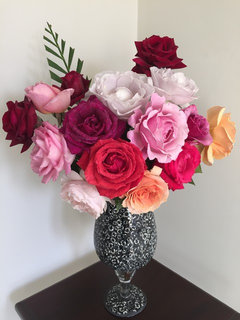
    Personally I believe that roses of all colours have an amazing ability to blend in with one another and yet still do not look out of place:


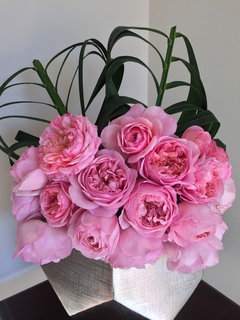
    However lots of roses of the same colour can give a mass impact:


    Also remember that different varieties of roses planted in the same bed may not all be flowering at the same time.

    Sophia thanked fragrancenutter
  • 11 years ago

    Dear Cynthia,

    I am a bit confuse when you mentioned about the rose heights. The roses that I purchased are all 90cm stem "standard rose", maybe in the States you call "tree rose"?

    If they are all 90cm Stem aren't they supposed to be growing the same height doesn't matter whàt type of rose they are?


    BTW, thank you heaps for the planting info, I needed it.


    Take care

  • 11 years ago

    Hi fragrancenutter,

    Beautiful roses you got there. Nice flower arrangement too.

    Thank you for your examples. I am still stuck. Maybe just plant without looking at the name tags

  • 11 years ago

    Hi jjpeace,

    Hahaha, you don't want to grow a colour wheel garden? Just what I was going to do. One of the easiest options, I guess.


  • 11 years ago

    dublinbay,

    Thanks a lot for your input. I will post a pic once the planting is done and will post another one when they are blooming (I hope).

  • 11 years ago
    last modified: 11 years ago

    Sophia - Just a thought, although it may be too late; I just wondered whether it might be feasible for you to start them off in pots, then you could wait until they bloom - which may give you a much better sense of what they look like 'in the flesh' - before deciding on final placement. You could then shuffle them around trying out your ideas (some sort of trolley thing might be needed, or at least a willing helper). I think Cynthia's advice re colours was good and what she's describing might be clearer to you when you can see the actual plants in bloom. As well as colours, you'll also be able to see the relative sizes/forms of the blooms. Leaves could vary somewhat in colour and size too, and there could be some variations in habit. So all that could potentially contribute to how you might choose to harmoniously arrange them (eg you might want to alternate or intermingle small blooms with large, rather than have a run of 3 smaller-flowered and then all the rest large.

    As I understand what you've told us, they're all 90cm (=around 3ft) -stemmed standard roses, known as rose trees in America, except for the last two - the freeby bushes - which you'll use elsewhere. You have one of each of the 18 numbered roses pictured, and plan to plant them in a single line, curving in a crescent/semi-circle around that bed, bordered by what looks like a low (box?) hedge, as you've marked in on the photo. I'm just restating all this to (hopefully!) help clarify - in case some of this info may have been accidentally overlooked or misunderstood.

    Another possibility might be to cut out pictures of the roses and shuffle them around on a table until they look 'right' to you (maybe start off trying out Cynthia's suggestions, then modify as you see fit). If you look up each of the roses by name on the website 'HelpMeFind/Roses' and click on the 'Photos' tab at the top of the page, you'll see lots more pictures of each rose, which will help give you a more accurate idea of its natural variations than one perfect picture of a single bloom in a catalogue can do. (You'll have to imagine them though, grafted to the top of their stems and kept neatly pruned/trimmed...) The 'Description' tab will give you a run-down of basic info on each, such as bloom size.

    Good luck, and I'll look forward too to seeing/hearing how it all goes.

    Comtesse :¬)

    Sophia thanked comtessedelacouche (10b S.Australia: hotdryMedclimate)
  • 11 years ago

    Ahhh, thanks for the clarification, Comtessdelacouche. I hadn't connected the "standard" rose to our term for tree roses, and that does make a difference about the ultimate height of the rose. I haven't grown tree roses here, since they're risky to overwinter our below zero F temperatures, but I still suspect they will have different growth habits and heights to some extent over the top of the 1 m high tree rose graft. The groundcover roses like Splice or Maxvita will probably droop down in a lovely cascade from the tree graft, the short roses like Munstead Wood or Afternoon Delight may make a relatively tidy clump on top of the graft, and who knows how big roses like Alnwick Rose or Princess Alexandra of Kent will get with an extra meter of boost in their height over the graft. Regardless, though, there's really no wrong way to plant these roses particularly if they're in an individual row stretched across that space. I'd zigzag that row rather than making it rigidly straight across the space, since that tends to look more natural and allows for the rows not to be exactly even. If the heights go up and down across the line, or the colors blend or contrast - it will still look lovely.

    That means you really get to do what's most convenient for you, Sophia! Comtesse makes some nice suggestions to help you make up your mind - get some more photos from helpmefind to see the range of colors and arrange them on paper first, or pot them up to see them in person, or do as you suggested yourself and just plant them without looking at the tags. It'll be fine regardless, and they look like nice specimens. You're right that the rose you pictured looks like it has a dead branch on one of the cane ends to prune off, but I wouldn't prune too much on a tree rose initially. Put that one toward the end of the row in case it doesn't make it, and send your photo to the seller for a refund if it dies.

    That brings up one more really important tip for tree/standard roses - DON'T prune too low on the rose, definitely not beyond the top of the 1 m tree rose graft (the knobby bit where the branches widen out). If you damage that graft or prune below it, the original rose you bought will be gone and all you'll have left is the base rose it was grafted onto, and it's unlikely to be a very attractive rose. in my zone, that's why I can't plant tree roses well since most roses die to the ground every winter and need the soil to protect them from the cold, but in Australia you should be fine with a little care when you prune out dead wood.

    Regardless, don't worry about the placement. We all have a lot of advice and you can make a plan if you find it fun, but random placement may be as good a strategy as any if the planning gets too stressful or time consuming.

    Cynthia

    Sophia thanked nippstress - zone 5 Nebraska
  • 11 years ago

    Well, now I've done it too - I just looked back and saw the bit about 'Snow Maiden' being the hedge - so not box, obviously! (I'll have to look that one up - I presume it's a little white rose...)

    Sorry, Sophia, no wonder you're confused ...I fear it is we, though, who are the confused...

    :¬)

    Sophia thanked comtessedelacouche (10b S.Australia: hotdryMedclimate)
  • 11 years ago

    Sophia, maybe you can arrange your roses like a rainbow for your daughter?

    I am in Aust too so I am familiar with Std roses. Even though they are all grafted onto a 90cm stump the actual roses that grow on top will be very different sizes depending on the variety. So if colour arrangement is not an issue for you it may look neater if you arrange them by bush size and vigor of the varieties.

    Sophia thanked fragrancenutter