Software
Houzz Logo Print
foreignlady222

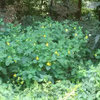
Hydrangea looking thing

Hi and thanks for your help,

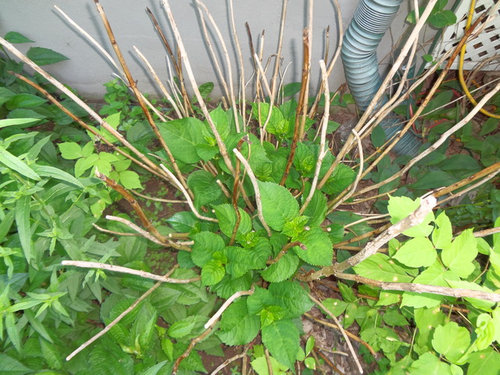
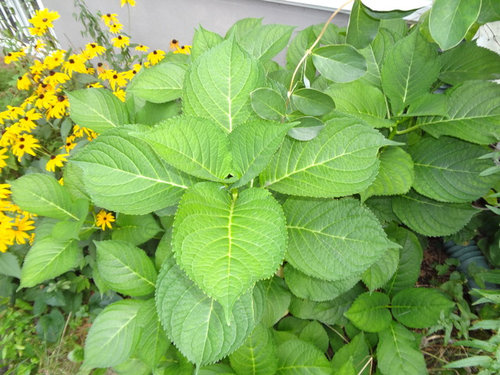
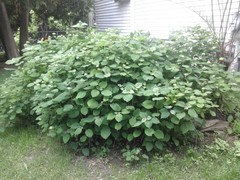
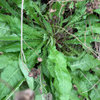
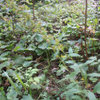
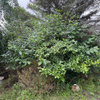
For the past three years, I've been trying to figure out what this thing is. Two years ago, it was suggested that it might be hydrangea. It looks and acts nothing like the hydrangeas I've seen. It has never flowered. Below is a current picture, as well as a late season picture of when it looked its best.


Any guesses?

Comments (37)

  • 11 years ago

    Looks like a hydrangea to me...it might not be getting the right conditions to flower.

  • 11 years ago

    It could have suffered the miserable winter die-back that knocked out all the hydrangeas around here for the last couple years; mine has blooms for the first time in three years. Where are you - zone and state?


  • 11 years ago

    If your hydrangea is a once blooming H. macrophylla, it will bloom from flower buds formed the previous year. In the top photo it looks like all your new growth is coming from the base of the plant. You didn't say where you are, but it may be that a late freeze killed the buds on the older growth. Pruning too late in the season can also remove flowering buds for the next year. If you are in a more northern area, there are re-blooming cultivars available that will bloom on both old and new growth in case they get zapped by a late freeze.

  • 11 years ago

    Definitely a Hydrangea. One of mine looked like that after 2013's winter weather when I made the mistake of not tying up the branches of my Hydrangeas to protect them from breaking through the middle. The plant recovered, as yours is doing in the first photo, but it didn't bloom (previous year's wood bloomer like yours).


    If you live where there is the potential for ice storms and/or deep snow, I recommend you tie up the branches in late fall or before the first significant storm. I've used bungees (attached to each other encircling the major branches) on some of my Hydrangeas and clothesline rope (same method) on others with excellent results. Whatever material you choose, never tie it to the branches directly. This past winter really tested them with heavy snow burying ¾ of the three shrubs and 100% of another. Because they were tied there was minimal damage to the Hydrangeas and every single one is full of flowers (even the one that got covered in 8ft. of snow).


    It's also a good idea to get in there with pruners and remove all the branches that did not show successful new growth. Your shrub(s) will be healthier for it as they won't waste energy on trying to keep those branches alive. Also make sure you feed the shrubs in the Spring -- especially after a very harsh winter.


    My 2¢.... Hope it's helpful =)

  • 11 years ago

    So the ID is confirmed then..! I really wish I could get some flowers out of it. I'll go cut out those old stalks, but if I understand correctly, I shouldn't expect much in terms of buds this year? Is it too late to "feed"? I don't know what to use though...

  • 11 years ago

    It looks healthy enough; I don't think you need fertilizer. If you are in the northern half of the country, it was the winter that did this, nothing else.


  • 11 years ago

    It is too late to feed the plant this year and the growth looks pretty good. Hydrangeas get the best benefit out of a feeding in Spring. Doesn't have to be anything fancy -- though Hydrangea specific plant food is recommended by most. I feed mine with Osmocote & bone meal -- both of which are readily available at garden centers, Home Depot, etc. -- usually only on the heels of a harsh winter.

    For this year, it'll be enough for 'em to be cleaned up and protected through the winter. Feed them next Spring.

  • 11 years ago
    last modified: 11 years ago

    Many thanks! Should it ever make a bloom, I'll post a picture. FYI I am in zone 5b, Greater Montreal area. We have bad winters, as a general rule. The last one was colder than average, with moderate snow. The one before that was very snowy and also colder, if memory serves. So I guess it is possible that it's been through winter hell for several years, explaining why I've never seen it's true colors.

  • 11 years ago
    last modified: 11 years ago

    For the record, here are my Hydrangeas [click on names for photos]:

    ❀ Blue Mophead

    ❀ Pink Mophead

    ❀ Pink Lacecap

    ❀ White Mophead

  • 11 years ago

    Wow! Seriously amazing help fizgig! And beautiful specimens! I think I already have all the materials I need to make this "hydrangea shelter" and it's nice to find another use for some more of my maple leaves. I actually have another small hydrangea that I planted myself, blue mophead I think, and I'll give it the same treatment in hopes of giving it a better chance! (It's also doing poorly, but I need to transplant it somewhere more suitable too...)

    I'll have you to thank again if/when they do well!

  • 11 years ago
    last modified: 11 years ago

    You're very welcome!! Glad you found the info. useful....


    If you're gonna transplant any of your Hydrangeas in your zone, it's best to do so in the Spring after all threat of freezing weather & storms are gone. Most folks will tell you to transplant when the plant is dormant in autumn, but cold climates are particularly hard on these shrubs. I've found it best to transplant in Spring -- be sure to add ferts. to the soil and backfill the hole with fresh garden or topsoil instead of dirt you took out of the hole (hope that makes sense). Be sure to leave the branches tied up when you do this to make your life easier --- and so you don't lose an eye *8^); also minimizes the damage to the blooming potential of the plant(s).

    Good luck with your Hydrangeas =)

  • 11 years ago
    I was reviewing hydrangea protection for winter and saw somewhere (Farmers almanac?) that you shouldn't use maple leaves (pretty much all I have). Any one know why?
  • 11 years ago

    Even here in Z 7b if we get an early freeze I can get die back, protecting with burlap is a good idea and once it starts flowering never remove the spent flower heads until the following spring, wait until new growth starts, that little bit of extra protection by leaving the old flower heads on is sometimes all it takes here but in your zone I'd definitely go with the burlap.

    Annette

  • 11 years ago

    Maples leaves don't make a good mulch unless they are shredded. A lot of people put the leaves on the lawn and run over them with a lawnmower to shred them. They are then gathered and used as a mulch or put in a compost pile.

    Mike

  • 11 years ago

    I dunno about the whole maple leaves and not using them thing 'cause I've been doing that for years with all my plants without any ill effects. All my Hydrangeas get protected with a layer of leaves including Maple --- whatever falls into the garden from nearby trees.


    Don't worry about it ;) After all, you'll be cleaning the leaves up in the Spring anyway and not letting them rot on your Hydrangeas ;) And you're not using the leaves as mulch -- which I agree, they're not good for -- you're using them as insolation against the harshest of the winter cold -- which they ARE good for. They're better for the purpose than mulch would ever be -- besides being free ;)

  • 11 years ago

    I was thinking Acer macrophyllum leaves rather than the smaller Japanese maple leaves. Here in the PacNW we have a lot of large leaves from our native Oregon Maple that smothers out lawns if not raked up. They are as large, or larger, than a dinner plate. Here in Maple Valley, Wa., the city has a contest every year for the largest.

    Mike


  • 11 years ago

    Mine is a sugar maple. I put them in plastic bags and try to make leaf mold out of them, which takes a couple of years... I also spread them all over the lawn and mow them.

    I guess I'll make a mixed protection with shredded and whole maple leaves, and gather what I can from other leaves that come to the edge of my property, because in my case, all I get basically is maple...

    Thanks for the tips and useful info!

  • 11 years ago

    You'll want to leave the leaves as whole as nature allows for the insulation of your Hydrangeas. That's how the leaves are most effective for the purpose =)

  • 11 years ago
    I feel like I am getting mixed messages... ☺ So, I guess I should leave them whole, but try to mix other leaves in with the maple.
  • 11 years ago

    If you're really concerned about the use of Maple leaves for this purpose, then, by all means go through the extra effort of mixing in other leaves as much as you can.... Personally, I wouldn't be concerned and would use any leaves available for the using ;) My front yard ones get a mixture of some kind of walnut, oak, and maple. My backyard ones get a heavy dose of maple with some oak.... Whatever mixture mother nature brings in on the wind ;) Of course, I leave the Hyndrangeas' own dry leaves in the mix (basically, once they're all down, I make preparations for snow protection).

  • 9 years ago

    Hi folks,

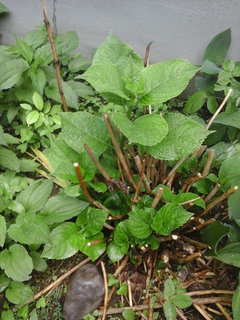
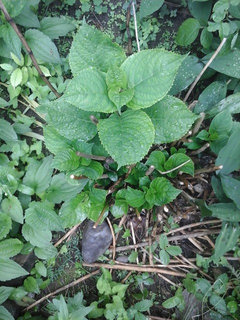
    Thought I might share an update on the hydrangea discussed in this thread. For the winter of 2015-2016, I protected the shrub as recommended with leaves and burlap, then eagerly cleared the protection when the time was right hoping to finally see some blooms. Well, the darn thing didn't grow a single leaf in 2016. I was meanwhile incapacitated and couldn't attend to it at all. So winter 2016-2017 was spent unprotected. This spring, it looked like nothing was going to happen and I was thinking I would simply remove it. Didn't get around to it, and now some growth is showing. I'll attach pics in a separate post.

    As soon as I get the chance, I'll get in there with my pruners and remove all the old dry branches with no new growth. I don't expect any blooms since none of the old growth did any growing this season again. Still, the leaves are pretty.

    Foreignlady

  • 9 years ago
    pics
  • 9 years ago
    last modified: 9 years ago

    Up and down years are fairly normal..... Our weather was weird and we ended up with strange behavior from our plants as well --- a good example is that 9/10 Magnolia trees failed to bloom. Our Hydrangeas also had issues "leafing" out. I gave mine a healthy dose of bone meal and that really got them going. I cleared away debris from around the root area of the shrubs, spread a good layer of bone meal & then a thin layer of topsoil before mulching the area. Being that yours have plenty of organic ferts. available to them with all the other plants around them, etc., you can bypass the use of ferts..... Just give them bone meal.

    By the way, my backyard Hydrangea looked pathetic and bedraggled this Spring -- as a result of a major rennovation/elemination of much of the yard. It spent 5-6mos. tied up tight after being unceremoniously pruned by by 3/4 of its size to keep it out of the way of workers & preserve/protect it from digging equipment. Come Spring, it was looking none-too-happy --- between the bizarre weather & its treatment.... But I took the pruners to it and removed all branches that weren't leafing out by LATE Spring.... The cleared the flower bed it calls home of all debris (including chunks of broken up concrete and God-knows-what-else the construction folks left behind), added a good dose of bone meal, a light dose of Osmocote, a 1-2" layer top soil & potting soil from a pot I wanted to eliminate.... Three weeks later, the Hydrangea seemed to spring to life. It's all healthy and bushy and it now has flower buds, too.

    My front yard Hydrangeas looked much like yours this Spring, too (and other years with unusual weather swings, too, I might add)... You wouldn't know it to look at them now. So don't despair.... Ups and downs are normal for these -- especially given that they are not native to areas where they're being planted. Whacky weather, particularly in late winter & early spring, tend to effect them negatively. But they're tough and can rebound with just a little bit of encouragement. The protection you gave them wasn't useless.... Its aim is to prevent the shrubs from being broken through the center -- protect the "heart" of the shrubs and they can recover from other damages (as yours are doing). If yours didn't respond well, you can alternatively skip the leaf litter protection & just do the burlap thing to keep it from being broken apart by snow & ice. Locations with very cold winters are harsh on these guys.... What your seeing is the shrub having struggled to survive the winter cold -- it eliminates sustenance to its long/tall branches in favor of maintaining its core so that it can then grow anew from the bottom of the plant. It also isn't 100% certain that it will not bloom.... Very cold winter cause these guys to behave a bit differently than the "experts" say they should.

  • 9 years ago
    Thanks for the tips. I will try finding some bonemeal. Baring that, I have some sort of tree transplanting soil mix that I seem to recall contains bonemeal, that would probably do..?
  • 9 years ago
    last modified: 9 years ago

    You can find bone meal at just about any garden center. Barring that, it's easily obtained online.... Stuff's very inexpensive. Tree planting soil would be OK if all else fails -- though not ideal, it would still be more helpful than not.

  • 9 years ago
    Couldn't find bone meal last time I looked. Will try again...
  • 9 years ago
    last modified: 9 years ago

    You can, alternatively, use fertilizer specifically for Hydrangeas -- I personally am not fond of them because they alter the pH of the soil which isn't ideal in a garden with other plants like mine. Another alternative would be to remove about an inch deep layer of topsoil and add Osmocote, then cover with fresh garden soil in Spring. The easiest would be if you could find a compost source -- but, I don't think that's as likely where you live in CAN (and dealing with compost isn't everyone's joy in life either).

    Not sure if you have a Lowe's near you, but they definitely carry bone meal .... As does Home Depot.... I know there aren't many of them stores in CAN, though. I know there's at least one of each in Montreal -- 3 Home Depots for sure -- but I realize, of course, that it's a pretty spread out city.... Each of them have a store locator on their websites.

  • 9 years ago

    There is little to no chance of getting you Hydrangea macrophylla to bloom in Montreal without some work. The pink (or blue) blooms are lovely but most varieties bloom on old wood which dies at about -21c. If you bury it in snow at every opportunity (& Montreal gets a lot of snow), you may be able to insulate enough of the old wood that you'll get blooms that spring.

  • 9 years ago

    In zones lower than 7, bigleaf hydrangeas (H. macrophylla) will need winter protection to ensure any kind of flowering. Flower buds are set in late summer/early fall and very vulnerable to winter cold. Snow is not enough. You need to cage and then stuff the cage with dried leaves, straw, etc.

    If you visit the Hydrangea forum you will find numerous threads discussing how to winter protect these hydrangeas. There are also selections of these bred to bloom both on old (previous season's) growth as well as new growth so protection is not quite as critical to flowering. Some cultivars are much better at this than others. This is also discussed at length on the Hydrangea forum :-))

    Bone meal would not be my first choice for a hydrangea fertilizer. Any fertilizer formulated for acid loving plants would work and their impact on increasing soil acidity is minimal (far more of a maintenance situation). The vast majority of plants prefer a slight to moderately acidic soil anyway. Or just use an all-purpose fert.

  • 9 years ago
    My home is on sale, so I don't think I'll ever see it bloom. I have another small one that I planted myself a few years ago, and I never protected it but got one or two blooms.

    Won't bother planting these things again on my new property. Doesn't seem worth the trouble for me.
  • 9 years ago

    There are other types of hydrangeas that are much hardier and will consistently produce flowers for you despite how cold it might get in winter. I'd look at either Hydrangea paniculata or Hydrangea arborescens. Both are hardy to z4 and bloom on new growth so even if they die back to the ground in winter, they will still flower in summer.

  • 9 years ago
    last modified: 9 years ago

    The Old Farmers Almanac says not to use Maple leaves because they break down too quickly.This confirms fizgig's statement. I had the same plant as you.It also died back in winter and it never bloomed,so in about the third year I dug it out.Seems like they're too much work imo,but if you really love them that much,go for it!

  • 9 years ago
    Pretty sure I have a few h. arborescens elsewhere in the yard. They do incredibly well. I have a large grove of them in one spot, it was so huge and messy that I razed it one year and it all grew back, full bloom, in a much tidier form. Now if I could only keep the kids from going on jungle adventures through it, I'd be golden!
  • 9 years ago
    picture of one grove....
  • 9 years ago

    It's looking very happy.That's the kind of Hydrangea I like.One you don't need to fuss with.

  • 9 years ago

    If you like Hydrangeas and want to plant them in cold zones, look for what is native to the area in the first place. Those are most likely to do well.


    The most common ornamental types (snowball or pompom types) struggle with the cold winters even here in zone 7a. In this part of the country, though, we have a few native Hydrangeas to choose from. The drawback is they generally grow far bigger and have flowers that aren't as showy. I have a Lacecap in my backyard and that sucker is tough as nails -- winter die-backs, full summer sun, drought, even being buried in chucks of concrete & sand in recent construction didn't phase it much at all (it's still full of buds) .... My snowball types in the front yard are wimpy by comparison & need a lot more TLC.


    If your house is for sale anyway, I'd say don't bother.... Cut away the dead branches so they don't ruin the "curb appeal" and leave it at that. IMO...

Sponsored
Miller Woodworks
Average rating: 5 out of 5 stars23 Reviews
Franklin County's Trusted Custom Cabinetry Solutions