Software
Houzz Logo Print
golfergirl29

Etching tests on marble, quartzite, and granite

11 years ago
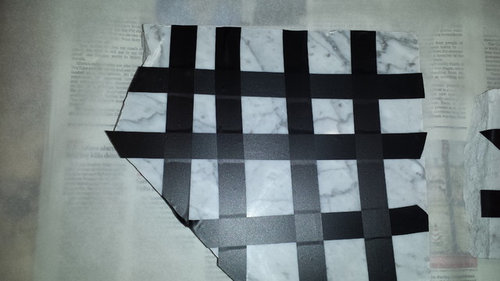
I thought I'd share how I tested samples of marble, quartzite, and granite and the results. The forums have been so helpful, and I would have made a costly mistake if not for the information freely shared here.

MARBLE

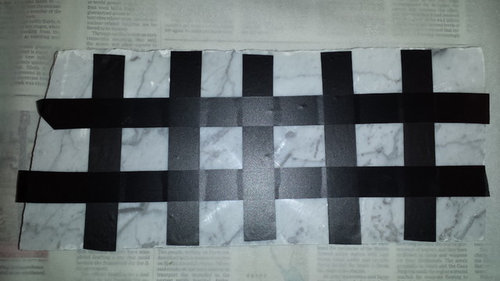
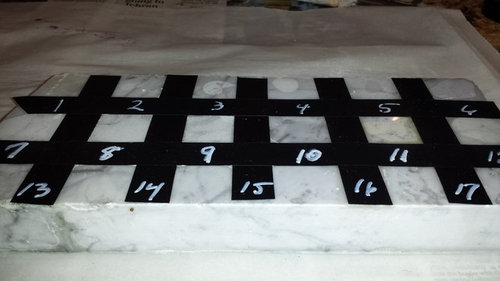
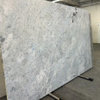
I started with a Bianco Venatino marble, which the fabricator was stronger than some other marbles. I used electrical tape to mark off sections. Glad I did, as some of the liquids wanted to spread.


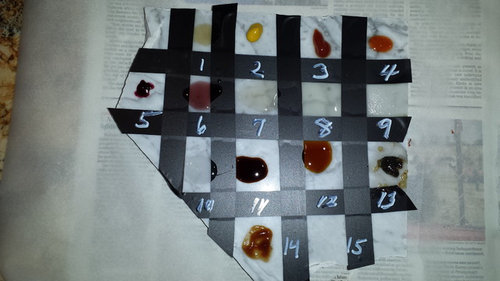
I then applied a drop of 1. coffee 2. mustard 3. ketchup 4. hot sauce 5. blackberry jelly 6. red wine 7. apple vinegar 8. lemon juice 9. lime juice 10. liquid soap 11. balsamic vinegar 12. soy sauce 13. squished blueberry 14. BBQ sauce.


We let the first slab sit for half an hour and got these results:


The worst was #11, balsamic, etched and stained. #7 apple vinegar, #8 lemon juice, and #9 lime juice all etched badly. You can feel the roughness. #2 mustard and #3 ketchup etched a little, but within tolerance for me. I had read that someone had positive results from lightly scrubbing with a green Scotch Brite pad. I tried that dry and again with a stone cleaner. The results above are after the scrubbing.

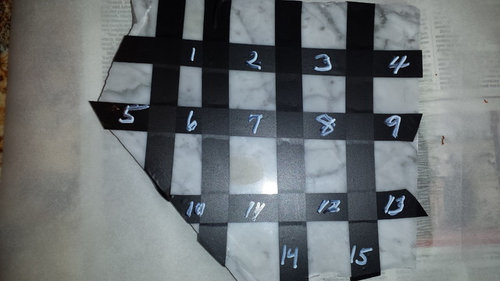
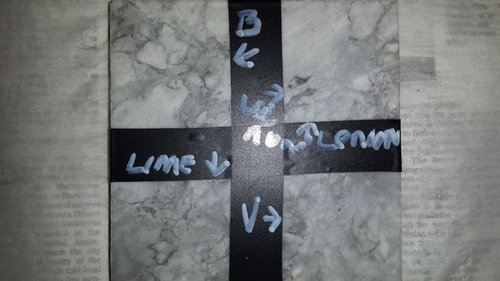
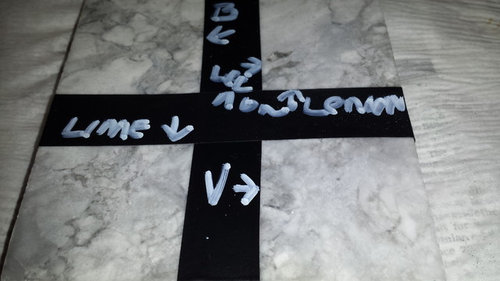
We let the other piece sit overnite and got these results:


You can see the etching more clearly. This time I got etching from everything except the coffee and, of things, the blueberry!

We keep our countertops clean, so the overnite test doesn't bother me as much as the 30 minute test.

Results: Darn, no marble for me. :(

QUARTZITE

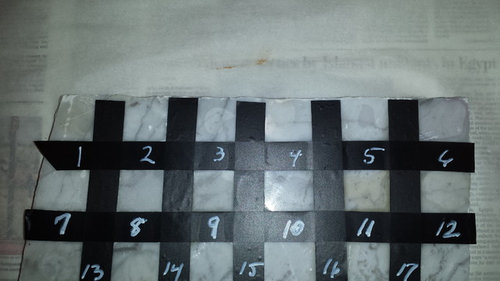
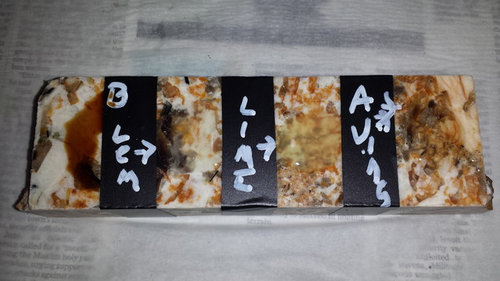
Since we only had a small sample, we decided to try the 4 culprits: Balsamic vinegar, lemon juice, lime juice, and apple vinegar. We did the 30 minute test with these results:


What a difference. I still had to scrub just a little, but it's all smooth to the touch. Once again, balsamic vinegar was the nastiest. By our standards, definitely within our tolerance range.

GRANITE


Comments (26)

  • PRO
    11 years ago

    Our favorite sales person has a huge piece of white marble on her desk which is stained with all manner of common household fluids. Every single contract is signed on that piece of marble so the customer cannot say "BUT SOMEONE SHOULD HAVE TOLD ME !!!!"

  • 11 years ago

    Thanks. Yes my place has this too. I'm going with granite it's held up well.

  • PRO
    11 years ago

    Couple of questions. Was the marble honed? Was the marbled sealed (e.g., with something like DuPont StoneTech BulletProof Sealer)?

  • 11 years ago

    It is polished marble. I did not apply any extra sealer to it.

  • PRO
    11 years ago

    Thanks for the clarification. BTW - Marble regardless of finish is porous and should be sealed. Wish I'd obtained a large enough sample to replicate your experiment with my honed & sealed marble.

  • 11 years ago

    After the first round, I decided just to focus on the nasty 4, which didn't take a lot of space. I had thought about sealing it first, but didn't see that in the comments I had read elsewhere.

  • 11 years ago

    I'm so impressed with the rather scientific way you went about this.

  • PRO
    11 years ago

    Sealant is not armour. While the sealers mentioned are excellent, all they give you is more time to wipe up a stain. No sealant claims to prevent staining.

  • 11 years ago

    Funky, it actually was a lot of fun. Especially rummaging thru the kitchen looking for potential nasties!

  • PRO
    11 years ago

    http://petchhouse.blogspot.com/2006/03/sealing-marble-acid-test.html

    This test is what convinced me of the need to seal. Very similar to what you did.

  • 11 years ago

    mdln, I agree that sealing is necessary. My concern with the marble was not staining, but etching. It looks to me that the petchhouse post has etching at the end of the experiment. I can tell you there was substantial roughness (etching) from the acidic liquids in my sample. Guess I could seal it and try again.

  • PRO
    11 years ago

    Thanks golfergirl, but did not mean for you to redo your study, just wanted to see if I could apply your results to my situation. Listed the petchouse link just as a FYI in case you'd not seen it. Yes, if etching is your main concern marble is probably not for you.

  • 11 years ago

    Interesting test, I like it!

    But, your quartzite is therefore not quartzite, as the results showed. It's most likely dolomitic marble. Real quartzite won't etch at all. However this does show the difference in the etching between the two different types of marble.

    Your granite sample looks more like quartz than granite. Hard to tell with the tape on it but I'm pretty sure that's not granite.

    But your method is very smart, and thank you for taking the time to document and share your results.


    golfergirl29 thanked karin_mt
  • 11 years ago

    Thanks for weighing in, Karin! Can you clarify for me--what difference would sealing the slab make on either staining or etching, if any? We just looked at a slab that is probably dolomitic marble and are seriously considering it because we could live with the results we had.

  • 11 years ago

    Sealing doesn't do much for etching, but it does help with staining.

    My understanding is that sealer gets down in between the pores and basically fills in those tiny spaces, making it harder for liquids to get down in there. When a sealer is applied, it's wiped off the surface, so you don't really end up with a coating on top of your stone. So the minerals at the surface are still vulnerable to being attacked by acids, which is the cause of etching.

    Given your scientific methodology, we'd all love to see the results of a sealed/unsealed staining and etching test on your dolomitic marble. That just might earn you the Nobel Prize in kitchen geology.


  • 11 years ago

    Karin, you just motivated me to do that. Next couple of days!


  • 11 years ago

    The "quartzite" that you tested looks like super white, which is notoriously mislabeled as quartzite in many stone yards when it is more like marble. You should test on something like Taj Mahal, sea pearl or white Macaubus, which are true quartzite and see what the results are.

    golfergirl29 thanked flysonic
  • 11 years ago

    My sealed Taj M quartzite has seen a lot (messy cook here). The only situation which gave me pause was a blue ink stain from a glass bottom coated with the ink. Probably sat there two hours before anyone thought to remove the glass from the mudroom counter. A little barkeeper lifted it up where soap sponge failed. Hooray. Love the stuff. Still running my hands across the surface two years in...

  • 11 years ago

    Love your test!
    Maybe I missed it, but what about staining? I think I could live with etching, but staining is a different story.....
    Probably etching would bother me less than those dots on marble-look alike quartz.


  • PRO
    11 years ago

    Listen, do you hear that? That's Corian laughing at all those stains.

  • 11 years ago

    Joseph - LOL - maybe my Cambria is laughing as well - but there are sure some pretty natural stones out there. I might even get tempted for our bathroom.


    Golfer - great job on testing the stones. I think this should become a "sticky"

    golfergirl29 thanked a2gemini
  • 7 years ago
    last modified: 7 years ago

    I know this is a really old thread but wanted to comment in regard to @Joseph Corlett, yes granite stains, but the granite is laughing at the scratches on the Corian. I'm considering going with laminate. Seems it is really hard to find a good all-around countertop as it relates to durability.

  • 6 years ago

    Very helpful- glad this came up in my search. off to do research with my little sample.

    golfergirl29 thanked salonva
  • 6 years ago

    Salonva, it was fun to do. Good luck on your own research!


  • 6 years ago

    Here's an article that guides you through various tests. And I agree it is fun!


    https://usenaturalstone.org/how-to-be-your-own-stone-sleuth/