Software
Houzz Logo Print
chitralekha_gw

What is affecting these tomato Plants?

11 years ago
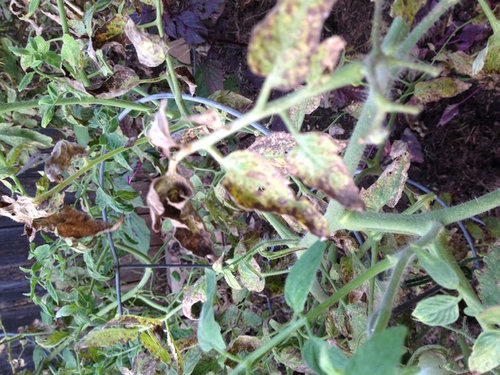
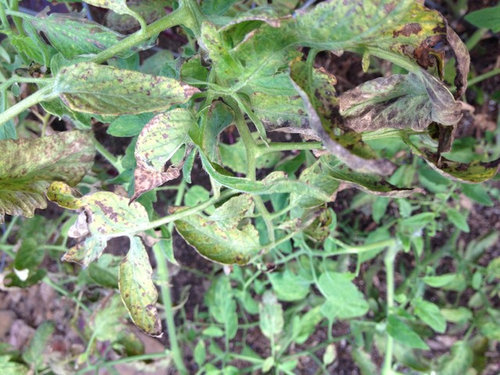
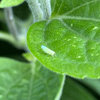
Our tomato plants (Solar Fire variety) is having some problems and the plant and the leaves look like as shown in this picture. Can you please identify what is causing it?

Comments (20)

  • 11 years ago

    Prob just from rainwater splashing on the leaves. Or overhead watering?

    Try taking a pic of the entire plant then zoom in.


    chitralekha thanked gumby_ct
  • 11 years ago

    From what I can tell it appears to be both Grey Mold and Early Blight, fungus diseases of tomatoes that are very common and especially so this year with all the wet weather.

    I copied your pic and blew it up and can see the tell-tale yellow-brown bulls-eye lesions of Early Blight in the bottom picture and the furry grey mold on the stems and leaves as well. This is an advanced case of both and has been developing for some time so your plants may not be salvageable at this point IMO.

    The recommended treatment is to remove ALL the affected leaves from the plants as well as any chunks of infected stem that you can, bag them and dispose of them away from the garden. Burn if possible. Then spray all the plants with a copper-based fungicide and do so weekly and after every big rain. That way you may be able to keep them alive long enough to harvest some fruit. If you have other plants that do not show these symptoms yet spray them too as the spores are airborne and the spray can help protect them.

    The alternative, and might be better approach in your zone 8 weather, is to pull these plants, bag them, wait for your weather to break, and plant fresh plants for a fall garden.

    Hope this helps. Good luck.

    Dave

    chitralekha thanked digdirt2
  • 11 years ago

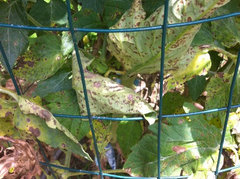
    I'm thinking I have the same thing going on with mine

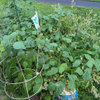
    All my tomatoes have this now, we've had a lot of rain in a short time here, this year my garden has a lot of problems

    chitralekha thanked karl_tn
  • 11 years ago

    Thank you Jean, Gumby, Dave and Karl. The picture Karl posted looks exactly the leaves of my plant. Dave, I appreciate all your advice about the problems and the remedies. I think there is no point in saving them now and I am following your advice and removing all of them and try to plant some for the fall harvest. I appreciate all the responses and thank you very much.

    Chitra

  • 11 years ago

    My plants have a ton of tomatoes on them, I just went out to try to remove some leaves, I got mine in cages some as high as 8 ' pretty much impossible to remove all leaves infected, I'm Gona try to at least get the tomatoes that are on them, I guess I'm off to lowes for that fungicide. Good luck with your next plants

    chitralekha thanked karl_tn
  • 11 years ago

    I pulled out all the tomato plants, bagged and got rid of them. How should I treat the soil in that area before planting new Tomato seedlings? Thank you.


  • 11 years ago

    About all you can do is turn the soil to hasten the decomposition of the spores by soil micro-organisms. However, it probably won't help much if you plant more tomatoes in the same spot this year. Early blight spores can last 3 or more years, so proper crop rotations will do the most to minimize the risk of infection.


  • 11 years ago

    Yeah if you Google Early Blight, the most common tomato disease there is worldwide, then you'll get all sorts of "what to do" info ranging from don't plant there again for 3-4 years which is impossible for many home gardeners to till/turn the soil deeply and amend with fresh soil and compost to dilute the activity of the fungus, which is usually possible. But that advice ignores the role played by weather and the fact that the fungus spores are also airborne, not just soil borne.

    So when it comes to the common fungus diseases of tomatoes the soil isn't the only issue or i would argue, even the most important.

    Does that mean there is nothing you can do? No way. It means you till/turn the soil, you mix in lots of fresh soil and even more active, high quality compost so the beneficial bacteria in it can help destroy the pathogens, and since you can't control the weather, you regularly spray the plants with the fungicide of your choice from the first day of plant out to protect them from the airborne fungi.

    The unusual weather this year has led to massive amounts of tomato disease all over the country. Fungus, bacterial, and mold caused diseases are running rampant for many. Those who jumped in with the fungicides early on as soon as they recognized the unusual wet weather with the wide temp extremes are winning. Those who didn't because they don't understand the relationship between weather and garden diseases are unfortunately paying the price.

    Hopefully the fall gardening weather will be more normal but just in case it remains overly wet we all need to be prepared to pre-treat the plants accordingly or the fall gardens will have the same problems.

    Dave

  • 11 years ago

    There is a good deal of sources online that early blight does not typically overwinter in the soil, but requires crop debris, however there is a lot of conflicting information.

    http://www.aces.edu/pubs/docs/A/ANR-1052/ANR-1052.pdf

    http://ipm.ifas.ufl.edu/resources/success_stories/T&PGuide/pdfs/Chapter5/Early_Blight.pdf

    IMHO it is unlikely that EB is going to overwinter in my garden (and it doesn't appear that it has.)... YMMV.


  • 11 years ago

    I would agree Peter but unfortunately the OP is in Z8 of mid-south Texas and with the exception of the far northern 1/4 of the state (anything south of Dallas-Ft. Worth) it has been reported by Texas A&M AG research as capable of over-wintering in both soil and debris due to the much milder winter temps there.

    Dave

  • 11 years ago

    Ah I missed that... yes I would definitely agree with Dave.

  • 11 years ago

    Exactly the reason people need to put their location in their profile - not just a zone. Gardening depends on location, location, location. AND while there are trends - each season can vary also.


  • 11 years ago

    I don't see mulch in those pics. I also like to see lower leaves removed. No bottom leaves touching bare soil .Ever. First week or two getting established is fine but i tend and remove all lower leaves. I've learned over the years to mulch to prevent splash-up and 'remove lower leaves'. For many reasons. I top dress with pro mix then straw. It is a small expense i do every year after spending the winter starting seeds...all 200 toms. (this year just 75-ish as i was traveling for two months at spring planting time). I need success and keep on top of it. Sure i have seasonal problems...something ate my first beet greens and the first row of peas, but i plant insurance rows every week for a few weeks just in case.

    No two years are the same in any climate. Try to not get discouraged. Learn your area and learn what it needs. My neighbors that roto-till are in muddy muck still and giving up. My raised beds are never tilled, drain well, and planted early.

    I also see stuffed cages. They could use some air circulation. Another reason to pull lower leaves. Hot humid wet and no wind? Lighten up the foliage down low.

    Just a thought.

  • 11 years ago
    last modified: 11 years ago

    Karl, your infection is down around the base of the plant, where it is supposed to be. The OP has almost over-the-hill plants in a climate where tomatoes are usually grown in a split season -- you give up on the spring crop and some point, and plant fresh replacements.

    We just have one long season here, and once a week I go under the plants and clip most of the low leaves off. If they are not shading a fruit cluster, they're gone. The basal pruning removes so much inoculum that it s-l-o-w-s things down until you get a crop. Your plant looks good, just needs trimming. The concentric rings around the irregular bull's-eye lesions are clear evidence of early blight.

  • 11 years ago

    I trimmed the heck out of them yesterday, most of the infected leaves were lower to middle, but some at the tops, I also sprayed last night with the spray I bought, and picked up some copper fungicide ( Bonnie) that was suggested to me, so I'm hoping this will help

  • 11 years ago

    Thank you Dave, Peter, Tripleione, Gumby, Sleevendog, Bcomplex, Karl, for all the advice about tomato gardening. Does OP mean other person? I am in San Antonio, TX. I learned a lot about gardening in SA especially after the recent unusual weather we had. Learned well how the growth of the plant is affected by weather, humidity, temperature fluctuations, insects and the floating spores and mold and what I have to do as a precaution to reduce the effects of these on the plant.

    Anyway I am going to prepare the area as suggested by all of you and plant at least one tomato plant and see what happens if I closely observe the plant and do the needful as recommended by you.

    Once again thanks a lot:)

  • 11 years ago

    OP = "Original Poster" ... the person who started the thread.

  • 11 years ago

    Thank you for explaining the short form "O P". I am the one who started the thread:) - Chitra.

  • 11 years ago

    I to want to thank all for the advice, without it I probley would have lost them all. Now I have a chance at least and next year I'm Gona do a lot different than I did this year