Software
Houzz Logo Print
kgrove34

Help ID these bugs! A garden threat?

11 years ago
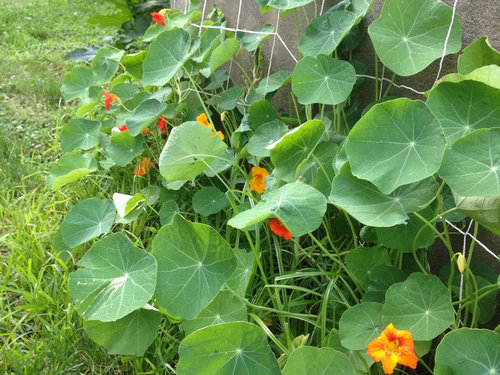
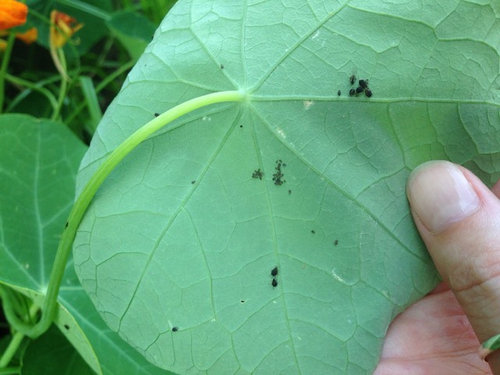
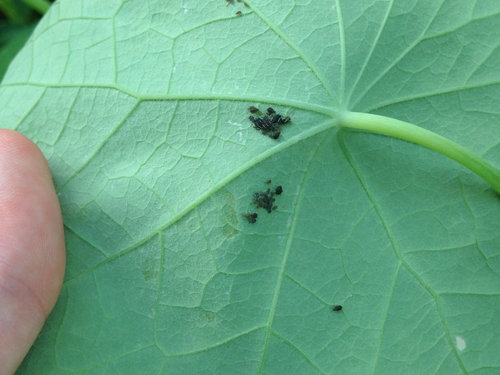
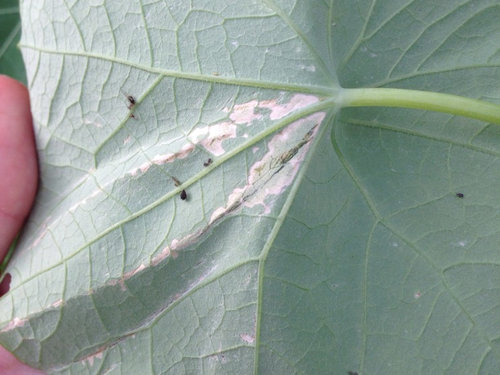
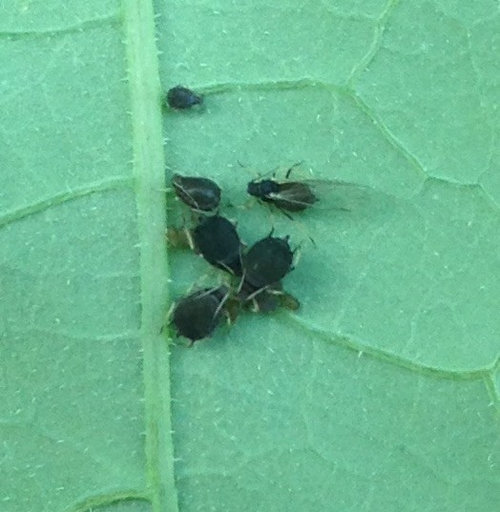
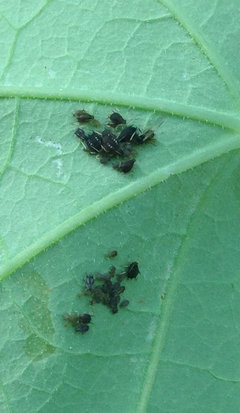
This morning, I noticed many of the leaves of my nasturtiums had clusters of small black poppyseed-like dots on their undersides. At the time, they were so small that I assumed they were clusters of eggs, but upon zooming in on the photos I took a few hours later, I can see that many of the dots are actually already bugs. What are these bugs and are they a threat? If so, whats the safest course of action for my garden? So far, they only seem to be on my nasturtiums, but I am afraid that they could travel to my vegetable plants (zucchini, peppers, beans, tomatoes, beets) as well.


Comments (13)

  • 11 years ago

    Here is one more close up picture!


  • 11 years ago

    Nasturtiums are often used as trap crops for insect pests since they seem to attract a lot of them.. As stated a sharp spray of water, to knock the wee buggers off the plants, works quite well. Since Aphids are prolific producers of new Aphids you will see more after knocking those you can now see off, just knock them off as well.

    Perhaps this article about Aphids will be of some help.

    http://www.ipm.ucdavis.edu/PMG/PESTNOTES/pn7404.html

    kimmq is kimmsr

    kgrove34 thanked kimmq
  • 11 years ago

    That's great! Thanks so much for your help. Aphids it is.

    "In some situations ants tend aphids and feed on the honeydew aphids excrete. At the same time, ants protect the aphids from natural enemies."

    I definitely have an ant problem in that area of my garden. I'll look for ways to get rid of the ants as well.

  • 11 years ago

    you will never get rid of ants .. and there is no reason to ... presuming they are the common garden variety ...

    ants do not create the aphid issue ... they respond to it ..

    by the time you eradicate all the ants... there might not be any living bug in your garden .. and do keep in mind.. many are beneficial ...

    there are reasons.. many peeps give up on certain plants ... Ns were a general PIA .. and i gave them up 30 years ago ... just not worth it... easier to get rid of the plant... than deal with the resultant issues ..

    ken


  • 11 years ago

    It sounded to me like the ants actively protect the aphids from other natural predators (lacewings, etc.) I've identified the aphids as bean aphids and don't want them to spread to my bean plants, so what should I do? Pull up the nasturtiums and hope that the aphids haven't already migrated? I gave them a good blasting of water this morning, but many of the clusters just wouldn't fall. I would assume the next best course of action would be to diminish the ants and thus allow aphids' natural predators to come in and assist with the aphid issue. Is there a better way?

  • 11 years ago

    It sounded to me like the ants actively protect the aphids from other natural predators (lacewings, etc.)

    ==>>> never heard of that theory before ... but i am open to anyone supporting said theory ...

    and i will repeat.. you will never defeat ants.. you went right back to saying you were going after them ...

    riddle me this batman ... WHY ARE YOUR Ns IN YOUR VEG GARDEN ..???

    you have learned they are problematic... and now location is questioned.. so yes.. pull them out ...

    perhaps you can find another spot for next year ... on the other side of the yard from the veg patch ...

    its just not worth the cost of chemicals.. or organic solutions .. IMHO ... not to mention your time, labor and worry ....

    each of your beans might end up costing you a buck a piece ...

    ken


  • 11 years ago

    Ken! Why on earth do you think that aphids make copious amounts of super rich honeydew? To attract ants who will actively defend the aphids against their predators. It's a successful symbiotic relationship; one that has been going on since ants and aphids came into being.

    Kgrove, your aphid, the black bean aphid, is extremely common and very happy to feast on almost any kind of plant. Look for them throughout your gardens, not only on beans.

    If they stubbornly hang on in spite of a brisk spray of water from the hose then start squishing them or just brushing them off. Quick spritzes of insecticidal soap will do them, too.

    Aphids come in pretty pink, apple green, yellow and red with black stockings, gray spotted, and more.


    kgrove34 thanked rhizo_1 (North AL) zone 7
  • 11 years ago

    kgrove34, the relationship between ants and aphids is analogous to the relationship between human beings and dairy cattle - herding, milking, protecting etc.

  • 11 years ago

    Many people intentionally plant nasturtiums close to a vegetable garden for the very reason you are describing. The nasturtiums are extremely attractive to black aphids - more so than most other plants - and the aphids congregate and feed off the nasturtiums, leaving other plants alone. Nasturtiums (and marigolds, but for other features) are one of the fundamental components of companion planting for a veggie garden for this reason. They are also very attractive to predatory insects like hover flies, which feed on the aphids.

    My suggestion is to leave the nasturtiums and their little black visitors alone. While they are present, you should have minimal occurrence of the aphids on any other nearby plants.


    kgrove34 thanked gardengal48 (PNW Z8/9)
  • 11 years ago

    Wonderful! Thank you all for your help and patience. I'll leave the nasturtiums alone for now and keep an eye on my other veggies just to make sure they don't become home to our little aphid pals too.

  • 11 years ago

    I hated to plant nasturtiums but did again. They are beautiful on the ground and spread in vines as a pretty groundcover. However, a better way -- I spray aphids with dish washing liquid added to water in a spray bottle. I use a couple tblsps. to a quart bottle. That works. Learned this on the garden program on Educ. Channel 30 yrs. ago..

    kgrove34 thanked Amelia Albrecht
  • 11 years ago

    That's a great idea, Amelia.....just be sure that there are no ladybug or lacewing larvae, or other beneficial critter munching on the aphids when you spray. There are so many predatory and parasitic insects that help us control aphids that in most instances, it simply makes more sense to let them all do their own thing.

Sponsored
Bella Casa LLC
Average rating: 5 out of 5 stars17 Reviews
The Leading Interior Design Studio in Franklin County