Software
Houzz Logo Print
defrost49

Purslane living mulch?

11 years ago

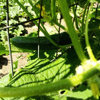
It just so happened that purslane took over a garden bed where I had transplanted so zucchini plants. It is now a mat, like living mulch. The zucchini is growing but not doing great, probably because I haven't been watering enough. But, maybe the competition with purslane is too much. My question, should I remove the purslane or keep it?

Comments (50)

  • 11 years ago

    Yes, it's mulch, but it's also competition. Real mulch doesn't compete for nutrients. I mean, I can plant parsley, beets, and carrots to act as mulch for zucchini. The results will be largely the same. Guess you just have to decide which you want more.

  • 11 years ago

    Certainly it is competition - even weeds or lawn grass grown next to a bed are competition. I would keep the purslane and eat it. Or watch it - IF an animal starts eating it it is prob a woodchuck.

    My guess is there was purslane there when you tilled the garden?


  • 11 years ago

    If you tilled purlslane into that garden bed, that accounts for it now being like a mat. The fastest way to spread purslane is to till it in. Chop it up and bury it. That's the ticket to having a garden covered with purslane.


  • 11 years ago

    Excuse my ignorance, but what is purslane?

  • 11 years ago

    I have no till garden beds which I weed with a hand weeder in the spring and usually during the growing season. Once the purslane started growing, I decided to see what would happen. It spread quickly. Peter, purslane is an edible wild plant with small fleshy leaves. If you google it, you can see a photo. There are quite a few recipes on the internet. It's packed full of vitamins. We probably should be eating it.

  • 11 years ago

    What does it taste like? If it is so full of vitamins and good for you, why is it not more popular? I'm 70 years old and had never heard of it until it got started in my garden about two or three years ago.

  • 11 years ago

    Purslane is really a succulent, with slightly crunchy stems. It is a little more tangy than lettuce, but pleasantly so. The reddish-purple stems are attractive in salads. It is positively loaded with nutrients. Look it up. It is a weed on my lawn, but thrives in the summer heat when the lawn starts to fade. It is both heat and drought tolerant. Easy to harvest. You just grab a clump and pull gently. Why isn't it more popular? I suspect the shelf life isn't very long, so it would be hard to market in stores.


  • 11 years ago

    you may not have heard of it, but from Sicily to Turkey I have seen it in farmer markets. In MI it does not do well, but I used to eat it a lot in Zones 8 and 9.


  • 11 years ago

    I think there is a wild variety and a cultivated variety. I'm in NH so zone 5. Glib, wonder if soil minerals have something to do with whether it shows up. My garden is open, former pasture. prput68 there are a lot of things we don't see in stores or perhaps weren't popular in our area of the country. A new vegetable to me is garlic scapes which I first saw at farmers markets but now harvest every year off my own hard neck garlic. I never saw fresh herbs in supermarkets and didn't know what pesto was until maybe the 1980s. Dandelion greens are popular with some people but not something my family ever had. I didn't have parsnips until I was dating my future husband and his parents grew it in their garden.

  • 11 years ago

    Purslane has a firm texture with a faint lemon flavor. It goes with similarly textured vegetables, but I will happily eat a purslane only salad. I think it may not be what minerals are there, but often what minerals are not there. It grows in poor and/or extremely compacted soil where nothing else grows. I don't think it competes much with deep rooted veggies, it never goes deep in the soil and relies on growth speed to make it to reproduction.


  • 11 years ago

    defrost, I guess you are right. I'm just an old backwoods country boy and was raised on simple things like tomatoes & sweet corn. Never had a lot of those exotic things.

  • 11 years ago

    Its greatest health benefit is that it's extremely high in Omega 3s, something severely lacking in the American diet.

  • 11 years ago

    There are websites that explain weeds as indicators of what kind of soil you have. According to this one, purslane grows on fertile, well-drained soil. http://www.gardeningknowhow.com/garden-how-to/soil-fertilizers/soil-types-and-weeds.htm

    when I clicked on the purslane link the next article leads me to believe I'm making a big mistake letting it grow any further ... although maybe it would choke out the creeping Charlie. Can throw seed a long ways and any tiny bit left will grow and spread.

    prput68, my husband would happily eat familiar foods for the rest of his life but I usually make him try new things. Heck, I think I was in my 20s before I ever saw a zucchini. Met a guy last year who spent a summer only eating foraged edibles. I thought that was a little bizarre but an interesting experiment. I couldn't go a summer without having fresh corn.

  • 11 years ago

    How about some recipes from some of you folks who eat purslane. I am starting to get curious. I told my wife if we found a use for it it would probably quit growing.

  • 11 years ago

    prput, One suggestion I have seen and will likely try tonight is to add it to fried potatoes. Here is a Turkish recipe: Turkish purslane salad. The funny thing is it is not really an exotic, it is just something that has been under many people's noses for some time. You have to wonder how many people have gone to bed hungry or under nourished when there was some healthy outside that grows easily to nourish and feed them. I wonder if there is any difference between cultivated purslane (which I have seen at a local garden center) or what I have growing in my vegetable beds. The cultivated one definitely has larger leaves but it is also watered where as I just ignore what is outside.

  • 11 years ago

    Be aware that although purslane is wonderfully nutritious, it is also high in oxalic acid, as are collards, spinach, parsley, etc. Oxalic acid forms insoluble salts from, for example, calcium. If you have trouble with kidney stones, you'd best not eat too much of those. Certain individuals are less tolerant of oxalic acids and may have kidney and gall bladder problems if they get too much. In general, the best way to use purslane it is combined with other leafy greens.

    FWIW, I think cooking reduces the oxalic acid content, but it also reduces the nutrient content.


  • 11 years ago

    There are several threads on purslane. Here is something I posted in a recent one...

    gumby_ct(CT it says Z5)

    Another
    scenario where we (as spoiled Americans) attempt to rout a native
    edible plant (which grows easily w/o care) to plant something that is
    not native, subject to drought and disease and even with coddling care
    refuses to grow and/or overwinter. Just sayin.


    From here...

  • 11 years ago

    I might eat purslane if I was starving - but personally, I'm not fond of the texture & flavor. Malabar spinach is similar, and I didn't particularly like that either. There are a lot of greens that are more palatable, including some wild ones like lamb's quarter. One man's meat...


    But IRT to using it as a living mulch, that makes as much sense to me as using a live anaconda for jungle wear... things can get out of control very quickly. Purslane comes to seed fast & produces it in prodigious amounts, so if you let it seed just once, you'll be fighting it for years. Last year heavy rains prevented me from weeding my rural garden until... well, just about now; a few purslane plants went to seed. This year I have a purslane carpet 30 feet wide! I'm trying to dig them all out before they seed again, but even if I do, I'll be fighting the buried seed for years. It is on my "most wanted" weed list right behind crab grass.

    defrost49 thanked zeedman Zone 5 Wisconsin
  • 11 years ago

    I think I can find enough to try a salad. I tried it on a tuna salad sandwich instead of lettuce but I think the flavor was masked by the onion and celery and fresh tomato on the tuna. Don't know how I missed the other thread on purslane so thanks for the link. Our daughter-in-law has chickens and might appreciate the purslane. Will rip it out before it becomes a pest.

  • 11 years ago

    I agree with zeedman. Purslane is a curse in the gardens.

  • 11 years ago

    Living mulch is that one of those hipster ideas like companion planting? :)

  • 11 years ago

    Actually, as a weed, I find purslane to be pretty easily manageable. While it does have a taproot, what comes out of that taproot is blanket-like foliage that spreads over the ground. So with one not so hard pull, you can remove a large area of the stuff. That's VERY different than other weeds, which often have densely packed roots, and stems that strongly resist pulling.

    Of course, unlike other weeds, mowing and tilling of purslane is pretty much just planting a lot more. So managing it is by pulling, and not shredding.

  • 11 years ago

    Happy pulling LOL.

  • 11 years ago

    wayne_5 said: ."..It's called gardening."

  • 11 years ago

    Peter, nature doesn't like bare soil. I thought something growing underneath the squash plants would be a good idea. Alas, no. Fortunately, my hand weeding tool will help me get it clean fairly quickly. Our daughter-in-law has chickens which I understand love purslane and it's good for them.

  • 11 years ago
    last modified: 11 years ago

    Sorry, if purslane is something you want to grow all the power to you... I just can't imagine intentionally growing it simply to act as a mulch is a good idea IMHO. If the argument for it that it doesn't have deep roots, use much water/nutrients, etc so that it doesn't compete with the plants is true, I can't see it really suppressing other weeds anyway. I just meant "living mulch" is one of those things that sounds nice but probably isn't going to work out. (In reality, the much less sexy sounding "decomposing mulch" is much better for the soil ;) )

  • 11 years ago

    Farmers do grow things things for mulch.

    Home gardeners grow turf grass right up to the edge of their garden beds - which not only competes for water and nutrients it also harbor pests.

  • 11 years ago

    Happy pulling LOL.

    Seriously, a big mat of the stuff pulls up with a small tug. I guess it just breaks off where the main stem hits the soil Now, that won't remove the taproot, but it will prevent reseeding. I find your cursed view of purslane as a weed to be a little peculiar. Around here, it's by far the easiest weed to at least remove the foliage.

    I'm not sure who is saying purslane has shallow roots. In fact, it has a pretty deep taproot. You kinda figure that for a highly drought tolerant species, especially a succulent, that is mostly water. But you don't notice it when you pull it up because, as I said, it just breaks off at the edge of the soil. I'm quite sure it would strongly compete for water and nutrients with stuff interplanted with it.

  • 11 years ago

    Let me add that in the spots where purslane has been growing in my lawn, there isn't any grass. Yep, there was a competition, and the purslane won.

  • 11 years ago

    Just how much water and nutrients do you think a plant like purslane would need to survive?

  • 11 years ago

    Purslane is an accepted xeriscaping plant, and is a variety of portacula. Certainly doesn't need any kind of regular irrigation. I think the leaves may be somewhat larger if there is water, but that's about it. It won't like water-logged soil though. It clings to the ground, so won't grow well in mulched areas. Since it is a drought tolerant succulent and loves sun, I just look at it as kind of a ground-cover cactus. It grows fine in poor soil, but won't mind some slow-release fertilizer.

  • 11 years ago

    "It won't like water-logged soil though."

    I wish that was true. The lowest part of my garden is heavily infested, where I have willow seedlings for weeds... it was among the first weeds to sprout as the soil began to dry out (along with thistle seedlings). The lowest, wettest spot is almost completely purslane.

  • 11 years ago

    Well, there are many varieties. Common purslane is what I was talking about. But I believe there is what is called water purslane or marsh purslane, which loves wet soil, and can even live in standing water. I think the leaves of those are darker. Not sure about the taste.

  • 11 years ago

    I checked out photos of water purslane - nope, this is just common purslane. Apparently it will tolerate a wide range of conditions.

  • 11 years ago

    Well you did say <"it was among the first weeds to sprout as the soil began to dry out (along with thistle seedlings).">

  • 11 years ago

    The point that common purslane doesn't like a lot of water isn't from my own experience. I've never waterlogged it. But I've heard master gardeners say that it doesn't like a lot of water. Maybe they were referring to mature plants. Certainly purslane will root best in a moist medium. I have to wonder if your very wet area is an area that gets weed seeds washed into it. That could concentrate the purslane there.

  • 11 years ago

    Some folks love it. I munch on it while puling weeds but never encouraged to to grow.

    http://www.eattheweeds.com/purslane-omega-3-fatty-weed/

    defrost49 thanked tcgardener Zone 10a SE Florida
  • 11 years ago

    That's one of the best writeups on purslane edibility I've seen, tcgardener. Of course, Green Deane is the king of foragers. Thank you!

  • 11 years ago

    I think we overlook a lot of hardy and persistent edible plants, call them weeds and dispose of them to grow plants which can be difficult to grow. There are many that love to grow on poor soil too.

    IF you are using any weed killers or insecticides I would avoid eating any native plants.

    btw - I don't think purslane is bothered by any insect pests.

    Really good link TC.


  • 11 years ago

    Ha, you wouldn't know if purslane is bothered by any insect pests, because if you search for "purslane" and "pests", it's purslane that is identified as the pest! But that's exactly right. We overlook many hardy, persistent, and also quite tasty edible plants, and call them weeds because we didn't plant them.

    That being said, I see that there is a purslane sawfly, and a portacula leafmining weevil that are admired for possibly offering biological control of what many consider a dreadful weed.

  • 11 years ago

    I was going on what I see in my yard/garden meaning lack of damage to purslane.

  • 11 years ago
    last modified: 11 years ago

    I know that, when it comes to food, we all have things we like and don't like. But while I do try to exercise understanding, it has always amazed me that people will go the supermarket and lay down hard earned money on insecticide and herbicide laden, waxed, nearly tasteless produce, or will pay even more money for organic, and nutritious specialty foods, but will passover some of the most nutritious, often tasty... and free foods on the planet.

    My biggest peeve in this regard is whether someone is at least open to trying it. Blows my mind that some will eat stuff sprayed with poison but won't even taste something wild. The conditioning of the 20th century runs deep in the minds of far too many people.

    My wish is not to offend those who do not desire to eat new or strange foods (we all have are individual peculiarities,) but I have never been able to wrap my mind around the depth of the control, and the manipulation of the thinking processes.

  • 11 years ago

    I'm glad I asked the question. Perhaps "living compost" was not the right term. In some gardening books, under planting is suggested (i.e. B. Damarosch's newest book). But the deed is done. Most of the purslane has been removed. The best thing was I weeded up the hand weeder I lost several weeks ago. Secondly, I noticed that the zucchini plants had a serious infestation of eggs on the underside of the leaves. I noticed a few newly hatched squash bugs, the pale gray ones about the size of ticks at this point. Thanks for the discussion, I really appreciated it even if I think the purslane is rather tasteless. It's a very popular edible in Turkey and a friend on Cape Cod said she has seen it for sale at farmers markets. A few larger plants had developed a tap root but the younger ones around the zucchini plants weren't that far along but since there was a lot of tiny plants, I didn't get them all. I have a 5 gallon bucket almost full that I hope our daughter-in-law's chickens will like.

  • 11 years ago

    For the squash bugs I use duct tape (tho any wide tape will do); wrap it around my hand sticky side out and use it like fly paper. Press onto bugs/eggs

    Go around the underside of each leaf looking for bugs and eggs it works equally well.

    You may have to repeat daily until all are gone. Time consuming but extremely effective. And truly organic ;-)

    Thankfully I have no squash bugs, cucumber beetles, etc. this year.

  • 11 years ago

    I have seen purslane out in the field where the crop had been drowned out that were nearly 3 feet across with huge stems. ...still a garden pest in one of the gardens. I used to raise the Portalacca flower, but it did not reseed quite as hardily.

  • 11 years ago

    gumby, I can tell you grasshoppers will eat purslane all the way to the skeleton in bad infestation years. I have not paid as much attention in normal years.

  • 11 years ago

    Woodchucks like purslane also.

    So IF you don't want to eat it, don't want to weed it, pick yourself up some grasshoppers and woodchucks.

  • 11 years ago

    Just think - don't have to plant it or water it. What's better than that?

    Better save some of those seeds eh?

  • 2 years ago

    Purslane is a pretty awesome living mulch compared to others! It's a vigorous grower, so it can quickly cover the soil, outcompeting weeds and helping retain moisture. Additionally, its ability to improve soil structure and fertility sets it apart from some other living mulches. It's a great choice if you're looking for a low-maintenance, beneficial ground cover in your garden!