Software
Houzz Logo Print
boosterpack

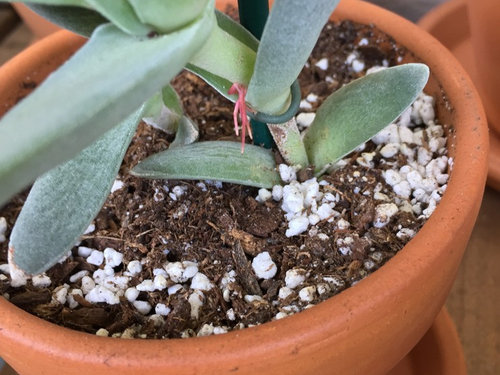
Are these roots?

11 years ago
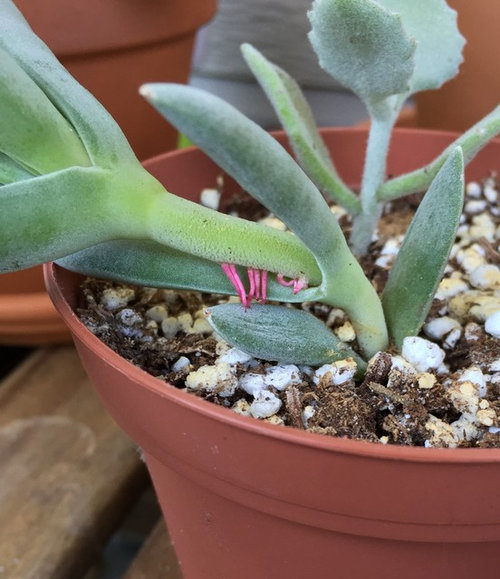
Noticed two of my Crassula Falcata are growing what I think appear to be roots from their sides! Is this normal? One leans over and slightly touches the soil (1st pic) but the other one is held upright and does not (2nd pic). Does anyone know what's going on?


Comments (13)

  • 11 years ago
    last modified: 11 years ago

    In the worst case, air roots can mean something is wrong with water transport in the lower stem or roots. But in this case, it probably just means you could water more. Your plant looks perfectly healthy. No worries.

    Brad

    boosterpack thanked paracelsus
  • 11 years ago

    thanks! should I leave the air roots or should I cut them off? does this also mean they may need fertilizer?

  • 11 years ago
    last modified: 11 years ago

    No, it doesn't mean it needs fertilizer (edit:see post below-found some suggestions about fert)...as Brad said in his answer: ..." it probably just means you could water more. Your plant looks perfectly healthy. No worries."

    And maybe (just maybe) if it is in humid environment, the air roots will grow...

    Edited to add: see post below-found some suggestions about fert

    boosterpack thanked rina_Ontario,Canada 5a
  • 11 years ago

    I wonder if your C. falcata needs more light? It looks like it stretching towards the light and maybe that led to some minor stem damage and the air roots. In pots that size, they normally grow straight up.

  • 11 years ago
    last modified: 11 years ago

    I tried to find more answers regarding aerial roots - most of what I was able to find suggests that they absorb water from the environment, especially if it is more humid. Only few suggested that it could mean lack of nutrients (I did say in my previous post it isn't sign that plant needs more fertilizer.)

    There are many types of aerial roots, but I am referring to these fine roots on some succulents. So far, I didn't find really convincing answer (about lack of nutrients) - so if anyone has a good reference, please post a link.

    In the meantime, I think I may attempt an experiment with one of the plants that seems to grow lots of these roots (at least in my environment) - xGraptoveria 'Fred Ives'. I have few of these & will fertilize one regularly to see if there is reduction in number of the aerial roots.

    boosterpack thanked rina_Ontario,Canada 5a
  • 11 years ago

    ia with ewwmayo-- i usually get aerial roots in my more etiolated plants. i guess it's them trying to stabilize themselves/right their growth as their stems grow unwieldy?

  • 11 years ago

    Rina, let us know how your experiment goes! In my experience, succulents send them out of the main root system is unable to meet the plants water demands. Yes, there has to be enough humidity in the air or after watering for the plant make them worthwhile.

    Usually etoliation is coupled with less than ideal growing conditions, including soil mix (age or type) and watering frequency.

    With lack of fertilizer, I would expect slower growth instead of more aerial roots.

    Boosterpack, I would just leave them (not cut). They definitely do not hurt your plant, it's just aesthetics. =)

    boosterpack thanked ewwmayo
  • 11 years ago

    ew

    That is what I have understood and believed (for few years of growing succulents) about the aerial roots, but I found few comments about nutrients. They were not from any scientific study, but just in case - I don't want to give incorrect info.

    I believed that even if plant has enough water, and if there is enough/lots of moisture in the air - they will grow these roots. And I would agree that if root system is not capable to absorb enough, aerial roots would help.

    Few different succulents I have grow these roots; adromischus cristatus, echeveria Doris Taylor, Fred Ives I mentioned above and some more. Jades do too, seldom for me (unless the humidity is high), but if I leave cuttings sitting around for a while before potting up, they usually grow many aerial roots along the stems (not only at the cut end-I would expect that).

    Rina

  • 11 years ago

    ew-- the plants that put out aerial roots for me are all echeverias whose light needs i can't meet (and will eventually get tossed or passed off to someone else who wants them). Since they're in the same soil and receive the same watering/fertilization as the rest of my plants (including some echeverias that are fine with the amt of light i have), i tend to attribute it to mostly issues with light availability c:

  • 11 years ago

    k8

    I don't have same experience - and I definitely can't supply enough light during colder weather; as for about 1/2 a year, all my succulents have to be indoors. They spend warmer months outdoors.

    Good to know about experiences of other ppl.

  • 11 years ago

    Thank you everyone for all of your help, especially rina and eww!

    I will be leaving the roots on as if it is a fairly healthy plant I'd rather not mess with it and they don't bother me to look at them. As far as the suggestion that they could be etiolated, it's very possible. I hate to admit it but the whole condo I'm in is north facing. Not the ideal for growing many plants that I'd like to, but I can't change that. I will look into perhaps watering them a bit more as well. All in all, it seems like the air roots aren't a sign that something has gone horribly wrong, which for a total newbie is great news! Again I can't thank everyone on this forum enough, you guys are awesome!

  • 11 years ago

    No problem! If you're looking to get more plants (aren't we all?), Haworthia or Gasteria are a good choice since they will still do well under less light. There are many different interesting species. Most of the Crassulas require more light, as do Echeverias and most of the rosette-type succulents.

    boosterpack thanked ewwmayo
Sponsored
AIS Renovations
Average rating: 4.5 out of 5 stars15 Reviews
Custom Craftsmanship & Construction Solutions in Franklin County, Ohio