Software
Houzz Logo Print
joshwakefield

Ground Cover Assistance

11 years ago
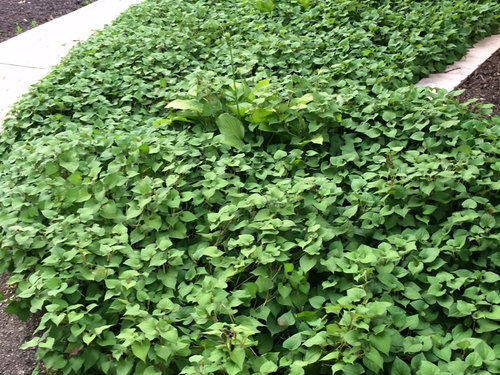
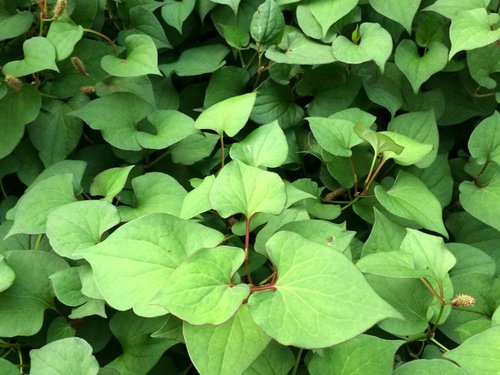
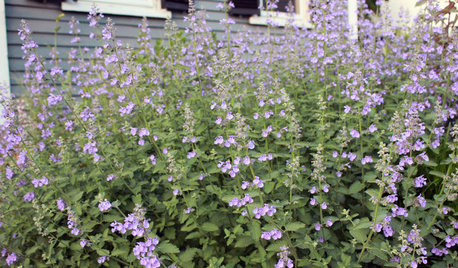
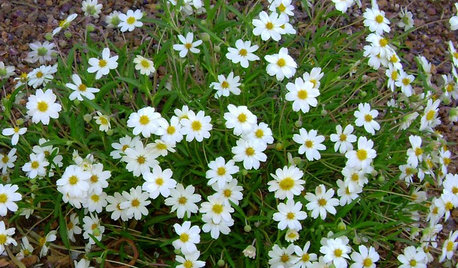
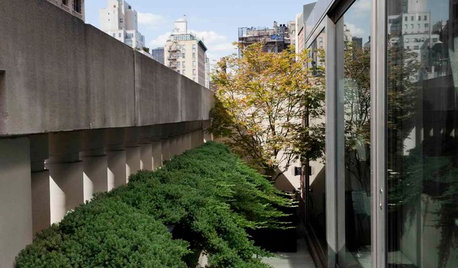
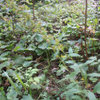
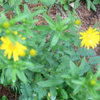
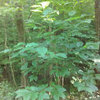
I'm looking for some advice on what to do wtih the ground cover (if it is that) in the attached pictures.

It was here when we moved in and is VERY invasive. It seems to be some kind of tuber (not sure about this?) or something in that the roots travel laterally and wind down deep.

I've pulled all of it up by hand at least 2 times, and it just pops right back up.

In addition, it has started to spread to unconnected beds (like 100 ft away from this picture)....I feel like it is taking over everything.

My questions:

What is it?

Do I want it?

If not how is the best way to get rid of it?

If so, what is the best way to maintain/manage it?

Thanks ahead of time for the help.

Best Regards,

J


Comments (22)

  • 11 years ago

    It is Houttuynia cordata.

    Josh Wakefield thanked peren.all Zone 5a Ontario Canada
  • 11 years ago
    last modified: 11 years ago

    If you want it gone, carefully use an herbicide and apply each time it comes back up. It may take 3-5 applications this season, and you may have to follow-up next year as well. Keep at it. Your bed will look pretty bad for a year or two, but if you really want it gone...

  • 11 years ago

    You can use a paint brush or a sponge foam brush to dab the areas where the plant has traveled. That way you target only the Houttuynia.

  • 11 years ago

    You have what looks to be a Hosta in the middle of that bed. If you could rescue it you would probably be quite happy you did.

  • 11 years ago

    So consensus is scorch the earth with chemicals? Do I need to cut/pull first or just spray directly?

  • 11 years ago

    It is up to you if you choose to use chemicals. If you dig and pull you can eradicate it. As gardengal said persistence is needed. It will take longer and it will be a lot of work but you may decide that option is right for you.

  • 11 years ago

    I used a brush killer on mine called Crossbow. Roundup works, but not as well for me for this menace.

    Manually, I'd use a 6 tined fork rather than a shovel.

    Mike

  • 11 years ago

    So dig it up with a 6 tined fork and then douse the ground with Crossbow just to be clear?

  • 11 years ago

    That is a huge area to dig. I would use herbicide. Even a small piece of root remaining from digging will probably re-sprout.

    Depending on how patient you are, you could also weed whack the area, then cover with plastic or thick newspaper and pile some mulch on top of that if you didn't want to spray it.

    The hostas should be dug up, then soak the roots to remove all traces of Houttuynia. Otherwise when you transplant you will have more of the problem in another location.

  • 11 years ago

    Use a herbicide like Crossbow OR dig it up. Using a herbicide after digging does no good. Herbicides work by being absorbed by the leaves, not by poisoning the ground.

    Mike

  • 11 years ago

    "So dig it up with a 6 tined fork and then douse the ground with Crossbow just to be clear?"

    No. The herbicide needs to come into direct contact with the actual plant, either foliage or cut stems, so just applying to the soil will not work.

    Just digging up the plant does present a bit of an issue because, as previously mentioned, any remaining portion of root left will regenerate into a new plant. And it does spread rhizomatously (via underground stems), sometimes at a considerable distance, which is why you have plants popping up across the garden. Interestingly, one website says you can keep it in control by surrounding it with a barrier, like a sidewalk. Obviously, that is not as effective as one would hope :-)

    FWIW, I have never known the smothering routine described above to be very effective with any sort of aggressively rhizomatic plant......YMMV.

  • 11 years ago

    Unless there are seeds left there, there should not be regeneration if the covered plants receive no sunlight for an extended period of time. Garden plants need light in order to grow and produce chlorophyll to be kept alive.

    I have used a thick layer of wood chips on top of a cover or some sort . I was patient and the plants beneath it were killed off completely. If there are roots extending past that area, they will produce plants.

    I would use herbicide as a first choice on this monster, but if the garden owner is adverse to that, she could try another method. Digging is a losing proposition.

  • 11 years ago

    Crossbow > 50% Roundup ??

  • 11 years ago

    There maybe should be no regeneration in theory but I agree with GG. My particular bugbear is Calystegia sepium. It will always eventually find a join or even travel many feet to the edge of a covered area. And in damp climates paper or cardboard breaks down before the roots are dead. I find forking to be effective if it is very thorough and repeated several times.

  • 11 years ago

    "Crossbow > 50% Roundup ??"

    RoundUp is a brand name for glyphosate, the active ingredient. Crossbow is a brand name for another herbicide that contains triclopyr and 2,4-D as active ingredients. It is most effective against woody plants and generally works much better than glyphosate alone for for brush, brambles, ivy and other plants with permanent above ground stems. Either would work on the houttunyia.

    Carol, it's not that the plants will regenerate after smothering but rather they will extend rhizomes to an area that is not covered (or to any seams in the covering) and pop up there. I have seen this happen consistently with English ivy, horsetails, knotweed and a number of other plants that spread aggressively via these underground stems.

  • 11 years ago

    You can get 25% Roundup(generic) at Wallmart. Thin it to about 3-5% and spray the leaves in Spring before any thing else comes up. That will kill it dead, really dead.

    Whenever I read of Roundup not working for someone, they never state what the concentration was. Roundup, ie, Glyphosate will kill just about anything if the right concentration is used. If you buy the real Roundup, you pay at least 10 times too much for it, and it is usually in .5% concentrate.

    Always look at the concentration of any chemical you buy. Pay attention to the percent of 'inert ingredients', which is nothing more than water. Usually 99.5% water when you buy the real 'Roundup'. Most stores carry generic, just look for Glyphosate.


  • 11 years ago

    Sorry I'm a garden novice....if I get 25% why would I thin it out to 3-5%.....don't I want as much punch as possible?

  • 11 years ago

    The Super Concentrate Roundup is 50.2% Glysophate.

    Inert ingredients 49.8%

    Mix 2 1/2 fl. ozs per gallon of water.

    Rainproof in 30 minutes.

    Just read the directions and follow to a 'T'.

    Mike

  • 11 years ago

    OMG ... i will yell... READ THE LABEL.. AND USE ACCORDINGLY ...


    ITS ALL ON THE LABEL .. READ IT.. USE ACCORDINGLY ...


    PUMP TANK .. oops ... fill with water.. figure out how to use it.. low pressure.. nozzle adjustment plus number of pumps ... figure out how to make DROPLETs... get this.. gravity makes drops fall to earth ... this stuff isnt french perfume ... atomize it.. and it drifts ...


    so once you have that all set... then READ THE LABEL ... and use the APPROPRIATE dilution for your purpose ...


    i would spray once now.. and in 4 to 6 weeks.. i would spray again .. anything that is still green.. or any new sprout..


    in october.. dig it all out ...


    next april.. look for any new shouts.. spray again if need be ...


    next may ... if you feel secure you got it all ... landscape it all ..


    but do keep the tank and the solution around.. because IT WILL BE BACK .. lol .. but just some little pieces here and there.. which you can spot spray as need be ...


    good luck.. i have been doing the above for 16 years at moms house.. trying to get rid of the pretty version of this carp ..


    btw... then you are going to have to figure out how to garden on that hill.. and that might be harder than getting rid of this stuff ...


    ken


  • 11 years ago

    A good question about why use 3 to 5% when you have a quart of 25%. Well, sometimes too much is just too much. Actually, only use the thinnest concentrate that will kill it. I just use 3-5% as a best guestimate. Why waste the money when a thinner is better. I believe I paid about $10 for a pint of 25% generic glyphosate. Buy a 3 gallon sprayer(about $10). Mix with water 10 to 1 to get 2.5%, so the entire pint of glyphosate would make 160 ounces of killer, or about a 1 & 1/4 gallon mixture. That 2.5% mixture will be sufficient to do in that stuff. Save the remainder and use it again next year. I prefer to do this in the Spring when plants have their nice new tender leaves. They absorb it and then die.

    Be careful to only spray when it is calm. If you don't, it will be very obvious to your other dead plants why this is important.

    YMMV