Software
Houzz Logo Print
nick_ball

Alkaline soil

11 years ago

Did a soil ph test tonight. My soil is very alkaline. Like 7.7-8. I've planted a Paul's select Norway spruce and a Siberian spruce. Both of them about 4' tall.

I know conifers like acidic soil. I'm wondering how/or if I should add something to the soil to make it more acidic. And if I do add something, when I should do it. Now, or wait to fall? My first instinct is to just throw some holly tone on it now and hope for the best.

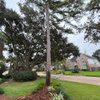
The previous owner of my house planted a Picea Pungens that seems to be doing great. It's a 30' tree that looks gorgeous. Although I noticed it does not produce any cones. So I'm wondering if the alkaline soil may contribute to low cone production. Any suggestions would be greatly appreciated. Even from you Ken! ;)

Comments (11)

  • 11 years ago

    We're these results obtained from a DIY kit from big box store, or did u send soil to your local extension office? If DIY, I wouldn't base any decisions on the result.

    Conifers are not too picky, most here would favor no amendments...but you could always experiment was adding sulfer and/or other surface level amendments if soil test indicates deficiencies

  • 11 years ago

    It was a DIY kit. What is a local extension office?

  • 11 years ago

    Locate your county's Extension Service office with this map: http://npic.orst.edu/pest/countyext.htm

  • 11 years ago

    I know conifers like acidic soil.


    ==>>> i have over 500.. i wasnt aware of this .. seems like an overly broad statement ...


    i have glacial sand... no amendments ever ...


    look around your property.. for miles around.. any trees and conifers.. who is amending the soil for them???


    ken

  • 11 years ago

    There is, for whatever reason, a belief in the heads of many that all conifers are alike in their preferences. I can quickly think of at least one species-and it's one you've planted, Norway spruce-and one whole genus-Thuja, which prefer calcareous soils, at least to some degree. Beware of the tendency to lump all conifers into one group. It doesn't work that way.

    If soil pH adjustment is called for-and yours is at best a borderline case of that-I'd second the recommendation to use "soil sulfur" for this job. Just be aware, many soil types have a tendency to gradually revert back to their old pH levels over time. This is called buffering capacity and you're not going to beat it. Small adjustments-sure. Big, permanent changes to soil pH? Not gonna happen.

    +oM

  • 11 years ago
    last modified: 11 years ago

    This is actually a topic I have been researching a lot lately. I understand that conifer's will grow fine without amendments in most circumstances, true... but I wonder what would happen if we optimized the soil to meet the ideal needs of the tree? Faster growth, healthier, improved disease resistance? I don't know.. Only recently have I been able to find evidence of this being true. I think the nurseries do this, and have been experimenting with it for years.

    I'm not talking about sticking miracle grow evergreen spikes in the ground. I'm talking about lightly applying natural products such as fish emulsion, calcium, magnesium, Epsom salt, and most important "Compost Tea". I like these ideas, because you are not amending the hole, but rather broadly applying around the base of the tree, so there will be no "Clay Pot" effect, that occurs when amendments are only applied directly to the planting hole, and the roots outgrow that zone.

    I know (non scientifically) that holly tone applied to the base of my Emerald Green arbs made them grow faster, greener. That was without a soil test (risky), but if I did a soil test, I could apply my surface level amendments the way I do for my lawn. Also, Fish Emulsion doubled the size of my Acer seedlings vs. the ones that were not given this.

    Anyways, sorry to get sidetracked, but this is an interesting topic. Below you will see a list of preferred Ph level by species.

    http://www.christmas-trees.org/fertilizing_christmas_trees.pdf

  • 11 years ago
    last modified: 11 years ago

    BTW, it's pH, not PH, Ph, or any other variant. Thuja (arborvitaes) absolutely do not require soil acidification in any but the most bizzarly extreme cases-cases where likely, the soil is so out of whack that there is no plant life growing there. They prefer neutral to just slightly alkaline conditions, this alkalinity due to the presence of limestone or its breakdown products in the soil profile. If Hollytone "made them grow faster", it is because of the nitrogen and other nutrients supplied, not some imagined change to soil pH. And it should be mentioned, manmade adjustments to soil pH almost always revert back over time. This buffering capacity can easily defeat our attempts to change things. Look it up if you don't believe me. Buffering capacity; soil pH adjustment; acidification of soils; there are lots of ways to crack this open.

    +oM

  • 11 years ago

    "Anyways, sorry to get sidetracked, but this is an interesting topic. Below you will see a list of preferred Ph level by species.

    http://www.christmas-trees.org/fertilizing_christmas_trees.pdf"

    From that table of trees and pH, in my experience, only "Yellow Pine" (such as Pitch Pine) performs better on acidic soils. The rest of them do just fine on our 7.2 to 7.7 limestone based clays.

  • 11 years ago

    If they just studied plants in containers and related their findings to container grown plants that would be good info, but once a plant is in the ground there are lots of other factors to consider. My mother loves to water and use fertilizer, her plants grow twice as much as mine, look healthy but when a big storm comes along the spruce trees snap off and they are mixed in around other larger trees. So I would be a bit concerned about to vigorous of growth

  • 11 years ago

    Soil amendment is not the same as fertilization. The use of fertilizers is a completely different topic than is the use (or not) of soil amendments at planting. I've always been OK with moderate fertilization, nor do I quite agree with the "always test your soil first" crowd, for the simple reason that nitrogen-the nutrient of greatest concern-is not measured in these inexpensive soil tests, is always in "short" supply in terms of what plants could use, and is unstable in the soil profile, so any measurements are largely meaningless anyway. You can pretty much always achieve a boost in growth rate via N fertilization, and that's not necessarily a bad thing, so long as you're not going overboard and causing direct, physical damage to your trees or causing them to be especially nutritious and tasty targets for insect and mite pests, which BTW does happen.

    If you like adjusting pH of soil in various sections of your yard, there's no harm in that. What I'm getting at-and so are lots of others-is that, in general, it makes a lot more sense to match plants to existing soil characteristics, not the other way around. What you do in your own yard is completely up to you.

    Some folks try to grow palm trees far north of their range. They create elaborate coverings for the trunks, do all kinds of extravagant things to get these palms through winter. Do I think it worth the effort? No, mostly not. But that's their business, not mine. I find it much more rewarding and even much more interesting to grow things that are adapted to the site.

    +oM

Sponsored
Whisler Home Improvement
Average rating: 5 out of 5 stars9 Reviews
Franklin County's Committed Home Improvement Professionals