Software
Houzz Logo Print
kevin6958

Emerald Green Arborvitae

Greetings from Lowell, NC! My question(s) relate to treating several possibly-over-watered Emerald Green Arborvitae. Hopefully the information I provide will be relevant.

I planted 22 of the trees in mid-June. All were 3-to-4 feet tall and in 12" and 13" pots. The great majority of the trees are planted on a short hillside with a few trees on mostly-flat ground at the top and bottom of the hill. I installed drip irrigation at the same time and all have been watered regularly and consistently. Everything was going great until a couple weeks ago ...

Five of the trees began to appear as though they were under-watered (yellowish/brown appearance and looking dry), and of course my reaction then was to increase watering time. The appearance has only degraded a bit. Much of what I've read since suggests a tree that has been over-watered, and may be suffering from root rot, can take on the same appearance. Yesterday I dug down beside a couple root balls to inspect. The surrounding soil (clay) was consistently moist but I couldn't really decide on the soil of the root ball. The root ball certainly wasn't sopping wet but I couldn't squeeze that soil into a ball in my hand either. Today I purchased a moisture meter and the root balls of all trees in concern are registering wet, wet, wet. All of the trees that look good are registering on the low moist side.

I mentioned there was a hillside involved. What I think may be happening is the root balls on the hillside are receiving sufficient water but I know much of the water is running off the hill. On the other hand, the trees that are on flatter ground are receiving much more water to the root ball - maybe too much. It has been very hot and very dry in these parts, so suffice it to say the ground is very hard and the trees are basically sitting in hard clay pots in the ground without a great ability to drain. I'll answer any question about the initial planting but let's assume for now they were planted with great care, with sufficiently sized holes, and with nice soil conditioner.

So, how can I verify with any more certainty my trees are under-or-over watered? And is there a way for certain to verify if 'root rot' is at play? And if so, what can one do about it? I'm inclined to dig the trees up, re-pot them, dry up the root ball a bit, and replant the trees after a while. Hopefully that's an absolute last resort.

Looking forward to any ideas you may have!

Kevin

Comments (15)

  • 11 years ago

    you planted late ...


    did you amend your clay planting holes???


    does a hole dug.. filled with water .. ever drain??? ... how bad is the clay???


    those were extremely small pots.. for large plants ... were the plants root bound.. what if anything did you do about that??


    i was getting already to tell you to go dig a freakin hole and find out what the situation is.. congrats.. you dodged that bullet... lol ...


    what kind of drip irrigation did you use ... name of product please .. hopefully not common soaker hose ...


    as you found out;.. a plant with water rotting roots.. looks just like a plant with too little water ...


    more info.. and some pix please


    ken

  • 11 years ago

    Thank you for your reply, Ken. Your answers below ...

    • you planted late ...

    Perhaps; but I didn't skimp on the water for a second.

    • did you amend your
      clay planting holes???

    Yes. There's really not an option but to do so where I live. The original soil that went back into the holes was mostly the top few inches of soil mixed 50/50 with this soil conditioner. This stuff works wonderfully in these parts.

    • does a hole dug..
      filled with water .. ever drain??? ... how bad is the clay???

    I guess that depends on the hole dug. :) The clay's pretty bad but I don't know how to measure it.

    • those were extremely
      small pots.. for large plants ... were the plants root bound.. what if anything
      did you do about that??

    I wouldn't necessarily consider the plants to have been root bound, but there were some roots visible around the edges of the root balls. Like everything I've ever planted I used my hand to rough up any small roots that were visible around the outside of the root ball.

    • i was getting
      already to tell you to go dig a freakin hole and find out what the situation
      is.. congrats.. you dodged that bullet... lol ...

    Not sure I understand what you mean, but for the holes I did dig: As I said, the pots were 12 and 13-inch pots. All of my holes were 18-inches wide and ~4-inches deeper than the pots. I filled the bottom of the holes with the soil/conditioner mix and watered that in. I continued to water in each layer of soil as the holes were filled. There's 3-inches of hardwood mulch around all trees.

    • what kind of drip
      irrigation did you use ... name of product please .. hopefully not common
      soaker hose ...

    I used a product from Lowes manufactured by Mister Landscaper. There is one of these adjustable drippers placed at each tree. I move/alternate the placement of each dripper (to the 'other side' of the root ball) with each watering.

    • as you found out;..
      a plant with water rotting roots.. looks just like a plant with too little
      water ...

    And what might I do about that now?

    • more info.. and some
      pix please

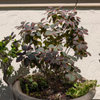
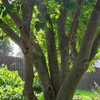
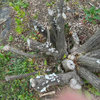
    Please see pics below (my apologies for the poor quality of light). The first image is an example of what looks good. The second and third images of what looks not so good, and what looks the worst.

  • 11 years ago

    what a brilliant reply ... good job ...


    good on real irrigation rather than simple weeper hose ...


    i have no clue on your clay breaking product.. especially if you put 4 inches in the bottom .. maybe one of our science types can discuss that ...


    see link for a discussion on planting in clay ...


    if you have a warranty.. i would plan on replacing come fall ...


    do a perk test... find a place to dig a hole ... a foot wide.. foot deep.. fill with water... and time how long to drain ... my sand will drain in under a minute except in drought ... then it takes 2 minutes ... to compare with your result ... google the term if you want to learn more about it ...


    lets see what others have to say ...


    ken


    https://sites.google.com/site/tnarboretum/Home/planting-a-tree-or-shrub

  • 11 years ago

    Thanks again, Ken. I actually did a perk test in a round-about way for several of the holes I dug. All holes were initially created using a 2-may auger with a 12-inch bit and finished with shovel and post hole diggers. In 5 or 6 places the bit would only dig to about 9-inches deep and then just spin on the polished clay. I put several inches of water into all of those holes to try to soften up the clay a bit so I could continue with the auger. I didn't time it but as I recall it took quite a long time for the water to absorb - maybe 20 minutes or longer. Actually, I think a couple of the holes never absorbed entirely so I just continued on digging as-is. As I said, the clay isn't great.

    For what its worth, none of the trees I'm having issue with are in the aforementioned holes. And just a reminder, I'm only having issue with 4 (a corrected count from original post) of 22 trees. All the others look very good.

  • 11 years ago

    Thuja-all members of the genus-have good tolerance to clay-based soils. In fact, best growth (in the world) comes on relatively heavy, moist soils. Just throwing that out there to dispel any notions that Thuja is like red pine or something-unable to handle moisture. T'ain't so. Probably the single most tolerant genus to high water table. I've got some swamp up at my land and it's really the only tree that can grow in that constantly wet muck soil.

    +oM

  • 11 years ago

    I wonder if the soil around them is adequately wet, but the rootball itself is drying out.

  • 11 years ago
    last modified: 11 years ago

    Not sure what the problem is but they appear wind damaged? One is leaning over. My line of 28 arborvitae are also in heavy clay and don't seem to mind it. I had some heavy duty workouts getting them planted in this bedrock!

    Have you looked for bagworms?

    You're fortunate it's only 4. You can always replace them. I love the continuous look of one variety but the down side is creating a monoclimate and if one is plagued with disease they can all be affected.

    What I usually do when something is not faring well is watch and wait and perhaps stop any kind of extra effort pampering. See what it does on its own. Also you can remove one of the 4 (preferably in the fall) and inspect the root ball.

    They are really beautiful trees. I hope they cheer up for you!

  • 11 years ago

    Kevin,

    The main reason soil conditioner is used around here is because we have very sandy

    aoil, so the water runs right through it. By using the soil conditioner, (which is basically ground up pine chips), it helps the ground retain some moisture to help the tree or shrub get established.

    You don't need soil conditioner for heavy clay soil. The best thing for heavy clay is organic manure, to IMPROVE drainage. The soil conditioner will hold onto the moisture in the soil for the shrub. You shouldn't have added that with your soil. You would have been better off just planting it in native soil, even if it was heavy clay.

    The time of year to plant conifers in the Southeast is fall. There is no better time, and the trees really do a lot better because they get additional moisture from our rainfall in the fall, and the roots grow great to get the tree ready for a long hot summer that is coming up for them.

    Your trees probably aren't going to make it. Timing and soil is everything. So, if you have to replace most of them, which you probably will, don't use soil conditioner. Plain clay is fine.

    Plant in fall. Mulch well. Sorry, and good luck.


  • 11 years ago

    wisconsitom, Thank you for the feedback - very interesting indeed.

    Dave, sorry to disagree but all 22 root balls are moist.

    Elizabeth, that one is leaning has baffled me from the beginning. The top was actually dropped over when still in the pot (when I bought it). But I assumed it would straighten up a bit as it became established. But no wind damage at all - that tree is rather sheltered - unless that was the cause for the droopy top before it came to me.

    butterfly4u, Thank you for the feedback. I hate to be that guy who asks for help and then sounds argumentative but I want to make sure I understand this. I take your point about the soil conditioner holding some moisture - that's a given. I completely agree that fall planting would have been best but my circumstances are that I needed to plant in June. If you say the natural clay (which was ridiculously dense and compact) would have been better not mixed, then I leave room for that possibility. But what do you base the idea on that I will likely have to replace 'most' of the 22 trees? As I said, only four show signs of distress - all others seem to be doing very, very well. And since I determined that I was likely over-watering the trees and have pulled back on my watering schedule, one of those four is looking much better. What am I missing here?

  • 11 years ago

    Hi Kevin,

    The variety of causes for what ails any plant is often vast ranging from drought, fertilizer burn, freeze/ thaw damage, insects, injury, fungus and disease. What often drives gardeners is immediate need and risk of inaction.

    For other perspectives try contacting your county extension office and sending in these pix. Also try one of several online sources such as Yardener.com, AskMelinda and Gardening Know How Q& A.

    You may not get to an exact answer as to what has caused this puzzling problem but it may help you decide if you have to take action or can watch and wait. These trees grow very slowly, only about 9-12" per year.

    I agree that fall planting is ideal though I didn't always understand just how much better things fare when doing that. Summer planting is super stressful. When I planted mine in June I lost 2 within a month. They were throttled by storms. I just went and bought new ones that I planted in fall.

    They did better, not having to cope with transplant shock, storms, drought stress and the rest.

    So don't worry at all, if you find that you can't correct the problem then either let them hang around and see how they do for one year and replace them next fall or go ahead and do it this fall.

    Considering their slow growth the replaced ones won't be far behind the established ones.


  • 11 years ago
    last modified: 11 years ago

    The main reason soil conditioner is used around here is because we have very sandy

    aoil, so the water runs right through it. By using the soil
    conditioner, (which is basically ground up pine chips), it helps the
    ground retain some moisture to help the tree or shrub get established.
    You don't need soil conditioner for heavy clay soil.

    ==>>> i am on glacial sand.. the best soil in the world for all conifers.. WITHOUT AMENDMENT ... period ...

    and after one year ..... all my conifers are free range.. never needing to ever be watered ...

    when i moved 1500 potted hosta to this lot. and planted the pots of media into the sand.. the sand wicked all available moisture out of the peat .. and a couple hundred died .. as once peat drys.. in the soil ... its near impossible to rewet ...

    what lizzy does.. works for lizzy ... and all the power to her ....

    but it might not work for everyone ... and you have to find out.. in your soil.. ion your yard ... sorta like a micro climate.. call it a micro culture ...

    do appreciate liz's effort to reply .. i do.. it adds to the conversation...

    ken

  • 11 years ago

    Kevin,

    You didn't read Ken's link he kindly provided you. Look at the number 1 important thing on the list. When you are planting a conifer in the Carolinas, in June, in our heat, that is the reason you will most likely loose some of your conifers. The ultimate no no for the Carolinas.

    Our heat is incredible, it is not just a little warm in the Carolinas in June, unless you live at the top of a mountain, and it doesn't get all that hot in June. I don't know, mabey you do.

    Newly planting a conifer in June is not good, transplanting a conifer in June, in the Carolinas, with our heat, good luck.

    That is the reason, the number one reason I wihsed you luck. I hope all your trees make it, but I am trying to prepare you for a let down. Timing is everything in gardening.

  • 11 years ago

    Thanks to all for the feedback - many interesting points have been made.

    butterfly, I did in fact read the link that Ken provided. But I chose not to address it directly simply because I don't subscribe to the notion that a conifer can't be planted in June, or any hot summer month, and not be nurtured to thrive. Including these 22 emerald greens, I have literally planted 125 plants (mostly heavy shrubs and a mix of other perineals) on this property between the last week of May and the second week of August. Of those I have lost 1 gardenia, 1 abelia, 2 dianthus, and what looks like 3 emerald greens. I believe in what I see and I see a 94% success rate for planting in the summer, in my climate, as pretty darned good. For now I'll continue to apply my new strategy of watering the emerald greens selectively (which is essentially ~15 minutes per tree instead of ~2-hours per tree), as needed, and see where that gets me. Unfortunately I didn't receive the feedback I had requested on treating potentially over-watered conifers so I'll tune out for now. I'll update the thread at a later date with progress ...

    Thanks again to all that replied.

    Kevin

  • 11 years ago

    I'm just wondering if that fence is within your yard or between you and next door? If the latter the plants are going to grow though into next door's yard in no time. If it is a boundary fence they really need to be much further into your property. Of course, this is all nonsense if it's just a fence within your plot.

  • 11 years ago

    'Smaragd' is more susceptible to root rot than most arborvitaes. And any arborvitae can get root rot under conditions that promote it, many plants that grow in wetlands in nature are growing under specific conditions there - it doesn't follow that if a plant is growing in a swamp in the woods you can plant it in any other wet location and it will not be bothered.