Software
Houzz Logo Print
wvudave_charlotte_nc

Thatch rake overkill? What happened?

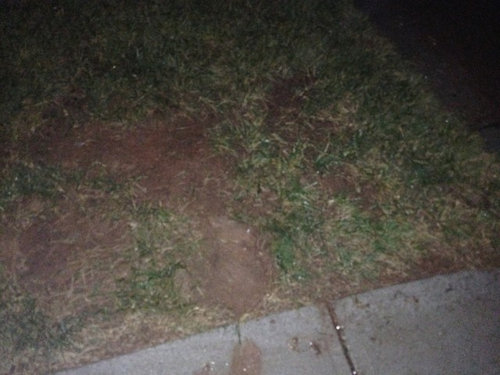
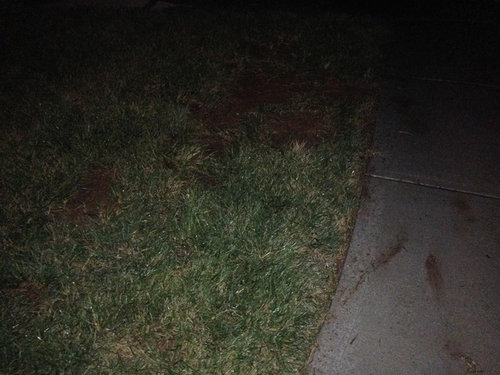
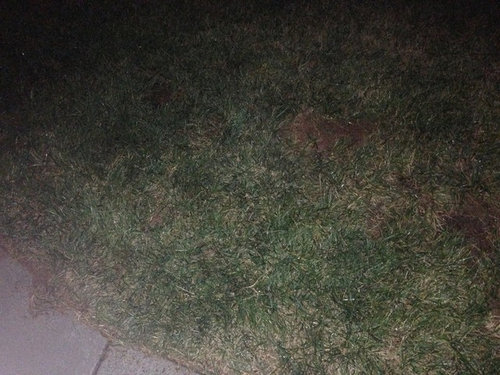
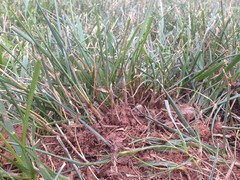
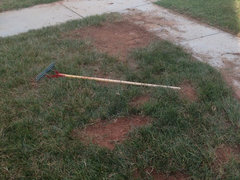
I dethatched a portion of my lawn that was already thinning out badly this evening. I ended up pulling a lot of grass out with the thatch, probably because it was in bad shape already, but I'm not sure.

I checked online, and I used the correct side of the rake. I used the same rake on my teeny tiny backyard (which is mostly overrun with bermuda grass) without this issue.

Can anyone provide any insight? Did I do something wrong? I have TONS of seed I plan on using in about 10 days (still hot here in NC), so it isn't a huge deal, but I want to make sure I don't destroy more of my lawn, which isn't in very good shape anyways.


Sorry about the bad quality photos. I'll take better ones tomorrow. I also watered the sidewalk afterwards, so the bare spots are a little muddy.


Comments (20)

  • 11 years ago

    Are you sure that was good grass? It could have been P. annua or P. trivialis, which look like grass (and are related to Kentucky bluegrass), but have very shallow root systems. In which case, they're better gone...but can come back from root scraps, so keep an eye out.

    If it was good grass, it wasn't in that well and you probably shouldn't mourn the loss. ;-) It doesn't seem to have done severe damage and there's certainly plenty left, so I doubt you're using the rake wrong.

    What's going to worry us more is why the grass isn't in great shape. There's always a reason. Can you let us know how you feed and water, and exactly what grass type you have? I can't determine it from the photos, which are rather dark, but it looks like northern (fescue, rye, and/or Kentucky bluegrass) grasses.

  • 11 years ago

    What kind of grass is it? When you dethatch bermuda the net effect is more mass of grass. When you dethatch St Augustine the net effect can be a completely dead yard. Other grasses fall between those extremes.

    Now I'm going to ask seemingly unrelated questions pertaining to the generation of thatch.

    What is your watering schedule? How often and for how long do you water?

    Do you mulch mow?

    When were the last two times you fertilized and what did you use?

  • 11 years ago
    last modified: 11 years ago

    I'm pretty sure I have fescue, K31. I live in southern North Carolina near Charlotte. The home was built in 2007 as part of a new development, used to be farmland, and I inherited a bad lawn a year ago when I bought the house. I went back to dethatch more today, and a lot of the grass keeps coming up in the same area. The roots are not deep at all.

    I typically water the grass deeply about once a week unless it has rained. Maybe for about 20 minutes. But I'm not super OCD about it because my lawn isn't real nice. I bought 15 pounds of seed for overseeding, and my lawn is probably about 1,000 square feet. I also purchased 3 x 3 cubic feet of peat moss to lay on top of seed. Should I also get topsoil to lay underneath?

    I do mulch mow, on the highest setting. I fertilized for the first time in early April. I just used the Scotts regular turf builder.

    It is a small lot, my neighbors are close, many of them have fantastic lawns.

  • 11 years ago

    And thank you for the feedback. I have no idea what I am doing. As a new homeowner though, I am determined.

  • 11 years ago

    Update: As of 4:46pm Friday...

  • 11 years ago

    @morpheuspa

    "If it was good grass, it wasn't in that well and you probably shouldn't mourn the loss. ;-) "

    Please tell that to my wife...

  • 11 years ago

    So much bad grass...So much...

  • 11 years ago

    And if you look at the section over by the mailbox, that is 95% bermuda grass. FML.

  • 11 years ago

    "I don't think FML would consider Bermuda in a fescue lawn a true reason to actually declare FML. At least it wouldn't get a lot of tips. :-)"

    You're very right. But this lawn is owning me at the moment. I need a victory.

    When would be a good time of year to do the lab test?

    If I skip the topsoil, should I rent a roller? My lawn is very thin. I was going to put the topsoil down very thin. Just enough to help germination (or so I thought). My priority is seed to soil contact.

    I REALLY want to produce a thick lawn come spring.


  • 11 years ago

    You can lab test any time you can get the sample...so pretty much except when the ground is frozen solid. Here's the whole Getting A Sample thingy from their site: http://www.loganlabs.com/get-started.html

    Post the results here, we'll review them with recommendations.

    You can rent a roller and use it half full of water if you want. It's not strictly required, but it does help improve seed to soil contact. Or, for an area that small, you could probably step on the seed areas and achieve the same effect (your foot and a roller exert about the same amount of pressure).

    Thick lawn come spring? With fescues and good care, thick lawn come November first is in the cards. Fescues mature fast, look good fast, and don't dawdle on the fully mature thing.

    Keep in mind that, post-seeding, you'll have to water 2 to 3 times daily for 5 to 10 minutes (depending on your sprinkler) to keep the seed moist. This isn't optimal care for the established part of your lawn, but the seed doesn't accept compromises. For a while, existing grasses will.

    wvudave_charlotte_nc thanked User
  • 11 years ago

    What kind of seed did you get? The seeding rate for new lawns for fescue is 5-10 pounds per 1000 square feet. What does the bag say about seeding rate? You will be doing an overseed. Use the rate for overseed; it should be on the bag of seed. Grass that is planted too thick is more prone to disease and won't have sufficient space to grow, so use the proper rate.

  • 11 years ago
    last modified: 11 years ago

    Jonathan Green K-31 Tall Fescue is the grass seed I bought. I see no point in purchasing a TTTF when my lawn is already predominantly K-31.

    HERE IS MY PLAN...

    1. Dethatching: My plan is to finish using my thatch rake on the rest of the yard, which will hopefully be enough to expose/stir the soil.

    2. Scalping; I just lowered my mower height to the middle setting (has 3 settings) and mowed yesterday. I plan on mowing it again in a few days, and then adjusting the height to the lowest setting, and mowing again Saturday. All in an effort to maximize seed to soil contact. Last year I just spread seed and it didn't go well.

    3.. Aeration: I have someone coming to core aerate my lawn on Sunday morning.

    4. Seed: I then plan on applying the seed with a handheld spreader,

    5. Rolling: I'm strongly considering renting a roller and filling it halfway to go over the whole lawn. Just to make sure the seed makes good contact with soil.

    6. Peat Moss: I will then apply a very thin layer of peat moss in the front and bare spots, to help the seed stay in place and germinate.

    7. Starter Fertilizer: I also purchased some starter fertilizer, which I was thinking of putting down last. Unless there is a better time?

    What do you think?

  • 11 years ago

    Just want to emphasize using the correct rate of seed. Use the overseed rate on the bag. You have way more seed than you need and you may be tempted to sow thickly. Don't. Put the correct amount of seed in your spreader, put it on a low setting, and aim to make at least two passes in different directions. On bare areas you can sprinkle a little more by hand. In 3 weeks if you have bare areas you can sprinkle a little more seed in the bare areas. Your plan should work. If you're happy with K31, great. If it were me, I'd use a turf type tall fescue. But K31 does have its advantages, being a tough sturdy grass.

    wvudave_charlotte_nc thanked beckyinrichmond
  • 11 years ago

    +1 Becky. While I find K31 to be an unattractive grass in the extreme, if it makes you happy, wonderful. And there's a great deal going for K31. It's practically indestructible, which is why it's popular as a forage grass.

    Your plan looks fine. I'd say that aeration probably isn't required (you're roughing up the soil surface with the rake quite nicely). The roller is optional, but good insurance.

    In this one instance, which is a mixed overseeding/new lawn seeding? Try to apply the starter only in the new lawn areas. If that's impossible to do at bag rate, skip it or apply at half rate to the entire lawn.

    The reason is that the nitrogen in the starter is going to set off growth in your existing grasses, which will rapidly overshadow the new sprouts. Barring a soil test showing a shortage of phosphorus, I don't generally recommend starter for overseeding for that reason.

    Instead, feed the new lawn gently (about half rate) at 1 month into the process, by which time fescues are already starting to mature. Repeat half rate feedings every 15 days through the end of the season.

    wvudave_charlotte_nc thanked User
  • 11 years ago

    I wish you would have given us your entire plan up front so we could
    have been working from a plan, because as you have read, for example,
    topsoil was not necessary. As it turns out core aeration is not
    necessary. According to the time stamps on Sunday night you said you had someone coming over Sunday morning to aerate. Is it too late to stop that? Further, peat moss is not necessary. While it might help the seed stay in place it does not help it germinate. Rolling is more important than peat moss. It won't be a problem unless you apply too much, but it is expensive, time consuming, and not really needed. I'm trying to save you about $500 and 2 days of labor to get the same or worse results. Seeding isn't that hard. Your steps 1,2,4,5,and 7 are enough.

  • 11 years ago

    @dchall_san_antonio I can stop the aeration, but I don't mind spending $40 on some extra insurance. I REALLY want a thick healthy green lawn. Will it not help at all?

  • 11 years ago
    last modified: 11 years ago

    So I should cancel the aeration? And just rake the seed in myself? I have my thatch rake and a regular lawn rake. While core aeration might not be necessary, is it any help?

  • 11 years ago

    If you have some particular need to aerate, doing it before seeding is better than doing it aftewards. But it does create holes and the seed that falls into the holes is too deep. You don't have to stir up the soil but if you want to, you can do it. The seed just needs to have contact with the soil. If you rake, make sure the seed is very close to the top and it is only lightly covered. The key to good germination is keeping the seed bed moist. Water lightly several times a day. If it is hot, water an extra time.

    wvudave_charlotte_nc thanked beckyinrichmond
  • 11 years ago

    Why not just sod? I've done the seed thing 2 years in a row, but never again.