Software
Houzz Logo Print
coloringwoods

damp basement

11 years ago

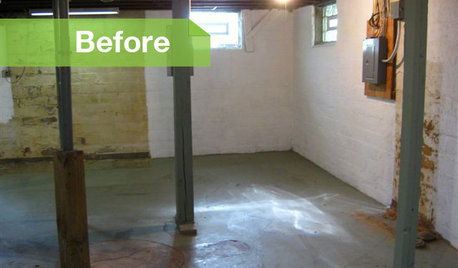
We had a finished basement with laminate flooring and rugs. Then we had a torrential rain and for the first time since we've lived in the house we got water in our lower level. It appeared to be localized in the family room, and we don't know if moisture had ever been a problem before with the lower level. When we purchased the house there was carpeting in the lower level that we had removed.

When we tore up all of the laminate flooring even the floors in the back rooms had a moldy musty smell. The floor did have a plastic sheeting over the cement. Our concern now is even if we put in a waterproof vinyl we may always have the musty moldy floor underneath. We have never had a musty odor in the lower level, but I'm assuming that is because the floor is all enclosed, containing the odors. Is this just "the way it is" with a lower level cement floor? I have health concerns about this , and don't really know what other type of flooring to use- other than cement! Does anyone have any ideas about the best way to handle damp basement flooring?

Comments (4)

  • PRO
    11 years ago

    First off we need to find out where the water came from. Usually this comes from improper down spouts, poorly landscaped soil (not sloping away from the foundation), improper drainage around the foundation.

    If you find and fix the areas of concern (sump pump, french drainage tiles, properly functioning down spouts, etc) you have a good chance that this "dampness" will recede into a "rare" event.

    Fix the problems before you throw away money on a floor. Find out where and why the water entered, throw money at the "fix" and then go ahead and install flooring. If you don't fix the concern, you will forever worry that it will "happen again".

    Right now, you need to dry out the basement. That normally means a few weeks of industrial fans running, windows open (oh dear...it is fall = rain) etc. Dry out the basement with heavy air flow. While you are doing that, fix the things that need fixing (down spouts, landscaping, french drains, sump pumps, etc). Now that your basement is as dry as you can be, now you purchase flooring.

    And yes, if you lay flooring in a "damp" basement (one that was not allowed to dry out properly and that the problems were left unfixed) you could be locking in the mould and mildew. Take the time to correct the concerns. Dry out the basement (NO FLOORING) and then install new floors when you get the all clear from a mould/mildew abatement professional.

    coloringwoods thanked Cancork Floor Inc.
  • 11 years ago

    We want to believe our issues resulted from poor gutter pitch and a 5" rain in an hour. We removed the laminate floors and underlayment immediately in the area flooded. Now more than 3 weeks later we are removing the remaining laminate floors in the back bedroom where there was no visible moisture and finding musty moldy planks. Is moisture wicking up through the floor, or is it common for moisture to occur under floors just because of dampness in lower level? Our house was built in 89 so I don't think it has a moisture barrier under the concrete floor.

  • PRO
    11 years ago

    A concrete slab without a moisture barrier will ALWAYS wick water into the home/air. Unless you built in the Sahara where there is NO ground water (not for half a mile under the sand dunes) a basement slab (without barrier) will be touching "moist" ground. That moisture moves through concrete. Slowly but it still moves through.

    When a REALLY wet event occurs, then it moves faster. Standing water is not a common event but it can still occur (obviously it has done so in your home). Just because it wasn't ON TOP of the floor doesn't mean there wasn't a snick of standing water underneath the laminate...underneath the plastic. Water moves and it can seep underneath things. The slab was obviously overwhelmed (which happens with huge rainfall, no moisture barrier, poor downspout location/pitch, lack of sump pump and lack of proper drainage tiles at the foundation wall).

    A vinyl floor plank floor, as it states on the packaging, is NOT a vapour barrier. You will still need a vapour barrier underneath LVT. There is no going around this plastic sheeting. LVT can still get mouldy (especially with standing water). The saving grace of LVT is that you can remove it, WASH IT DOWN (bleach solution comes to mind), allow it to dry (properly racked so it doesn't stretch), reinstall a new vapour barrier, and the reinstall the LVT.

    Should this happen again, the only thing you can "skip" is purchasing a new floor. Everything else has to be done again. The only way to reduce the likelihood of standing water is to do all the exterior work and then see what is left to do inside.

    coloringwoods thanked Cancork Floor Inc.
  • 5 years ago

    Cant the entire slab and walls be coated inside with a Drylock 4psi hydrostatic pressure guarantee? If applied in 2 coats up to 16mil thick this should definitely solve the issue I would assume be sure to patch any cracked foundation with Drylock fast plug and go from there. once dried test the situation and call the local volunteer fire department to see if the could dump the tank without pressure on the highest area and lowest area of the problem source. then see what happens. Geez your gonna give these people a heart attack theres definitely products out there that will help you without spending 20k on grading your property and all that. make sure your gutters are sealed and that the downspout is cleared and debris isn't trapped at the bottom. Be sure it angles off and drains to down slope leaving the downspout 48" away from the house. thats simple, grading your property isn't and people need to get there heads in reality.