Software
Houzz Logo Print
lclark21324

Trees in Laramie, WY

I just bought a home with a fairly good-sized lot. On the property were about 10-12 dead aspens that I've removed. The property went into foreclosure and has been vacant for about three years so I'm guessing the aspens died from lack of water and neglect in addition to severe chlorosis (it's pretty obvious that my neighborhood has exceedingly poor soil). I want to replace these trees in the spring, but I don't want to plant in their stead cottonwoods, blue spruce or aspens. I would like to plant something unique and different.Any suggestions for trees that would grow at 7,000 ft and zone 4b? The trees should have an ability to thrive in alkaline soil. I'm in the process of attempting to amend the ph of the soil.

I would like to plant 4-5 trees. I'm considering northern catalpa, burr oak, american linden, kentucky coffeetree, american elm (I don't have high hopes for this tree for many reasons, but I just want to try) and some kind of locust. Any sugggestions or information would be extremely appreciated! I'm willing to take chances and I'm well aware that I'm facing an uphill battle with the hash conditions of Laramie and SE Wyoming.

Comments (52)

  • 10 years ago

    Water will be the largest limiting factor you have to deal with. It's easy to say what MIGHT grow where you are...I grew up in northen MN, and let me tell you this...what people might say should grow where you are versus what the local nurseries will actually carry is quite different. Ah, for the days of expounding at great length at the significant differences that exist between six kinds of linden and 12 kinds of green ash... If you are willing to supply the water that mother nature does not, your list of possibles goes up dramatically.

    So how exotic do you want to go? Amur corktree? Mongolian oak? Honeylocust? There are several elms that should do well for you, maybe not strictly speaking true American elm, but there are several hybrids to choose from. Turkish Filbert? Northern rubber tree? While the last may be a bit of a stretch of wishful thinking, the rest should be no problem, and that's just off the top of my head.

    I'd look at the releases from NDSU and the Morton (Canada) Research Station. I'd see what can be found locally...my default is always to start locally. Then if you just have to have something that either absolutely cannot be found locally (Mongolian oak, for example), or are willing to take the risk of something possibly getting frozen out ( Eucommia ulmoides, for example).

  • 10 years ago
    last modified: 10 years ago

    BLUE OAK (Quercus douglasii) is unusual, very drought tolerant, and a little tolerant of alkaline soils. Might have trouble with your cold weather. If you are willing to water it, American Yellowwood (Cladrastis kentukea) is unusual, has flowers, and is tolerant of alkaline soils. Very pretty tree. Many think it is a weed, but Common Hackberry (Celtis occidentalis) is tolerant of alkaline soil and wildlife likes it. Hophornbeam/Ironwood (Ostrya virginiana), Cockspur Hawthorn (Crataegus crus-galli)?

    EDIT: Noticed your zone. That makes it tougher...Blue Oak probably couldn't handle the cold.
    What do you want to know about the trees you mention? Are there any you aren't familiar with? Catalpa looks kind of tropical. Quite pretty in the Spring when it blooms, quite ugly in the Fall. A tough trees. My parents have some American Linden growing in sandy soil. Nice looking trees, pretty tough. In theory want moist soil, but the ones my parents have are doing fine in a spot they really shouldn't. Leaves get devoured by insects.


    Kentucky coffeetree is a kind of lucust.

  • 10 years ago

    Lane, the do-it-yourself soil test kits are notoriously worthless.

    L Clark (zone 4 WY) thanked rhizo_1 (North AL) zone 7
  • 10 years ago

    Thanks for the input. I would provide all the water the trees need, or course. I would like to plant north American trees because I love 'Merica damn it. I guess I am just looking for anything that's a deciduous tree that's not a cottonwood, aspen or green ash that will actually grow. Fast growing would be nice, but not too concerned about that. Laramie's a tough place to grow anything so the tree has to be tough.


    Would a buckeye tree be a good choice?


    And why are home ph tests bad?


  • 10 years ago

    Lane, home tests rely on poor quality systems and methods for registering a reliable pH. Laboratory testing can eliminate the influences that make a difference in what the pH may register from one day to the next. Accurate calibration is important, too.

    Then there's that "operator error" issue.

  • 10 years ago

    Second the County Extension office, they're pretty good up there. Also pay the $30.00 and get a good soil test. I go up there at least once a year, so fairly familiar with your situation. Drive around the area, look at the trees, and ask yourself 'why aren't there more trees here?" and "why isn't there a great variety of trees here?" and begin from there, not "I have a huge palette to choose from, how do I narrow it down?". If your soil isn't like the older part of town to the west/south of campus, your choice will be limited.

    The climate and weather limit your choices. Sounds like your soil may too. You only have so much to work with - make your understory plants do some of the heavy lifting.

  • 10 years ago

    Catalpa and Hackberry are certainly tough. Also look into Ironwood.

    L Clark (zone 4 WY) thanked edlincoln
  • 10 years ago

    I've got no additional suggestions that haven't been made, but I've gotta give you kudos to trying to garden in those conditions - I have four times your annual rainfall, and I still complain when it doesn't rain enough!

  • 10 years ago

    I think I'll get a professional soil test. Thanks for the advice.


    I'm a first-time homeowner in my 20s so I've never really been overly concerned about trees until recently. This changed when I visited my brother in Omaha this summer. Holy crap, it opened my eyes to the world of big, beautiful trees. So I haven't really paid attention until recently! I've always liked them, but never really considered why there aren't more, why there isn't a greater variety, etc. About the only thing I've noticed is 90% of the trees in this 'little city on the high plains' are cottonwoods and blue spruce.


    Dan - what do you mean by this? "You only have so much to work with - make your understory plants do some of the heavy lifting."


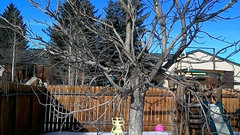
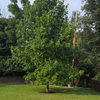
    If it helps, I've got two healthy, large weeping birches with white bark (I don't know the proper name for this tree) and what I think is a horsechestnut tree that's about 10'' in diameter that's unfortunately been topped and now looks like an octopus is growing out of it. To my limited knowledge these trees are healthy. I don't know if that helps with suggestions at all.


    Are horsechestnuts desirable trees?

  • 10 years ago

    I've never heard of ironwood or hackberry. I'll certainly look into it!

  • 10 years ago
    last modified: 10 years ago

    Can Bur Oak grow there? Loved those trees when in the Dakotas. How about Kentucky Coffee Tree. Mountain Ash? Ponderosa pine?

  • 10 years ago
    last modified: 10 years ago

    What is a desirable tree is a matter of taste. I like horsechestnut. They arent native to north America but as far as I know they aren't' an invasive species. They are planted for their salt tolerance near the coast and near roads in northern areas. Recently they have been afflicted by disease in my area. They would be easy to propagate from the nuts.

    Oh, the hackberry or the ironwood was supposed to resemble elm...can't remember which. Congrats on becoming a homeowner so young!

  • 10 years ago

    Thanks for that list. And thanks, owning beats renting for sure.

    The Bur oak seems like a good choice. After some research I learned that it's a Wyoming native! Although I haven't noticed one they are apparently native to the NE corner in the Black Hills.


  • 10 years ago

    Post pictures of the weeping birches (including the close up of leaves and any seeds) to the "Name that plant" forum...people should be able to identify them.

    Visit an arboretum...you can see what the trees you are considering look like in person.

  • 10 years ago

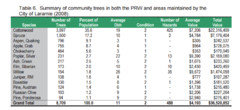
    FYI, watched a webinar today that had tree census data from Cheyenne, screen shot attached. May be useful for your decision process, altho not as useful as Extension Agent...

    L Clark (zone 4 WY) thanked Dan _Staley (5b Sunset 2B AHS 7)
  • 10 years ago
    last modified: 10 years ago

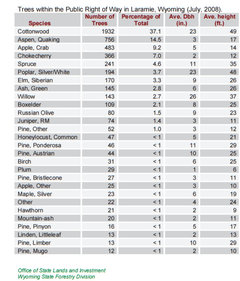
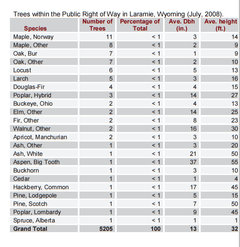
    I came across this on the city website.

    So basically most Laramie, WY trees, based on a lot of what I've read on this forum, is an all-star lineup of trash trees. Ha. Laramie, WY is a tough place to grow. Hopefully I'll find some really nice trees that can thrive here and share my knowledge with the newly-hired city arborist.

    More

  • 10 years ago

    "Kentucky coffeetree is a kind of lucust."

    It's not a Locust, it's a legume (bean family). The Locusts and Kentucky Coffeetree are about as closely related as Oak is to Beech.

  • 10 years ago

    When I was up there in Sept I did a scenic self-tour of the old town and noticed that the variety and interest came from the understory trees and shrubs. The big stuff was only a few species but the understory plants was a fairly wide variety.

  • 10 years ago

    And big trees are beautiful because they are big trees.

    The understorey can be more pretty, rather than majestic. Majestic is what the large trees give and nothing can do this other than big trees. Gardens without large trees will always be lacking (IMO).

  • 10 years ago

    Lane, there's some good suggestions here. I too have visited your area and it is one of the most bleak landscapes I've ever seen. Don't get me wrong, I actually like the effect-but it is clearly not a region conducive to trees. That said, a few ideas I'd consider, some of which have already been mentioned: Bur oak, hybrid elm (many varieties), Kentucky coffee tree, hackberry, perhaps black locust, although I wouldn't plant that species here, where it's clearly invasive. But for where you are, I don't see much chance for escape into the wild.

    +oM

  • 10 years ago

    Cottonwoods and blue spruce are the most common trees in Laramie because they survive, cottonwoods leaf out fairly early & people are desperate for some signs of spring by then. They also have great fall color, but can get pretty big for a lot in town. For a few others that survive in Laramie, you might look at the burr oak--the University planted one some years ago south of the Arts & Sciences building near the walk leading back to the Biology & Classroom buildings They have an interesting pattern of gnarled branches, which you will get to see for most of the year, but the fall foliage is pretty drab. It survived & grew to my surprise. Catalpas are a beautiful tree, but I've never seen them in Wyo. above about 4,000 feet--whether that is because they aren't planted or don't survive, I don't know. Silver Poplar ( known to me as silver maples), survive there. There were half a dozen or so on the 2nd lots of the intersection of 15th & Grand on the south side. They grow pretty big, but often freeze out before getting much fall color, but color isn't that important for this tree. The dark blue/green leaves with a white/silver underside makes an attractive accent all summer, along with the white bark with black spots in the winter. They do get pretty big and will put out cotton in June. There were honey locusts growing at that same intersection on the north west corner lot around the old president's mansion. Mountain ash were planted along the street leading into the campus between the Coe Library and Knight Hall on the Knight Hall side. I believe American Elms grew in Laramie, though the Dutch Elm Disease may have taken them all out by now. I think there used to be some American Elms near Old Main. Chinese Elms (called Siberian elms by everyone else) grow well, which is why they are planted. Nothing really kills them, they sprout millions of seeds, don't get much fall color, and tend to break limbs in wet snow storms. But, they do grow fast and survive almost any climate, soil, and level of irrigation. The pines will grow there, but periodically get winter burned and sometimes killed. A lot of research on Kentucky Coffee Tree was done at the National Arboretum just over the hill towards Cheyenne, and they should do well although I've never seen one. Russian Olives will grow anywhere, are invasive and listed as noxious in much of Wyoming, but do make a very attractive tree with their reddish bark and bluish green and silver leaves. I never noticed them being invasive in the Laramie valley, however. Just make sure to trim them up to a tree form if they start to bush, and keep the branches above head height as their thorns are nasty.

    The natural soil pH around Laramie, especially as you go north and west from downtown, is very high, running around 8 most of the time. This tends to be too much for aspen and they don't live that long & need replanting. Aspen and other trees will get iron chlorosis due to the high pH even though the soil is loaded with iron (which is why it is red). Just treat with iron sulphate if it is a problem. Golden willows and other willows will grow well there, also, as will Lombardy poplars but Lombardy's are short lived, typically starting to die out in as little as 10 years. Alder will grow well, and chokecherries are great--good fall color, don't get too large, fragrant blooms in the spring and delicious berries in late summer if you can beat the birds. The cherries make fantastic syrup and jelly and a great brandy.

    L Clark (zone 4 WY) thanked Beeone
  • 10 years ago

    Beeone, by your description, that "silver maple" you mention is almost surely white poplar-Populus alba. No worries though-I agree that in this situation, pretty much any tree that can be coaxed to survive, known invasive problem plants excepted, is the one you want. I wonder too about your "Chinese elms that everybody else calls Siberian elm", in that around here, the situation is reversed, non-tree people always calling the numerous local Siberian elms "Chinese elms". I wonder if that's not what you meant but obviously unsure.

    For soil pH adjustment where iron is already plentiful, I recommend straight "soil sulfur", an easy to use product that does gradually drive down the pH via bacterial action on the prills, converting them into sulfuric acid. Like any soil pH adjustment though, buffering action in the soil itself will tend to take things back to where they were over time. Just saying, no need to add iron where iron is already plentiful.

    Just those few minor niggles, but otherwise, a great rundown.

    +oM


  • 10 years ago

    Tom, is elemental sulfur just spread on a lawn like fertilizer?

  • 10 years ago
    last modified: 10 years ago

    Beeone (or anyone), what is an elm that would do well (survive) in Laramie?

  • 10 years ago

    Beeone (or anyone), what is an elm that would do well (survive) is Laramie?

    The siberian elm (ulmus pumila) would thrive

  • 10 years ago
    last modified: 10 years ago

    Other than Siberian elm, sorry. Should have added that.

  • 10 years ago

    Lane, look into hybrid elm cultivars, things like 'Accolade', 'Triumph', and bunch more I'm forgetting at the moment. Lots of work has been done with mostly Asian elm species to come up with interesting and useful hybrids, all of which will have at least some resistance to Dutch Elm Disease. Like most elms, tough trees and I wouldn't doubt they'd hang on in your situation, as well as most.

    Oh and as far as elemental soil sulfur, yes, you can simply broadcast it over mulch and turf, you can rake it lightly into mulched areas, you can incorporate it when working up soil, pretty much wide open on that. You really can't burn with it although I suspect if you were using it to try to drive the pH way down into the 4.0 range, that any turf area that would be a part of the application area might look off-color, as such low pH readings are lower than most such plants are adapted to handle. But other than something like that, it seems pretty hard to get into trouble with it.

    +oM

    L Clark (zone 4 WY) thanked wisconsitom
  • 10 years ago

    Soil sulfur only gives you a .1 to .2 change. Broadcasting it would do nothing for a foot down where the tree roots are.

    Again, the County Extension Agent, again, will be able to tell you whether the new elms will make it there, or certainly the city forester.

    L Clark (zone 4 WY) thanked Dan _Staley (5b Sunset 2B AHS 7)
  • 10 years ago
    last modified: 10 years ago

    I guess American larch is out of the question because it needs at least slightly acid soil.

    Too bad to have that as a limiting factor when the climate is already so limiting. I'd search these forums for the guy in Texas who used dilute acid to make his soil acid enough for blueberries. Just don't tell the EPA LOL. I think he posted to the fruits forum.

    (in all seriousness probably not too damaging to the environment...if done correctly which is the big if, and why EPA would never license such a approach even for "professionals". Heck if you read these forums, you hear stories that "professionals" can't even figure out how to put herbicide down safely in some cases, and overspray a neighbor's plants or whatnot. But you just need to convert a *bunch* of CaCO3 to CaS04 or CaCl - I can't remember which acid he used)

    L Clark (zone 4 WY) thanked UpperBayGardener (zone 7)
  • 10 years ago
    last modified: 10 years ago

    "There's nothing that says larch to me about this part of Wyoming."

    I know but I've seen them in eastern parts of Washington and northern Idaho that were otherwise surprisingly dry looking.

    BTW it just occurred to me I meant Western Larch, not "American" larch.

  • 10 years ago

    Question about soil sulfur- Would it help if I aerated the lawn heavily before broadcasting the sulfur? Maybe get the sulfur into the "root zone" a bit more?

  • 10 years ago

    Davidrt28, I've seen a larch in Laramie and it doesn't look too happy. The needles (leaves?) look very yellow. Chloratic

  • 10 years ago

    Well, anyway, I think we agree this is a challenge. Lane, yeah go ahead and broadcast your sulfur, then do the aeration. I agree it should help a bit to get some of the material down into the soil profile just a bit.

  • 10 years ago

    Would it help if I aerated the lawn heavily before broadcasting the sulfur?

    No. Sulfur is relatively immobile in soil and will not perc down.


  • 10 years ago

    amending the soil ph upwards to alkaline is considerably easier and more effective than acidifying soil. I have calcareous soil and fwiw, white poplars (populus alba) are one of the loveliest trees in the landscape.

  • 10 years ago

    Dan, in your one-man diatribe against soil sulfur, you contradict yourself. So, if it is, as you say, relatively immobile in the soil, how then does it follow that increasing the range of soil depths at which it could be deposited via following behind core aerification would not effect a positive change? The two factoids are incompatible, don't you see?

    Lane, do go ahead as suggested and do your core aerating first, then lay down your sulfur. Just don't expect miracles. Put it this way-I''ve done a good bit of soil acidification in my time but basically-pun intended-never do so these days., aside from some annual and perennial ornamental things I install every year where it's super-easy to incorporate. The over-riding reason is not that there are meaningful limitations on delivery systems available to me. No, the reason I rarely practice this when working with woody plants is that it's just not effective over the long term. Sure, if you've got the time, it is actually pretty easy to make repeat applications of soil-acidifying materials over a limited area. But anything beyond that small scale, it just gets impractical, especially given there's plenty of plant material that is more adapted to neutral-and-above soil pHs. If somebody else's mileage varies, that's great. I do know that I still derive benefits within the more narrow confines of those display beds and planters. But that's just not what we're talking about here.

    One aspect of your situation which may both aggravate things and allow for periodic adjustments might be a tendency in your area for mulch materials to wither and disappear quickly. If I'm right about that, then just before your periodic re-mulchings would be an opportunity to add more of the sulfur to the system. Still not going to be an overwhelming difference but I think you can expect to see modest color improvement in existing plants and enhanced (over the previous inhibited) vigor. Keep in mind too that should you continue to make such treatments long into the lifespans of your trees, it will eventually entail managing large areas of potential rooting zone. Finally, without adequate soil moisture, no nutrients can get into the roots. So that factor-overall weather, climate really, will most dictate how these trees end up doing. Good luck!

    +oM


  • 10 years ago

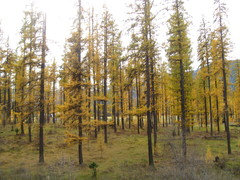
    Davidrt28, yes, there's a lot of larch in northern Idaho and western Montana. I took this picture in November of 2014 on the highway from Hope, Idaho to Thompson Falls, Montana.

    Mike


  • 10 years ago

    The two factoids are incompatible, don't you see?

    Tom, perhaps you didn't understand what I typed. I typed something basic in soil science, about the mobility of nutrients in the soil. Some nutrients are mobile, some are not. Sulfur is relatively immobile in soil. That is: it is not mobile, being relatively immobile in soil.

    You can't do anything to the soil to make trees that prefer acidic soils happy. Best to choose trees that do not require acidic soils.

  • 10 years ago
    last modified: 10 years ago

    And again, Lane is asking if core aerifying the soil prior to applying sulfur would help. And I quite simply said-and still do-that yes, of course it would, and for the very reason you keep citing, it's relative lack of mobility in the soil. Since by punching a bunch of holes in the substrate one would enable more prills to distribute themselves into differing levels in the soil profile, this would quite obviously-I thought-provide the benefit of getting the material into more ranges of the soil. It's right there in the words.

    In any case, your basic premise is wrong. Soil microbes, primarily certain bacteria, gradually convert soil sulfur into sulfuric acid. Now if you're going to tell us that sulfuric acid is immobile in the soil...I don't know what else to tell you.

    What's more, I don't appreciate you or anyone else calling me a liar here. I have treated the soil around chlorotic rubrum maples suffering from manganese deficiency with soil sulfur and was able to effect changes that were visible to the naked eye. Doesn't at all mean I recommend the practice-and I've made a full accounting of that in this thread-but it can and does work. Then, to top things off, you repeat more or less word for word what I've already detailed...that it's best to use plants already adapted to whatever soil pH range is typical of your area. What, didn't you think I said that right?

    +oM

  • 10 years ago


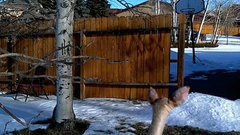
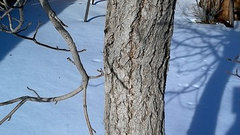
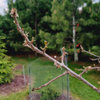
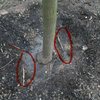
    Can anyone i.d. this tree just from the bark and buds? It's either a horse chestnut or a buckeye. It's been topped obviously, but I'm wondering if I should prune it or just let it grow. It looks like an octopus.

  • 10 years ago
    last modified: 10 years ago

    Not that I should join in the fray, but Tom highlighted an inconsistency in what Dan said that I was tempted to highlight myself. Elemental sulfur is hydrophobic and therefore yes, I would guess if you just spread it on the surface there's a chance of it either being rinsed away by rain or (out West!) just blown away. Before it had a chance to fully act. So it certainly seems like tilling it in or adding it to holes would be a good practice if you're using a lot of it to try to acidify soil.

    I've never lived in a calcareous soil area and hopefully never will, but to me the desirability of remediation is another cost/benefit analysis issue. The guy in Texas who used sulfuric acid to "correct" limestone soil really wanted to grow blueberries, and was successful after doing so. Obviously blueberries are Ericaceous plants and there's simply no other option to having acid soil. OTOH If you just need a tree in your yard, yeah it's much more reasonable to just find an alkaline tolerant tree.

    L Clark (zone 4 WY) thanked UpperBayGardener (zone 7)
  • 10 years ago

    I would remove crossing and inward growing branches and anything else you don't like. Wait until the tree is actively growing, my buckeye does not cover over cut branches very well at all if I trim at any other time of the year. My growing conditions here are better than yours by what I have read so far. I would plant more Buckeye trees as it seems they at least can survive there. Happy planting

    L Clark (zone 4 WY) thanked wayne
  • 10 years ago

    Tom, no one is calling you a liar. Get a hold of yourself.


    I agree with wayne about what to remove, I wouldn't remove any more than ~25% of the canopy this go-round - that's a fixer-upper for sure.

    And nothing I said about sulfur was inconsistent - of course you want to till it into the soil, and deeply. And a large amount of it to have an effect, albeit temporary. Out here, it doesn't do much at all so not a viable solution for the OP.


    L Clark (zone 4 WY) thanked Dan _Staley (5b Sunset 2B AHS 7)
  • 10 years ago
    last modified: 10 years ago

    "Out here, it doesn't do much at all so not a viable solution for the OP."

    I'm guessing the guy in Texas tried it first and realized a "more aggressive approach" was needed LOL.

    FWIW to help my (probable) "marine clay" to be better draining, it takes gypsum and/or calcitic limestone at least 2 years to really have an effect. (and I probably applied it 2 times each year) This is an ion-exchange between sodium and calcium. So I imagine the sulfur taking even longer, especially in a place that doesn't get 45 inches of rain a year, to fully react and fully acidify the soil.

  • 10 years ago
    last modified: 10 years ago

    I'm wondering though, is this buckeye a "water wise" tree for an area with such scant rainfall? I mean obviously keep it, but advice to plant more of them?

  • 10 years ago

    I don't know if it's a buckeye or a horse chestnut (I think horse chestnut), but it's a real champ. It's survived being chopped, frequent gale force winds, and at least four strait years of less than ten inches of precip while the irrigation's been out of commission.

  • 10 years ago

    They are pretty damn tuff, they grow early and shut down growing by the end of june here. I don't water except to get plants started. Leaf scorch can be a problem but there are some that are more resistant out of North Dakota and seem to handle dry prairie conditions. If you want something other than run of the mill.....

  • 10 years ago

    Lane Clark, my rough guess would also be buckeye or horsechestnut (despite the trimming job, it still looks quite nice & healthy). Leaves next spring should determine it. As far as trimming -- don't do anything yet. Additional trimming on top of an already bad trimming job isn't a good idea yet. Let it recover.

  • 10 years ago

    OP asked a specific question regarding the use of soil sulfur. Since I knew the answer, I responded to that question. Then you took us on a side trip with regular stops at why this was not a good direction for OP to take. I guess that's okay so far. Could be construed to add to the conversation. But in going on to deny the validity of observations I've made following such treatments, and which I've reported here, crosses some line. Why would I or anyone else be spending my time here making up stories? If I've said it can work-to a limited degree (saying that for the third or forth time), then you come on and tell us it doesn't work, what else am I to make of that?

    +oM